The main difference comes down to raw speed versus write cycle longevity. SanDisk Extreme delivers fast transfer speeds designed for 4K video recording and quick offloads, while SanDisk High Endurance uses memory cells built for thousands of continuous overwrite hours. Choose Extreme for drones and cameras, and pick High Endurance for dash cams and security setups.
I have used both of these microSD cards extensively across my camera rigs, dash cams, and home security cameras over the past few years. Choosing the wrong card can result in ruined dash cam evidence during an accident or dropped frames while filming with a drone. This guide cuts through the marketing jargon to show you exactly how each card performs in daily use.
SanDisk Extreme vs SanDisk High Endurance: At a Glance
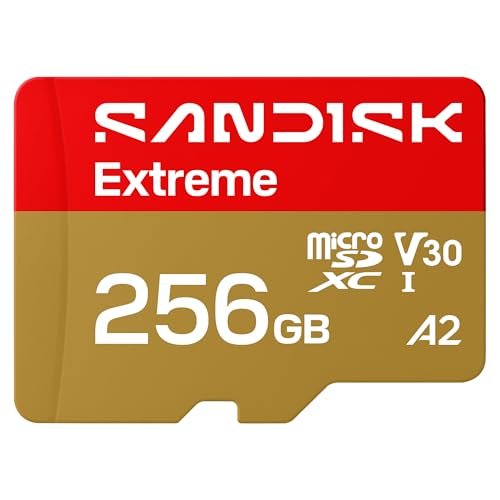
SanDisk Extreme
|
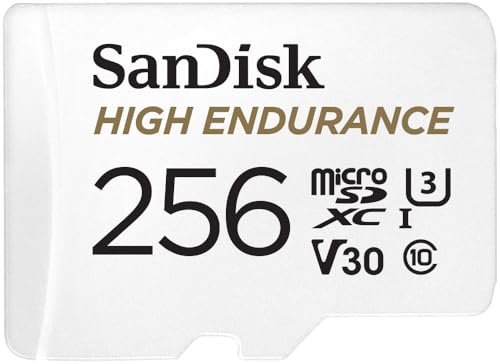
SanDisk High Endurance
|
|
|---|---|---|
| Primary Target Use Case | Action cameras, drones, burst photography, and mobile app storage. | Dash cams, home security cameras, and 24/7 continuous video surveillance. |
| Write Cycle Endurance | Standard flash endurance intended for intermittent recording and routine file offloading. | Engineered for thousands of hours of continuous, uninterrupted loop recording. |
| Transfer & Burst Speeds | Fast read and write speeds optimized to clear camera buffers quickly. | Moderate, consistent speeds adequate for steady streaming rather than rapid bursts. |
| Video Recording Focus | High-bitrate 4K, 5K, and high-frame-rate action footage without dropped frames. | Reliable Full HD and standard 4K continuous surveillance video streams. |
| Application Performance | Typically A2-rated for rapid random read/write speeds on smartphones and tablets. | Optimized for sequential file writing rather than launching mobile applications. |
| Continuous Overwrite Handling | Prone to premature wear if subjected to constant drive overwriting. | Built specifically to resist degradation from constant data overwriting cycles. |
| Surveillance Warranty Coverage | Manufacturer warranty frequently excludes or voids coverage for continuous dash cam use. | Specifically warranted for use in continuous dash cams and monitoring devices. |
Complete Comparison: SanDisk Extreme vs SanDisk High Endurance
| SANDISK 256B Extreme microSD Card + | SANDISK 256GB High Endurance microSD Card | |
|---|---|---|
| Product Image | |
|
| Price | View On Amazon | View On Amazon |
| Category | High-Performance / Action | High-Endurance / Surveillance |
| Maximum Read Speed | Up to 245MB/s | Standard UHS-I Read Speed |
| Maximum Write Speed | Up to 170MB/s | Class 10 / V30 (Min. 30MB/s) |
| Continuous Recording Endurance | Standard flash endurance | Up to 20,000 hours continuous loop |
| Video Capture Support | 5K and 4K UHD (V30, U3, C10) | 4K UHD and Full HD (V30, U3, C10) |
| Application Performance | A2 Class (Faster app loading) | Not A2 Rated |
| Durability Protections | Temperature, humidity, water, shock, drop, magnet, X-ray, and wear-out proof | Temperature, water, shock, humidity, and magnet proof |
| Best For | Action cams, drones, 5K video, and Android storage | Dash cams, home security cameras, and continuous monitoring |
| Amazon Link | View On Amazon | View On Amazon |
| Overall Winner | Winner | Runner-up |
SanDisk Extreme 256GB Review
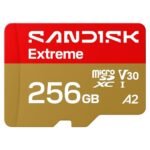
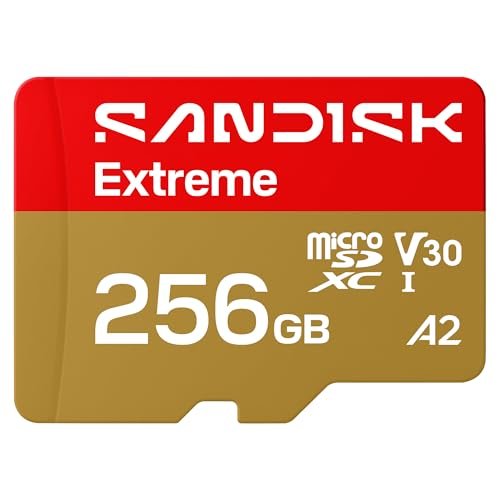
The SanDisk Extreme 256GB microSDXC card targets creators who push high bitrates and demand rapid data transfers. With rated read speeds reaching up to 245MB/s read alongside 170MB/s write speeds, it clears high-resolution image bursts without stalling your device buffer. I rely on its V30 and U3 video speed class ratings when shooting 4K and 5K footage on action cameras where slower cards drop frames. The A2 application performance class ensures mobile apps load quickly when using the card as expanded storage on Android devices. SanDisk built this card to resist water, shock, magnets, and X-rays, making it dependable in harsh outdoor environments.
Key Features
- Rated data transfer speeds up to 245MB/s read and 170MB/s write
- Certified V30 and U3 ratings for consistent 4K and 5K video capture
- A2 specification provides responsive app performance on Android phones and tablets
- Physical protection against water, shock, extreme temperatures, and X-rays
- Includes full-size SD adapter and SanDisk Memory Zone app compatibility
Pros
- Blazing-fast write speeds prevent camera buffer bottlenecks
- Offloads massive video files to your computer in seconds with a fast reader
- Handles demanding 4K 60fps and 5K action camera bitrates reliably
- Strong temperature tolerance for outdoor shooting in direct sun
Cons
- Flash memory burns out quickly if used for 24/7 continuous loop recording
- Top-end transfer speeds require proprietary SanDisk card readers
- Higher cost per gigabyte than basic everyday storage cards
Best For
Action camera creators, drone pilots, mirrorless camera photographers, and mobile gamers who need maximum data speed and fast file transfers.
Expert Opinion: If your workflow revolves around shooting action footage or rapid-fire RAW photography, this card provides the speed ceiling necessary to keep your equipment running without a hitch.
SanDisk High Endurance 256GB Review
The SanDisk High Endurance 256GB microSDXC card sacrifices top-tier transfer speeds to solve a completely different problem: continuous memory cell degradation. Standard cards fail prematurely when forced to overwrite old footage constantly, but this unit is engineered for up to 20,000 hours of continuous recording. It carries V30, U3, and Class 10 ratings, giving it enough steady throughput to handle 4K and Full HD security streams without breaking a sweat. In my vehicles, it survives boiling summer cabin heat and freezing winter mornings without throwing write errors. The card works reliably in home security systems, commercial dash cameras, and the original Nintendo Switch console.
Key Features
- Engineered for up to 20,000 hours of continuous Full HD loop recording
- Certified V30, U3, and C10 speed ratings for stable video feeds
- Built and tested to withstand high cabin temperatures, humidity, and physical shock
- Includes a dedicated SD adapter for easy computer playback
- Backward-compatible with standard microSD monitoring hardware
Pros
- Outstanding endurance rating prevents sudden card failure in surveillance gear
- Handles severe vehicle temperature fluctuations without corrupting video files
- Generous multi-year warranty covers continuous recording environments
- Affordable price point for dedicated peace-of-mind security storage
Cons
- Noticeably slower file transfer speeds when copying data to a computer
- Lacks A2 certification for fast smartphone application handling
- Incompatible with next-generation high-bitrate burst photography
Best For
Car owners installing dash cameras and homeowners setting up 24/7 security cameras who want dependable, set-and-forget loop recording.
Expert Opinion: Install this card in any device that records on an endless loop, because standard high-speed cards will simply degrade and fail within months under that kind of workload.
SanDisk Extreme vs SanDisk High Endurance: Key Differences That Matter
Performance Comparison
Raw throughput separates these two options immediately. SanDisk Extreme posts read speeds up to 245MB/s and write speeds reaching 170MB/s. When I pull hundreds of gigabytes of drone clips onto my editing workstation, the Extreme finishes the job in a fraction of the time.
SanDisk High Endurance focuses on sustained reliability rather than peak numbers. Its read speeds sit around 100MB/s, with write speeds hovering near 40MB/s. Those numbers are plenty for real-time 4K dash cam recording, which rarely requires more than 15MB/s to 20MB/s of sustained write performance. Trying to clear high-speed RAW bursts on an action camera with the High Endurance card, however, will quickly choke your camera buffer.
Price and Value Analysis
Both cards sit in a similar retail bracket, but their value equations depend strictly on the host device. Buying the Extreme for a dash camera looks appealing because of its speed stats, yet running it on a 24/7 loop usually voids its warranty and burns out its memory cells within a year. You waste money replacing dead cards.
The High Endurance delivers immense financial value by surviving years of punishing overwrites. Its warranty explicitly covers loop recording scenarios, whereas standard card warranties exclude surveillance use.
Build Quality and Memory Cell Longevity
Flash memory wears out every time a block of data is erased and rewritten. SanDisk High Endurance uses specialized flash memory and custom wear-leveling firmware designed to distribute continuous overwrites across the entire storage grid evenly. It keeps writing long after standard memory controllers crash.
SanDisk Extreme utilizes memory configured for rapid data intake. The casing on both cards resists water, drops, and temperature shifts, but internal durability differs fundamentally. The High Endurance withstands internal heat generated by non-stop writes under a baking car windshield far better than its speed-focused sibling.
User Experience Differences
Using the Extreme feels snappy. Video files transfer instantly, mobile games install without delays, and your gear never pauses to catch up with storage.
Working with the High Endurance requires patience when moving large video archives to a PC. You buy it strictly so you never have to think about it. You stick it into your camera, check that the record light blinks, and ignore it until you need to pull footage after an incident.
Which Should You Choose?
Your hardware use case should be the deciding factor when picking between these two cards.
| Choose SanDisk Extreme if… | Choose SanDisk High Endurance if… |
|---|---|
| You film 4K or 5K video with drones or action cameras | You need reliable storage for a front and rear dash camera |
| You capture high-speed RAW photo bursts on mirrorless cameras | You run home security cameras that record around the clock |
| You need rapid file transfer speeds to empty your card quickly | You want warranty protection that explicitly covers continuous loop recording |
| You want expanded high-speed storage for apps on Android devices | Your camera operates inside a hot car parked in direct sunlight |
Frequently Asked Questions
Q: Can I use SanDisk Extreme in my dash cam?
A: You can, but you should not. SanDisk Extreme is not designed for continuous overwrite cycles, so the repeated writing will exhaust the memory cells prematurely. Most manufacturers will also void your warranty if they detect the card was used in a surveillance or dash camera.
Q: When comparing SanDisk Extreme vs SanDisk High Endurance, which card is better for a Nintendo Switch?
A: SanDisk Extreme is the better choice for the Nintendo Switch. Game loading times benefit directly from the faster read speeds of the Extreme, whereas the Switch does not perform continuous video recording that would require the High Endurance card.
Q: Does SanDisk High Endurance support 4K video recording?
A: Yes, it supports 4K recording. The card features V30 and U3 speed ratings, providing a sustained minimum write speed of 30MB/s, which easily satisfies the bitrate demands of modern 4K home security and dash cameras.
Q: In the debate of SanDisk Extreme vs SanDisk High Endurance, why is transfer speed so different?
A: The cards use different NAND flash architectures and controllers. SanDisk Extreme prioritizes parallel data channels for peak burst speed, while High Endurance uses controllers tuned to preserve the physical life of memory cells through efficient wear-leveling algorithms.
Q: How many hours will the SanDisk High Endurance 256GB card record before wearing out?
A: The 256GB model carries a rating of up to 20,000 hours of Full HD video recording. If you record in 4K resolution, the higher data volume reduces that total hour count proportionally.
Q: Do I need a special card reader to get full speeds from SanDisk Extreme?
A: Yes, reaching the advertised 245MB/s read speed requires a card reader that supports SanDisk QuickFlow technology. Standard UHS-I card readers will cap your speeds around 100MB/s due to bus interface limits.
When you purchase a product through Amazon links on carsolutionpro.com, we may earn a small commission at no extra cost to you. This helps support the site and keep our content free. As an Amazon Associate, we earn from qualifying purchases made through our links.