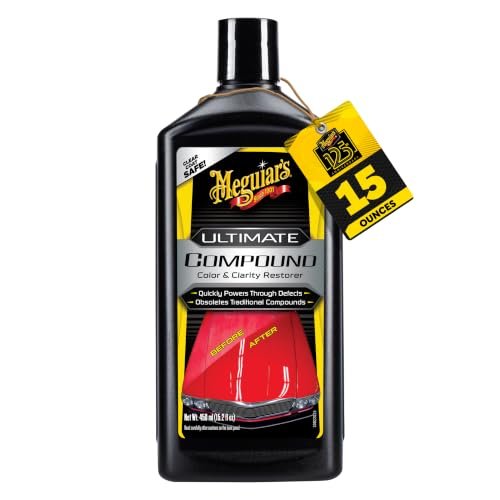
Polishing compound uses abrasives to physically level clear coat, removing scratches and heavy oxidation. Polishing wax cleans lightly while depositing oils and wax to protect the paint and boost gloss. Reach for a compound to fix deep paint defects, and choose a polishing wax for routine maintenance and protection.
Over the past decade of detailing cars in my garage, I have reached for both bottles hundreds of times. Knowing when to grab an aggressive cutting liquid versus an all-in-one protective wax can save hours of wasted elbow grease. Here is what my hands-on testing reveals about how each product behaves on tired paint.
Polishing Compound vs Wax: At a Glance
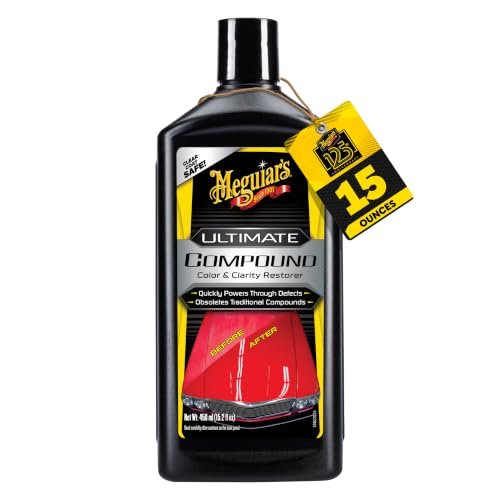
Polishing Compound
|
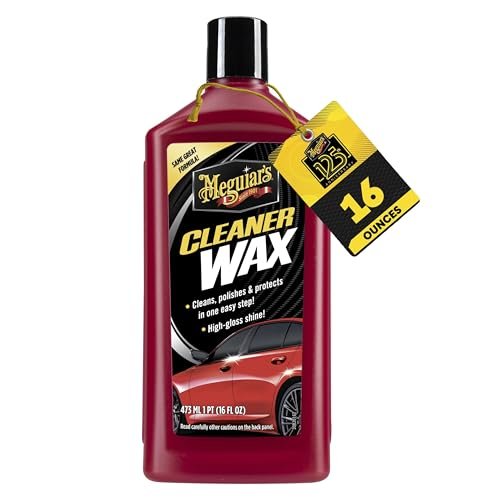
Polishing Wax
|
|
|---|---|---|
| Primary Purpose | Corrects clear coat defects such as scratches, swirls, and heavy oxidation. | Enhances gloss and applies a temporary protective layer over paint. |
| Abrasiveness & Cutting Power | Contains moderate to aggressive micro-abrasives designed to level the clear coat. | Contains minimal or chemical cleaners with negligible cutting ability. |
| Defect Removal vs. Masking | Permanently removes moderate surface defects by cutting down surrounding clear coat. | Masks and fills microscopic swirl marks rather than removing paint defects. |
| Surface Protection | Offers zero protection; leaves bare paint that requires immediate sealing. | Leaves a sacrificial barrier of carnauba or synthetic polymers. |
| Final Finish Quality | Restores paint clarity, but often requires finishing polish to remove haze. | Delivers an immediate high-gloss shine with slick, water-beading properties. |
| Application Frequency | Used rarely or as needed to avoid unnecessary clear coat thinning. | Applied routinely every few months to maintain paint protection and shine. |
| Ease of Use | Requires technique and ideally a dual-action polisher for best results. | Forgiving and easy to apply or buff off by hand. |
Complete Comparison: Polishing Compound vs Wax
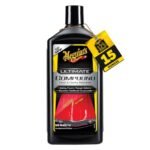
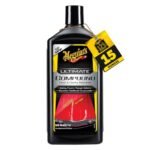
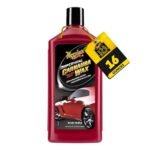
| Meguiar’s Ultimate Compound, Pro-Grade Car Scratch | Meguiar’s Cleaner Wax, 16 Oz | | |
|---|---|---|
| Product Image | |
|
| Price | View On Amazon | View On Amazon |
| Category | Mid-Range Paint Correction Compound | Budget All-In-One Cleaner Wax |
| Primary Function | Heavy paint correction, scratch, swirl, and oxidation removal | One-step cleaning, conditioning polish, and wax protection |
| Abrasive Technology | Micro-abrasive technology cuts fast without hazing | Mild surface cleaners without heavy defect-leveling abrasives |
| Protective Finish | None (leaves bare, corrected paint requiring wax/sealant) | Rich conditioning oils and protective wax layer |
| Volume | 15.2 oz | 16 oz |
| Application Versatility | Clear coat safe; applied by hand or DA polisher | Safe on all glossy paints; applied by hand or DA polisher |
| Best For | True paint defect leveling, oxidation removal, and scratch repair | Fast one-step maintenance, light blemish removal, and added gloss |
| Amazon Link | View On Amazon | View On Amazon |
| Overall Winner | Winner | Runner-up |
Meguiar’s Ultimate Compound Review
When a vehicle rolls into my bay with neglected clear coat, Meguiar’s Ultimate Compound is usually my first test spot solution. This formula relies on micro-abrasive technology that cuts into swirls and oxidation quickly without scouring the surface. In my testing, it acts as a true paint correction compound, leveling out moderate scratches instead of simply masking them with fillers. The formula stays wet long enough for multiple passes, making it forgiving for beginners working by hand or with a dual-action polisher. It delivers a clear coat safe cut that restores clarity to faded panels in minutes. You get a crisp, defect-free base that prepares the paint for sealants.
Key Features
- Micro-abrasive technology cuts defects quickly without scouring clear coat
- True paint correction capability for scratches, swirls, water spots, and oxidation
- Clear coat safe formulation suitable for both clear coats and single-stage paint
- Works effectively with hand application or a dual-action buffer
Pros
- Eliminates genuine paint defects rather than hiding them
- Leaves surprisingly little haze for a heavy-cutting compound
- Long working cycle with minimal dusting
Cons
- Leaves no protective wax or sealant layer behind
- Requires a follow-up protection step to prevent future damage
Best for: Car owners dealing with noticeable scratch marks, stubborn swirl marks, oxidized paint, or etching who need genuine paint leveling.
Expert Opinion: Meguiar’s Ultimate Compound remains my benchmark for consumer-friendly defect removal because it cuts aggressively while finishing down cleaner than traditional gritty compounds.
Meguiar’s Cleaner Wax Review
Meguiar’s Cleaner Wax is the bottle I grab when a daily driver needs a fast refresh without a multi-stage detailing routine. As a true one-step liquid wax, it tackles mild surface contamination while laying down a layer of protection at the same time. During my tests, the rich conditioning oils filled minor wash marring and enriched darker colors nicely. It spreads smoothly over single-stage paints and modern clear coats alike, wiping off with minimal pressure once dry. The chemical cleaners lift embedded road film that regular washing leaves behind. It delivers a high gloss shine in a single pass, saving significant time on weekend details.
Key Features
- One-step formula cleans paint, enhances depth, and deposits protective wax
- Conditioning oils restore gloss while masking very light imperfections
- Chemical cleaning agents safely pull grime from all glossy paint finishes
- Easy wipe-on, haze, and buff-off process by hand or dual-action machine
Pros
- Saves hours by combining cleaning and protection in one bottle
- Wipes off cleanly without stubborn residue
- Great value for regular seasonal paint upkeep
Cons
- Cannot remove moderate to deep scratches or severe oxidation
- Protection lasts only a few weeks compared to dedicated synthetic sealants
Best for: Drivers wanting a quick, affordable weekend detail that cleans, shines, and protects paint in one easy step.
Expert Opinion: This is the quintessential maintenance product for daily drivers, giving you clean paint and a slick gloss without demanding hours of corrective buffing.
Polishing Compound vs Wax: Key Differences That Matter
Performance Comparison
Understanding how these products interact with clear coat clarifies their real-world performance. A polishing compound acts like ultra-fine liquid sandpaper. When I work Ultimate Compound into a scratched door panel, the abrasives physically shave down microscopic high spots around the scratch until the surface reflects light evenly again.
Cleaner wax takes a completely different mechanical path. Its chemical cleaners dissolve light oxidation and grime, while natural waxes fill microscopic valleys to create an illusion of perfection. When I run a cleaner wax over moderate swirl marks, the swirls seem to vanish initially. Give it two months of rain and car washes, and those defects reappear as the wax washes away. Compound provides permanent defect removal. Wax provides temporary visual enhancement alongside surface protection.
Price and Value Analysis
Both Meguiar’s products sit at budget-friendly price points, but their long-term value depends on your workflow. A sixteen-ounce bottle of Ultimate Compound stretches across several full-vehicle corrections because you only need small pea-sized drops per panel. Because compounding permanently corrects the surface, you might only need it once every couple of years on a well-maintained car.
Cleaner wax burns through product faster because you cover the entire vehicle every few months to maintain UV protection. The value of a polishing wax comes down to labor savings. You avoid buying separate polishes, glazes, and sealants, getting three jobs done in a single hour of work.
Formulation and Abrasive Makeup
Looking under the hood of both liquids reveals distinct chemical engineering. Ultimate Compound uses engineered micro-abrasives suspended in lubricating oils. These tiny abrasive particles remain uniform in size, breaking down gradually under pad pressure to cut deep blemishes without gouging deep ruts into the clear coat.
Cleaner wax relies heavily on light chemical solvents, mild cleansing agents, conditioning oils, and carnauba wax. Abrasives here are microscopic to non-existent. The goal is removing oxidized pigment and surface road film without removing measurable clear coat thickness. That makes cleaner wax exceptionally safe for thin or vintage factory finishes.
User Experience Differences
Working with each bottle creates a distinct detailing experience. Ultimate Compound requires focused technique. You need firm pad pressure, overlapping passes, and a clean microfiber towel to wipe away residue after each section. If you let compound dry completely on the panel, buffing it off takes considerable effort.
Cleaner wax is forgiving and relaxed. You apply thin coats across entire body panels, let the product dry to a light haze, and wipe it away effortlessly. There is zero fear of burning through sharp edges or taking off too much clear coat. Anyone with an hour of free time on a Saturday can produce a slick, mirror-like finish with it.
Which Should You Choose?
Your vehicle's current paint condition and your available time should dictate your decision.
| Choose Meguiar's Ultimate Compound if… | Choose Meguiar's Cleaner Wax if… |
|---|---|
| Your paint shows heavy swirl marks from automatic car washes | Your car has good paint with only light grime |
| You need to remove clear coat scratches or oxidation | You want to finish detailing in under an hour |
| You plan to apply a ceramic coating or sealant after | You need paint protection alongside light cleaning |
| You are doing a multi-step paint correction process | You prefer a simple one-bottle maintenance routine |
Frequently Asked Questions
Q: In the matchup of Polishing Compound vs Wax, which one removes scratches better?
A: Polishing compound removes scratches far better because it contains micro-abrasives designed to physically level the clear coat around the scratch. Polishing wax only fills shallow imperfections with oils, meaning the scratches will return once the wax layer degrades.
Q: Can I use both products on the same vehicle?
A: Yes, using them in sequence is an effective way to detail tired paint. Always apply the polishing compound first to cut away oxidation and scratches, wipe the residue completely clean, and then apply the polishing wax to protect the freshly leveled finish.
Q: Does polishing compound protect my car’s paint from weather and UV rays?
A: No, polishing compound offers zero protection. It is strictly an abrasive corrective product that leaves the paint completely bare, so you must always apply a wax, sealant, or ceramic coating immediately afterward.
Q: Looking at Polishing Compound vs Wax, which one is safer for a complete beginner?
A: Polishing wax is much safer for beginners because it contains little to no abrasives, eliminating the risk of cutting too deep into your clear coat. Polishing compound requires moderate care around body lines and sharp edges to avoid thinning the paint excessively.
Q: How often should I use a polishing compound on my vehicle?
A: Use compound sparingly, generally once every one to two years at most. Because it physically removes a microscopic layer of clear coat each time, frequent compounding can eventually compromise your paint thickness.
Q: Will cleaner wax remove water spot etching?
A: Cleaner wax can remove fresh mineral deposits sitting on top of the clear coat, but it cannot fix deep water spots etched into the paint. For etched spots, you need the cutting strength of a polishing compound to level the surface.
Q: Can I apply these products with my bare hands and a microfiber cloth?
A: You should use a foam or microfiber applicator pad rather than a loose cloth for both products. A pad distributes pressure evenly across the panel, preventing finger marks and allowing compounds to cut consistently.
When you purchase a product through Amazon links on carsolutionpro.com, we may earn a small commission at no extra cost to you. This helps support the site and keep our content free. As an Amazon Associate, we earn from qualifying purchases made through our links.