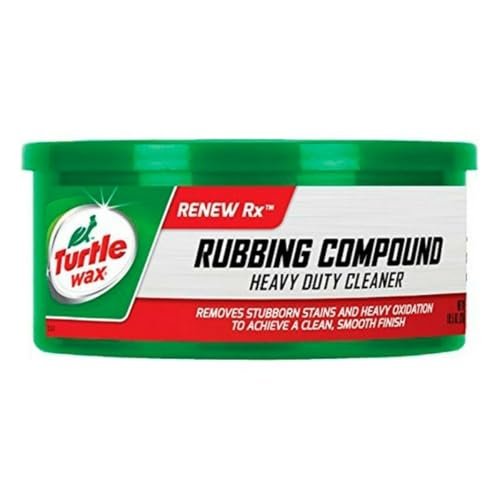
Rubbing compound uses coarse abrasives to level deep scratches, severe oxidation, and heavy defects, while polish relies on finer particles to refine the surface and restore mirror gloss. Choose rubbing compound for severe paint damage on neglected vehicles, and choose rubbing polish to remove light swirls, clear up haze, or finish after compounding.
Over years of detailing tired, neglected daily drivers in my garage, I have tested dozens of abrasive formulas to see how they behave on real clear coats. Putting a traditional heavy-duty compound up against a modern hybrid polish reveals distinct differences in cutting speed, surface finish, and cleanup time. This guide breaks down how both products perform so you can choose the right abrasive system for your paint.
Rubbing Compound vs Polish: At a Glance
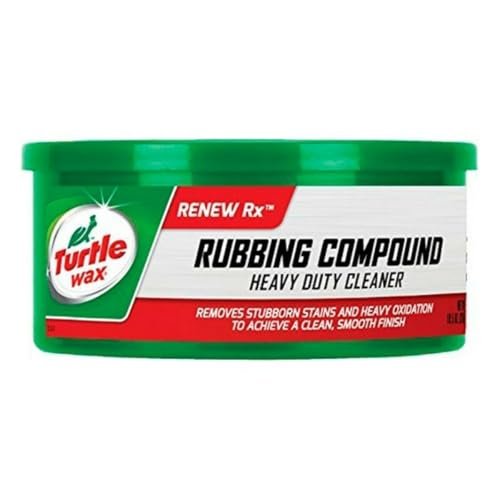
Rubbing Compound
|
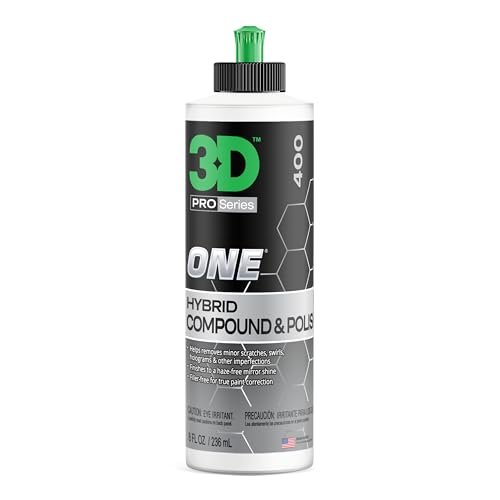
Rubbing Polish
|
|
|---|---|---|
| Abrasiveness & Cut | Coarse, aggressive abrasives designed for fast, heavy defect leveling. | Fine to medium abrasives engineered for gentle, precision refining. |
| Primary Purpose | Eliminates deep scratches, severe oxidation, and heavy water etching. | Removes light swirl marks, minor hazing, and restores high gloss. |
| Surface Finish Produced | Often leaves micro-marring or cloudiness that requires subsequent polishing. | Leaves a smooth, mirror-like reflection ready for wax or sealant. |
| Clear Coat Removal Rate | Removes a noticeable amount of clear coat; requires careful handling. | Removes minimal clear coat, preserving overall paint thickness. |
| Detailing Stage | Used as the initial cutting step in multi-stage paint correction. | Used as the final refinement step or for light single-stage detailing. |
| User Error Risk | Higher risk of burning through thin paint or causing swirl marks. | Very forgiving, making it safe for beginners and delicate finishes. |
| Dusting & Working Time | Shorter working cycle that typically generates more abrasive dust. | Longer working cycle with lubricating oils and minimal dusting. |
Complete Comparison: Rubbing Compound vs Polish
| Turtle Wax T230A 10.5 Oz Rubbing | 3D One Car Scratch & Swirl | |
|---|---|---|
| Product Image | |
|
| Price | View On Amazon | View On Amazon |
| Category | Budget | Premium |
| Formula Type | Heavy-duty abrasive rubbing compound | Hybrid cutting compound & finishing polish (1-step) |
| Dusting & Residue | Standard abrasive residue | Zero-dust formula for clean finishing |
| Correction System | Multi-step system (requires separate finishing polish) | One-step true paint correction (cuts and polishes) |
| Application Versatility | Hand or machine buffer (clear coats, single-stage, lacquers) | Hand or DA polisher (all vehicle finishes & paint colors) |
| Volume | 10.5 oz | 8 oz |
| Manufacturing Origin | Imported / Standard production | Made in USA (25+ years detailing heritage) |
| Best For | Severely chalky paint, heavy oxidation, and budget spot repair | Effortless swirl removal, true paint correction, and mirror-gloss finishing |
| Amazon Link | View On Amazon | View On Amazon |
| Overall Winner | Runner-up | Winner |
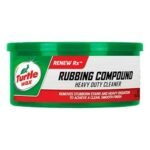
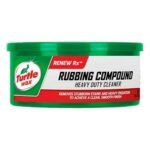
Turtle Wax T230A Rubbing Compound
I reach for this classic paste tub whenever severe weathering requires an aggressive, gritty bite. The advanced formula contains coarse abrasives engineered to grind down dead clear coats, deep scratches, and neglected single-stage finishes. Thanks to its heavy-duty cleaning power, stubborn industrial fallout, road grime, and heavy oxidation scrub away fast. It delivers professional-grade results on severely chalky paint, restoring flat surfaces back to a uniform base. Its versatile application allows you to work by hand with a terry towel or by rotary buffer across clear coats and lacquers alike. The easy to use tub design keeps application straightforward, giving car owners an accessible way to attack heavy paint defects.
- Advanced formula grinds down severe scratches, oxidation, and stubborn surface blemishes
- Heavy-duty cleaning power strips away embedded road grime, chalky residue, and paint transfer
- Versatile application spreads smoothly on clear coats, lacquers, and enamel paints
-
Easy to use paste consistency offers controlled spot correction without liquid run-off
-
Exceptional cutting power on severely weathered and oxidized vehicles
- Extremely low price point compared to modern liquid correction bottles
-
Paste formulation clings well to vertical fenders and doors without dripping
-
Leaves noticeable micro-marring and dull haze that demands a secondary polish
- Tends to dust heavily and dry out if worked under warm ambient temperatures
- Tougher to wipe clean from dry paint compared to modern lubricating liquids
Best for: Car owners dealing with heavily oxidized, neglected finishes who need an aggressive, budget-friendly cutting compound to level severe defects before final finishing.
Expert Opinion: Turtle Wax T230A remains a classic heavy-grit abrasive that excels at raw defect leveling, but treat it strictly as an initial correction step. Plan on following up with a dedicated finishing polish to restore gloss and eliminate leftover haze.
3D One Car Scratch & Swirl Remover
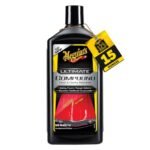
When I want fast paint correction without juggling multiple bottles, 3D One is the product I load onto my machine. Its All You Need Is One hybrid formula bridges the gap between heavy compounding and fine finishing in a single liquid. You get true paint correction that wipes away swirl marks while revealing optical clarity and rich gloss on dark paint. Machine work feels effortless because the versatile application adapts instantly whether paired with a cutting microfiber pad or a soft finishing foam. Built with pro grade quality in the USA, the chemical makeup produces virtually zero dust inside an enclosed garage. Because the bottle offers no gimmicks just results, you skip the secondary refining step on light to moderate paint defects.
- All You Need Is One hybrid blend cuts like a compound and refines like a fine finishing polish
- True paint correction removes deep swirls without leaving behind milky residue or fillers
- Versatile application alters its cutting performance based on your choice of pad and tool
- Pro grade quality ensures low-dust operation and an exceptionally long working cycle
-
No gimmicks just results fluid design reduces correction time by consolidating two steps into one
-
Finishes out to a brilliant, mirror-like gloss with almost no rotary micro-marring
- Clean working environment with virtually zero dusting on panel seams
-
Extremely easy towel wipe-off without grabby friction or oily smear
-
Higher initial price per ounce than standard store-bought paste compounds
- Requires an aggressive microfiber cutting pad to level severe sandpaper-grade scratches
Best for: DIY detailers and professionals seeking a single, low-dust liquid capable of cutting swirls and finishing out to a high-gloss reflection on all paint types.
Expert Opinion: 3D One stands out because its abrasive behavior adjusts according to your pad selection. Pairing it with a dual-action polisher gives you fast cutting power alongside clean, haze-free depth in a fraction of the time.
Rubbing Compound vs Polish: Key Differences That Matter
Performance Comparison
Abrasive particle size dictates how quickly each product changes the paint profile. Turtle Wax Rubbing Compound uses large, aggressive mineral abrasives designed to shave down clear coat quickly. It tears through chalky oxidation, graffiti, and curb scrapes, but it leaves behind dull micro-marring.
3D One uses diminishing abrasive technology that starts with moderate bite and breaks down into fine polishing particles under mechanical friction. You get substantial swirl removal initially, followed by high clarity as the liquid works down. For heavy sanding marks, Turtle Wax levels the peak faster. For high-gloss depth and swirl-free reflections, 3D One outperforms traditional paste compounds significantly.
Price and Value Analysis
Price reflects a fundamental difference in formulation technology. Turtle Wax T230A sits at the entry-level budget tier, costing just a few dollars for a 10.5-ounce tub. If you have an old work truck or a single project panel to clean up, it provides incredible surface leveling for pennies.
3D One commands a higher price point per bottle. In return, you eliminate the expense and labor of buying separate compounding and polishing liquids. You also save substantial shop time by cutting and finishing in a single pass. For regular maintenance detailing, the efficiency of 3D One justifies its cost.
Build Quality and Chemical Composition
Paste compounds like Turtle Wax rely on traditional carrier solvents mixed with heavy mineral abrasive grits. This formulation creates a thick, pasty paste that bites hard immediately. The trade-off is rapid drying and chalky residue that requires careful cleanup around trim edges.
3D One features an advanced, water-based emulsion packed with precision aluminum oxide particles. It stays wet on the panel for minutes without gumming up your buffing pads. The liquid wipes off cleanly with zero white staining on exterior rubber moldings or unpainted plastics.
User Experience Differences
Working with Turtle Wax compound takes physical effort. Rubbing it by hand demands firm, circular pressure, and buffing off the dried residue requires a clean, stiff towel. It works best for small spot repairs where you need localized grit.
3D One provides a modern detailing experience. The liquid flows smoothly, lubricates the buffer pad across body lines, and generates zero airborne dust. Towel removal requires very light pressure, which protects sensitive clear coats from accidental wiping scratches.
Which Should You Choose?
Your vehicle clear coat condition and desired finish quality dictate the right bottle for your garage.
| Choose Turtle Wax Rubbing Compound if… | Choose 3D One Hybrid Polish if… |
|---|---|
| Fixing severe chalky oxidation on neglected vehicle paint | Correcting spiderweb swirls and moderate scratches in one pass |
| Working on a strict budget for spot repairs | Polishing soft or dark paint without causing micro haze |
| Removing paint transfer or heavy scrapes from contact | Working with dual action polishers inside an enclosed garage |
| Prepping old single stage paint before wet sanding | Detailing without messy dust residue on plastic trim |
Frequently Asked Questions
Q: In the debate of Rubbing Compound vs Polish, which should I apply first?
A: Always apply rubbing compound first if your paint has deep scratches or heavy oxidation. Rubbing compound cuts the clear coat down to eliminate defects, while polish follows as the second step to refine the surface, clear up compounding haze, and restore high-gloss reflections.
Q: Can you explain the abrasive differences between Rubbing Compound vs Polish?
A: Rubbing compound contains coarse, aggressive particles that act like ultra-fine liquid sandpaper to flatten deep imperfections. Polish uses substantially smaller, finer abrasives designed to smooth microscopic scratches and maximize light reflection on the surface.
Q: Can rubbing compound damage my car clear coat?
A: Yes, rubbing compound can cut through clear coat if you apply too much pressure or run a rotary machine on high speed over body edges. Keep the buffing pad moving flat across the panel and check your paint thickness frequently.
Q: Does polish remove scratches or just hide them?
A: A true polish like 3D One mechanically removes light scratches and swirl marks by leveling the clear coat around them. Glazes hide scratches with temporary fillers, but dedicated polishes contain abrasives that permanently eliminate fine imperfections.
Q: Can I apply both products by hand instead of using a machine buffer?
A: Both formulas work by hand, but your arm will tire quickly on full panels. Turtle Wax compound cuts well by hand on small spot repairs with a microfiber pad. Modern polishes like 3D One yield significantly deeper gloss when paired with a random orbital machine.
Q: Should I apply wax directly after using a rubbing compound?
A: Skipping straight to wax after compounding is not recommended. Rubbing compound leaves behind tiny micro-marring and a dull finish. Running a fine polish over the panel first restores the optical clarity needed before sealing the paint with wax or ceramic coating.
When you purchase a product through Amazon links on carsolutionpro.com, we may earn a small commission at no extra cost to you. This helps support the site and keep our content free. As an Amazon Associate, we earn from qualifying purchases made through our links.