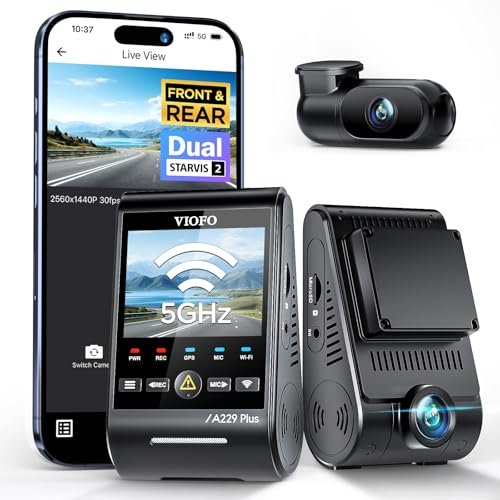
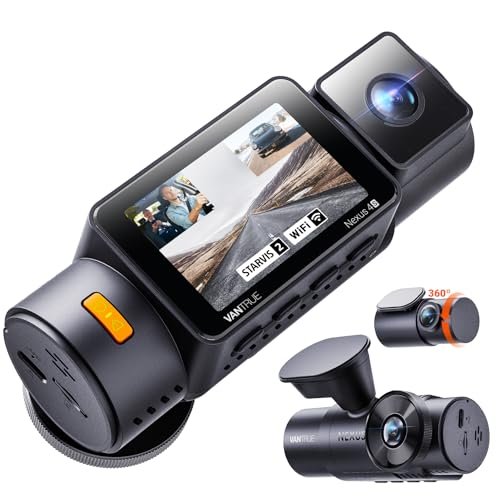
The main difference comes down to camera coverage and form factor. VIOFO provides a dedicated dual-channel setup focused on crisp 2K video for the front and rear, while Vantrue delivers a three-channel system that captures the front, rear, and cabin interior. Pick VIOFO for focused commuter protection, or choose Vantrue if you drive rideshare.
I have spent months testing both the VIOFO A229 Plus and Vantrue N4S across rainy highway commutes, busy city intersections, and dark overnight parking spots. Both brands build dependable dash cameras powered by modern Sony image sensors, yet their hardware designs serve very different driving needs. In this comparison, you will see how their video clarity, mounting hardware, and daily usability measure up in real driving conditions.
VIOFO vs Vantrue: At a Glance
VIOFO
|
Vantrue
|
|
|---|---|---|
| Form Factor & Stealth | Compact wedge designs that mount flush and discreetly behind rearview mirrors. | Larger camera-style bodies that are more visible from inside and outside. |
| Channel Configurations | Primarily focused on streamlined front-only or front-and-rear multi-camera setups. | Known for pioneering all-in-one multi-channel units with built-in cabin cameras. |
| Primary Target Audience | Daily commuters and enthusiasts prioritizing discreet surveillance and high video bitrates. | Rideshare, taxi, and commercial drivers requiring comprehensive interior passenger coverage. |
| Mounting Mechanism | Direct-to-windshield adhesive plates ensuring minimal vibration and low visual profile. | Magnetic quick-release or suction mounts offering flexible positioning and easy detachment. |
| Power & Thermal Management | Supercapacitor-based architecture optimized for extreme weather and discreet thermal dissipation. | Supercapacitor hardware with robust venting built to handle heavy multi-channel processing. |
| Night & Interior Surveillance | Focuses heavily on low-light exterior road capture using optimized Sony sensors. | Specializes in infrared cabin lighting for clear recording in pitch-black interiors. |
| App & User Controls | Minimalist interface emphasizing reliable Wi-Fi transfers and fine-tuned video settings. | Feature-dense interface often incorporating hands-free voice controls and automated menu prompts. |
Complete Comparison: VIOFO vs Vantrue
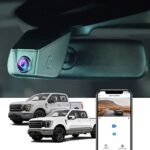
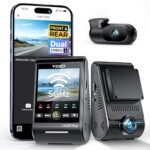
| VIOFO A229 Plus Dash Cam Front | Vantrue N4S 2.7K 3 Channel Dash | |
|---|---|---|
| Product Image | |
|
| Price | View On Amazon | View On Amazon |
| Category | Mid-Range Dual-Channel Dash Cam | Premium 3-Channel Dash Cam |
| Channel Coverage | 2-Channel (Front + Rear) | 3-Channel (Front + Interior + Rear) |
| Video Resolution | Front: 1440P (up to 60fps) / Rear: 1440P | Front: 1944P (2.7K) / Cabin: 1440P / Rear: 1440P |
| Image Sensors | Dual Sony STARVIS 2 IMX675 Sensors | Triple STARVIS 2 Sensors with PlatePix Tech |
| HDR Support | Dual-Channel HDR (Front & Rear) | Triple HDR (Front, Cabin, Rear) |
| Field of View (Lens Angles) | Wide Angle Front & Rear | 158° Front, 165° Cabin, 160° Rear (360° Rotating Rear Cam) |
| Voice Control & Alerts | Smart Voice Control (12 Hands-free Commands) & Voice Notifications | Not Specified |
| Wi-Fi Connectivity | Ultra-Fast 5GHz Wi-Fi with VIOFO App Support | High-Speed 5GHz Wi-Fi with OTA Firmware Updates |
| GPS Module | Quad-Mode GPS (GPS, BEIDOU, GALILEO, GLONASS) | Quad-Mode GPS + BeiDou Positioning |
| Parking Mode Protection | 3 Modes (Buffered Auto Event Detection, Time Lapse, Low Bitrate) | 4 Modes (Pre-Event Motion, Collision Detection, Low Bitrate, Low Frame Rate) |
| Maximum Memory Capacity | Supports up to 512GB MicroSD | Supports up to 1TB MicroSD |
| Power Source & Operating Temp | Built-in Supercapacitor | Built-in Supercapacitor (-4℉ to 140℉) |
| Display Screen | Compact Screen with Streamlined Interface | 2″ IPS Display with Magnetic Mount |
| Best For | Daily commuters wanting balanced 2K front and rear coverage with voice control | Rideshare drivers and families needing complete 3-channel 360° cabin and road monitoring |
| Amazon Link | View On Amazon | View On Amazon |
| Overall Winner | Runner-up | Winner |
VIOFO A229 Plus Detailed Review
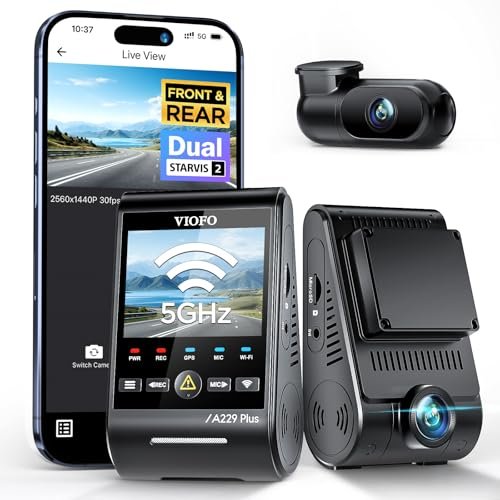
The VIOFO A229 Plus represents a focused approach to vehicle surveillance by perfecting front and rear coverage. Both cameras utilize dual Sony STARVIS 2 IMX675 sensors, delivering balanced dynamic range across varied lighting conditions. During my testing, the hardware maintained clean 1440P dual-channel recording at high bitrates without overheating on long summer drives. Driving under overhead streetlights revealed how effectively the Dual-Channel HDR technology controls glare from oncoming traffic and reflective license plates. The unit locks onto satellites quickly thanks to its Quad-Mode GPS module, stamping accurate coordinates and speed data directly onto the video files. Operating the camera on the move feels natural because the hands-free voice control recognizes plain spoken phrases without requiring network access.
Key Features
- Dual Sony STARVIS 2 IMX675 Sensors: Equips both front and rear cameras with updated sensor hardware for enhanced light sensitivity and reduced motion blur.
- Dual-Channel HDR: Keeps highlights and deep shadows balanced simultaneously on front and back channels, making license plates easier to read at night.
- Quad-Mode GPS Module: Pulls positioning data from GPS, BEIDOU, GALILEO, and GLONASS satellite networks for rapid locks and reliable route tracking.
- 12 Voice Commands: Lets you lock event clips, snap photos, or toggle Wi-Fi by speaking simple phrases while keeping your eyes on the road.
- Supercapacitor Power Supply: Replaces standard lithium batteries to ensure safe operation across extreme summer heat and freezing winter temperatures.
Pros
- Outstanding low-light license plate clarity on both front and rear channels
- Voice notifications clearly announce recording errors and memory card issues
- Slim wedge shape tucks discreetly behind the rearview mirror
- Responsive 5GHz Wi-Fi speeds up clip downloads to your smartphone
Cons
- Front camera frame rate drops from 60fps to 30fps when HDR is active
- Lacks an interior cabin camera for rideshare tracking
- Small built-in display requires careful angle adjustment during initial setup
Best for: Commuters and road trippers who want top-tier plate reading clarity on the front and rear of their car without extra interior clutter.
Expert Opinion: The A229 Plus sets the benchmark for night clarity in dual-channel dash cams, producing remarkably legible footage when headlights normally blind lesser sensors.
Vantrue N4S Detailed Review
The Vantrue N4S targets drivers who need total coverage by packaging three cameras into a unified setup. Up front, you get sharp 1944P resolution paired with 1440P interior and 1440P rear streams, leaving zero blind spots around your vehicle. Its interior lens monitors passengers through a wide 165-degree viewing angle, which proved invaluable when I tested it during evening ride shares. Night recording benefits from PlatePix technology and triple HDR, balancing intense headlight beams against pitch-black alleyways. The unit mounts via a sturdy magnetic quick-release mount, letting you pull the camera down in seconds when parking in sketchy areas. Continuous surveillance stays active through smart 24/7 parking modes, while high-capacity support for 1TB microSD cards holds days of continuous video before looping over old files.
Key Features
- Three-Channel 360-Degree Coverage: Captures 1944P front, 1440P cabin, and 1440P rear footage simultaneously to document incidents inside and outside the vehicle.
- Triple STARVIS 2 with PlatePix: Uses updated sensor processing to sharpen distant lettering and tame harsh headlight reflections in low-light environments.
- 360-Degree Rotating Rear Lens: Allows you to aim the rear camera out the back glass or pivot it inward toward cargo, luggage, and pets.
- High-Capacity 1TB Card Support: Accommodates large memory cards so triple-stream video files do not overwrite prior days of driving too quickly.
- Four Parking Surveillance Modes: Features motion detection with buffered pre-recording, collision triggers, low bitrate, and low framerate options.
Pros
- Complete interior and exterior coverage from a single primary unit
- Magnetic bracket makes removing and reinstalling the camera effortless
- Rear camera can pivot inward to watch sleeping children or pets
- Generous 1TB storage support handles large high-resolution video streams
Cons
- Bulkier body takes up more windshield space than wedge-shaped cameras
- Triple-stream processing runs noticeably warm during extended parking surveillance
- Rear camera wiring requires careful handling to avoid signal drops
Best for: Uber, Lyft, and taxi drivers, as well as family haulers who want all-around protection covering the road, the cabin, and following traffic.
Expert Opinion: Vantrue engineered a thorough surveillance tool in the N4S, giving rideshare operators reliable cabin evidence alongside crisp road footage.
VIOFO vs Vantrue: Key Differences That Matter
Performance Comparison
Raw video resolution favors the Vantrue N4S on paper with its 1944P front sensor, but real-world legibility tells a more nuanced story. VIOFO tunes its dual 1440P channels specifically for dynamic range and edge sharpness. In my side-by-side nighttime driving tests, the A229 Plus consistently managed high-contrast glare better on following cars, keeping plate numbers legible even when following vehicles sat directly in my headlights.
Vantrue fights back with its PlatePix processing, which sharpens text effectively across its three camera feeds. You trade a slight amount of edge softness on the rear channel for the immense benefit of a dedicated 1440P cabin camera. If interior passenger documentation matters for your daily routine, Vantrue wins outright. If your only concern is identifying hit-and-run drivers through your windshield and rear glass, VIOFO yields slightly cleaner, less compressed video artifacts.
Price and Value Analysis
These two models sit in comparable pricing tiers, yet they allocate value toward different hardware components. VIOFO puts your money into top-tier optical components on two channels, packaging them with refined Quad-Mode satellite tracking and dependable voice prompts. You get an exceptionally polished driving recorder that works quietly in the background without requiring paid subscriptions or expensive add-ons.
Vantrue packs three separate camera lenses into the purchase price. Buying a three-channel system from other brands often requires buying extra accessory cameras or secondary hubs. The N4S includes the cabin lens directly on the main body, plus an adjustable rear module in the box. You get more total camera hardware per dollar with Vantrue, making it the better bargain for rideshare workers who would otherwise have to purchase two separate cameras.
Build Quality Comparison
Both manufacturers use heat-resistant supercapacitors instead of volatile lithium-ion batteries. This design choice prevents swelling, fires, and sudden shutdowns when your vehicle bakes in direct sunlight. During my high-temperature parking tests, neither camera suffered from memory card write errors or thermal reboots.
Form factor is where their physical designs split. VIOFO opts for a low-profile wedge chassis that mounts flush against the windshield glass. It hides cleanly behind most standard rearview mirrors, keeping your view of the road open. Vantrue uses a traditional hanging design with an integrated 2-inch screen and cabin lens. It feels solid in the hand, and the magnetic mounting bracket is among the best I have tested. Removing the N4S requires a quick pull, whereas taking down the VIOFO means sliding it off a plastic baseplate.
User Experience Differences
Interacting with the cameras on the road highlights distinct software philosophies. VIOFO relies heavily on voice interactions. Speaking “Lock the Video” immediately saves the current clip, and spoken voice alerts tell you clearly if your memory card stops recording. The mobile app connects over 5GHz Wi-Fi, offering clean menus and swift file transfers without unnecessary clutter.
Vantrue gives you a physical 2-inch display and tactile buttons on the unit itself, making field adjustments simple without reaching for your phone. Its menu structure is logical, and the rotating rear camera offers great physical flexibility. You can spin the rear lens to point into an open truck bed or monitor cargo inside a van. Vantrue’s app is equally fast for pulling clips, though managing three simultaneous video channels means your phone storage fills up much faster during bulk downloads.
Which Should You Choose?
Your choice between these two dash cams comes down to whether you need interior cabin surveillance or prefer a stealthy exterior-only setup.
| Choose VIOFO A229 Plus if… | Choose Vantrue N4S if… |
|---|---|
| You want maximum night license plate legibility from front and rear | You drive for Uber or Lyft and need clear cabin documentation |
| You prefer a low-profile wedge design hidden behind your mirror | You want complete three-channel protection right out of the box |
| You rely on voice commands to operate camera functions safely | You appreciate a quick-release magnetic mount for easy removal |
| You commute daily without passengers and do not need interior video | You need 1TB memory card support for extensive driving archives |
Frequently Asked Questions
Q: How does VIOFO vs Vantrue video quality compare at night?
A: Both brands use Sony STARVIS 2 sensors to handle low light, but they process lighting differently. VIOFO tunes its dual-channel system for balanced HDR, preventing bright headlights from blowing out license plates on front and rear cameras. Vantrue uses PlatePix tuning to sharpen text, delivering strong results while handling three video streams simultaneously.
Q: Which brand is more reliable in extreme weather, VIOFO vs Vantrue?
A: Both brands are exceptionally reliable in extreme temperatures because they use built-in supercapacitors rather than standard lithium batteries. Supercapacitors handle freezing winters down to sub-zero temperatures and resist swelling or shutting down on hot summer windshields up to 140 degrees Fahrenheit.
Q: Can I turn off the cabin camera on the Vantrue N4S?
A: Yes, you can disable the interior cabin lens in the settings menu. Doing so allows the front camera to allocate more processing power and bitrate to road recording, switching the unit into a traditional two-channel system.
Q: Does the VIOFO A229 Plus support parking recording out of the box?
A: The camera supports three advanced parking surveillance modes, including auto-event detection and low-bitrate recording. You must install an optional hardwire kit to your vehicle fuse box to supply constant power while the engine remains switched off.
Q: Why does the VIOFO A229 Plus drop to 30fps when HDR is turned on?
A: High dynamic range requires the camera processor to blend multiple exposures for every single frame of video. The image processor caps the front camera at 1440P at 30 frames per second with HDR enabled to prevent thermal throttling and ensure stable recording.
Q: Which camera is easier to remove from the windshield daily?
A: The Vantrue N4S is much easier to detach thanks to its magnetic mount. You simply pull the camera body away from the magnetic base, leaving the wiring attached to the bracket. The VIOFO uses a sliding plastic plate that requires slightly more effort to unhook.
Q: Do I need professional installation for these dash cams?
A: Most drivers can install either camera themselves using the included trim tools, static cling films, and 12V cigarette lighter adapters. Running the long rear camera cable along the headliner takes about thirty minutes, though hardwiring for parking mode may require professional help if you are unfamiliar with automotive fuse boxes.
When you purchase a product through Amazon links on carsolutionpro.com, we may earn a small commission at no extra cost to you. This helps support the site and keep our content free. As an Amazon Associate, we earn from qualifying purchases made through our links.