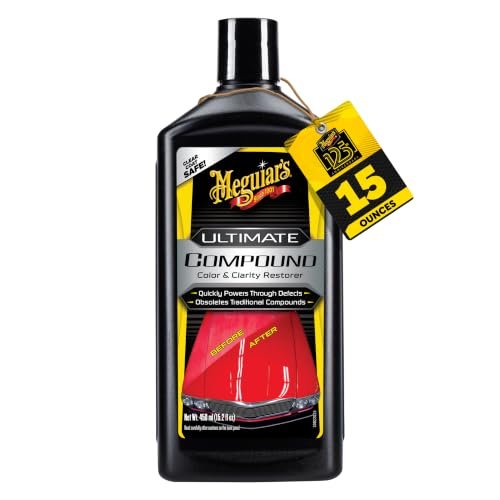
Compound uses heavier abrasives to level clear coat, eliminating deep scratches, heavy swirls, and stubborn oxidation. Polish contains finer abrasives and conditioning oils designed to refine compounding marks, remove minor hazing, and maximize gloss. Use compound first for noticeable paint defects, and follow with polish to restore a mirror-like shine.
I have spent years detailing neglected vehicles, and working out the boundary between aggressive cutting and fine finishing remains one of the most common detailing hurdles. In this comparison, I break down my hands-on testing with both formulas so you can choose the correct bottle for your paint condition. You will learn how their abrasives behave, how they handle on different pads, and when applying both creates the best finish.
Compound vs Polish: At a Glance
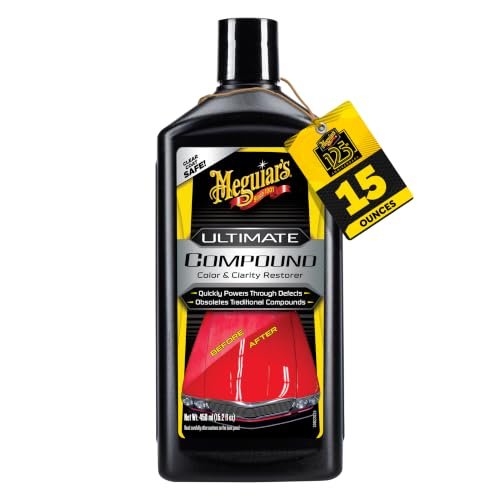
Compound
|
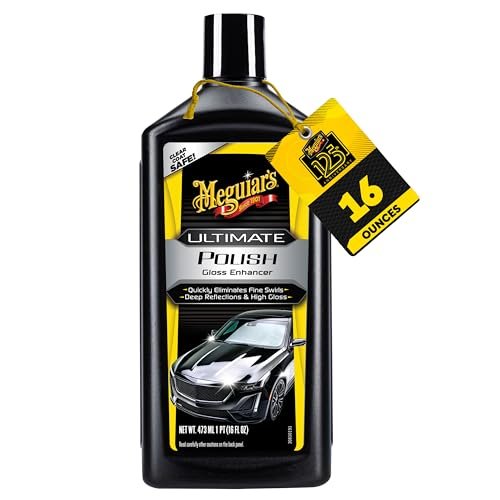
Polish
|
|
|---|---|---|
| Abrasive Aggressiveness | High cut; features coarse abrasives formulated for rapid paint leveling. | Fine cut; utilizes ultra-fine abrasives to refine rather than cut aggressively. |
| Primary Purpose | Removes deep scratches, heavy swirl marks, etching, and severe oxidation. | Eliminates minor swirls, removes compounding haze, and maximizes surface gloss. |
| Finish Quality | Levels defects but often leaves dullness or micro-marring requiring subsequent refinement. | Produces a high-gloss, mirror-like finish ready for sealant or wax. |
| Clear Coat Removal | Removes a noticeable amount of clear coat; use sparingly when necessary. | Removes minimal clear coat; safe for routine or semi-regular correction. |
| Recommended Pad Pairing | Pairs best with dense foam cutting pads, microfiber, or wool pads. | Pairs best with soft or medium foam finishing and polishing pads. |
| Process Sequence | First-stage correction step applied directly to heavily neglected or scratched paint. | Final polishing step used after compounding, or standalone on minor defects. |
| User Forgiveness | Lower margin for error; higher risk of strike-through on thin clear coats. | High margin for error; beginner-friendly with minimal risk of burning paint. |
Complete Comparison: Compound vs Polish
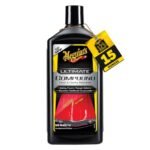
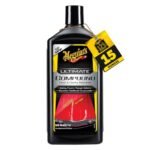
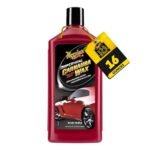
| Meguiar’s Ultimate Compound, Pro-Grade Car Scratch | Meguiar’s Ultimate Polish, High-Gloss Polish for | |
|---|---|---|
| Product Image | |
|
| Price | View On Amazon | View On Amazon |
| Category | Mid-Range Paint Correction | Mid-Range Finishing Polish |
| Volume | 15.2 oz | 16 oz |
| Primary Function | Fast-cutting defect and scratch removal | Pre-wax glaze and high-gloss enhancement |
| Defect Removal Capability | Cuts scratches, swirls, oxidation, and water spots | Gently eliminates fine swirls and towel marks |
| Formula Technology | Exclusive micro-abrasive leveling technology | Rich conditioning oils for deep wet reflections |
| Finish Quality | Restores color and clarity without hazing | Produces mirror-like reflections and maximum depth |
| Application Versatility | Safe by hand or Dual Action (DA) polisher | Safe by hand or Dual Action (DA) polisher |
| Paint Safety | Safe on clear coats and all glossy paints | Safe on clear coats and all glossy paints |
| Best For | Restoring faded paint, heavy swirls, and clear coat scratches | Pre-wax prep, show-car depth, and dark-colored vehicles |
| Amazon Link | View On Amazon | View On Amazon |
| Overall Winner | Winner | Runner-up |
Meguiar’s Ultimate Compound Review
I grabbed Meguiar’s Ultimate Compound to tackle severe clear coat neglect on a black hood that had sat under direct sun and tree sap for months. This formula relies on micro-abrasive technology to cut away clear coat imperfections quickly without creating severe micro-marring. In my garage testing, it leveled scratches, swirls, and oxidation that standard finishing liquids failed to touch. Working it over faded clear coat restored genuine color and clarity, eliminating cloudy patches across the test panels in three overlapping passes. Because it remains completely clear coat safe, you can address isolated fingernail scratches by hand or mount a foam cutting pad on a dual-action polisher for entire body panels. The lubrication package wipes off cleanly with a microfiber towel, avoiding the heavy caked-on dust common to traditional body-shop rubbing compounds.
Key Features
- Micro-abrasive technology cuts defects quickly while leaving a uniform finish
- Removes deep swirls, etching, water spots, and heavy oxidation
- Formulated to be clear coat safe on all glossy factory and aftermarket paints
- Works effectively via hand application or with dual-action polishers
- Restores paint color without leaving chalky white residue behind
Pros
- Aggressive defect removal without intense surface hazing
- Minimal dust generation compared to old-school rubbing compounds
- Wipes off cleanly with a standard plush microfiber towel
- Safe for hand use on tight spots around door handles and emblems
Cons
- Leaves minor micro-marring on ultra-soft clear coats
- Lacks conditioning oils needed for deep, mirror-like gloss
- Requires a finishing polish afterward on dark vehicles
Best For
Car owners dealing with faded clear coats, heavy wash swirls, bird-dropping etching, or visible surface scratches that need genuine leveling.
Expert Opinion: Meguiar’s Ultimate Compound strikes a rare balance by offering fast cutting action without destroying the finish. It reliably handles heavy clear coat damage, though soft dark paints will still need a follow-up step to look their absolute best.
Meguiar’s Ultimate Polish Review
After leveling out hard clear coat defects, I switch to Meguiar’s Ultimate Polish to clear up the residual surface haze. This formula functions as a dedicated pre-waxing glaze packed with rich conditioning oils that feed dark paints and generate optical depth. During my tests on dark blue panels, it smoothed out faint buffer trails and wash marks with very little pressure required. It is built to permanently remove light swirls rather than relying purely on fillers to mask imperfections. Because the chemistry is fully safe for clear coats, you can run several passes across thin factory paint without worrying about strike-through. Clean-up takes seconds, leaving behind an oil-rich reflection that preps the paint for a durable wax or synthetic sealant.
Key Features
- Rich conditioning oils maximize depth of color on dark and metallic paint
- Prepares the surface as a dedicated pre-wax glaze for long-lasting protection
- Permanently eliminates micro-marring, light swirls, and towel marks
- Safe for clear coats and all glossy paint types
- Highly flexible application by hand pad or dual-action machine
Pros
- Produces outstanding wet-look reflections and dark color depth
- Extremely long working time without drying out on the pad
- Zero risk of burning through thin clear coats
- Cleans up easily without grabbing or gumming up towels
Cons
- Lacks the cutting power to remove moderate or deep scratches
- High oil content can interfere with ceramic coating bonding if not stripped
- Pad saturation happens quickly if you apply too much product
Best For
Enthusiasts wanting to eliminate light wash hazing, restore rich color depth to dark paint, or prepare a clean surface right before applying wax.
Expert Opinion: Meguiar’s Ultimate Polish excels at maximizing optical clarity and gloss. It will not fix heavy scratches, but as a secondary refining step or a quick shine enhancer on well-kept paint, it performs exceptionally well.
Compound vs Polish: Key Differences That Matter
Understanding the dynamic between Compound vs Polish comes down to abrasive grade, chemical composition, and clear coat management. Both products refine paint, yet they target completely different stages of surface correction.
Performance and Defect Removal
The cutting ability between these two formulas represents their starkest contrast. Compound features hard micro-abrasives designed to act like liquid sandpaper. When you run compound across clear coat, it shaves down the microscopic peaks of the paint until they match the depth of the scratch valley. In my testing, Ultimate Compound easily knocked out 2000-grit sanding marks, etched bird droppings, and heavy spider-web swirls.
Polish contains much smaller, diminishing abrasives paired with lubricating oils. It does not possess the mechanical bite to remove deep gouges. Instead, it levels fine micro-scratches left behind by compounding passes or gentle wash mitt friction. Putting polish on deep oxidation yields disappointment, just as putting compound on clean paint creates unnecessary clear coat loss.
Formulation and Build Quality
The underlying chemistry separates these bottles beyond their abrasive grit. Ultimate Compound relies on a fast-cutting carrier designed to keep abrasive particles evenly dispersed across the contact pad. Its primary goal is friction and leveling, keeping residue light so you can inspect your defect correction between passes.
Ultimate Polish is formulated around gloss-enhancing glazing oils. These conditioning agents sink into microscopic surface pores, bending light to generate a deep reflection. You notice this difference immediately on black and deep red paint. Compound leaves the surface clean and flat, while polish creates that saturated look car enthusiasts call wet gloss.
User Experience and Working Cycle
Working with both liquids reveals practical differences in garage workflow. Compound has a shorter working cycle. It breaks down defects within three to four slow section passes, after which you must wipe it away before it dries out completely. While Ultimate Compound produces far less dust than older industrial compounds, it still leaves a powdery footprint along panel edges if worked too long.
Polish offers a much longer, slicker working cycle. The lubricating oils let the pad glide effortlessly over the panel without grabbing. Wiping away polish residue feels slick and smooth, though you must inspect the paint under an inspection light to ensure the oils are not simply filling defects you intended to remove.
Price and Value
Both products sit at an accessible price point under twenty dollars per bottle, making them affordable for DIY detailers. Value depends entirely on what your paint actually requires. Buying compound for a brand-new car that only has light towel marks wastes clear coat thickness. Conversely, attempting to fix a badly weathered vehicle using only polish wastes hours of machine time and half a bottle of product with negligible improvement.
Which Should You Choose?
Your vehicle's current paint condition and the severity of its clear coat defects should decide which product you use.
| Choose Ultimate Compound if… | Choose Ultimate Polish if… |
|---|---|
| Your paint looks dull, chalky, or oxidized from outdoor sun exposure | Your paint is in good condition with only light wash swirls |
| Visible scratches stay noticeable when viewing the car in direct sunlight | You want to maximize gloss and wet reflections on dark vehicles |
| You need to remove water spot etching or bird dropping marks | You need to clean up light haze left after an aggressive compound pass |
| You are starting a full two-step paint correction process on neglected paint | You are prepping clean paint for your favorite carnauba wax or sealant |
Frequently Asked Questions
Q: In the Compound vs Polish comparison, which step should I apply first?
A: Compound always goes on before polish. Compound does the heavy lifting by cutting away deep scratches, swirls, and oxidation, which can leave a faint haze on the clear coat. Polish comes second to refine that haze, smooth out the micro-finish, and bring out maximum gloss.
Q: What is the main difference between Compound vs Polish?
A: The main difference lies in abrasive aggressiveness and intended result. Compound uses coarser abrasives to level paint and eliminate noticeable defects, while polish uses ultra-fine abrasives and conditioning oils to refine the surface and maximize optical reflection.
Q: Can I use polish without using compound first?
A: Yes, you can use polish alone if your paint is already in decent shape. If your vehicle only suffers from faint wash swirls or looks slightly dull, skipping the compound step preserves your factory clear coat thickness while still delivering a deep, glossy finish.
Q: Do I need to wax my car after using Meguiar’s Ultimate Polish?
A: Yes, you should always apply a wax, synthetic sealant, or paint coating after polishing. Polish feeds conditioning oils to the paint and refines clarity, but it contains zero protective polymers to shield your clear coat from UV rays, road salt, or rain.
Q: Will Meguiar’s Ultimate Compound remove deep scratches down to the primer?
A: No, compound cannot fix scratches that have passed completely through the clear coat. A simple test is running your fingernail gently across the scratch; if your nail catches in the groove, the scratch is too deep for liquid compound and requires touch-up paint or wet sanding.
Q: Can I apply both products by hand instead of using a machine buffer?
A: Both formulas work by hand with foam or microfiber applicator pads. Hand application works well for isolated spots like door cups and mirror caps, but correcting an entire vehicle by hand requires considerable physical effort, making a dual-action polisher far more efficient.
Q: How often should I use compound on my vehicle?
A: Compounding should happen rarely, typically once every few years or only when severe defects appear. Because compounding actively shaves away clear coat, relying on regular wash maintenance and gentler polishing prevents premature thinning of your factory paint.
When you purchase a product through Amazon links on carsolutionpro.com, we may earn a small commission at no extra cost to you. This helps support the site and keep our content free. As an Amazon Associate, we earn from qualifying purchases made through our links.