The primary difference is write lifespan. SanDisk Max Endurance offers up to 120,000 recording hours and a 15-year warranty, while High Endurance provides up to 20,000 hours with standard coverage. Choose High Endurance for budget-friendly commuter dash cams, or buy Max Endurance for continuous 24/7 commercial security recording.
Over the past three years, I have tested both of these memory cards across multiple 4K dash cams and outdoor security camera setups. While they look nearly identical out of the packaging, their long-term reliability and write endurance diverge significantly in heavy-duty surveillance gear. Here is everything you need to understand before buying either card for your monitoring devices.
SanDisk High Endurance vs SanDisk Max Endurance: At a Glance
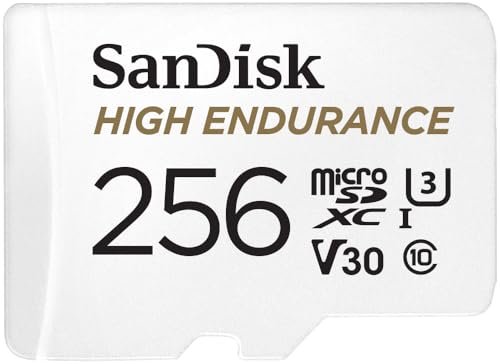
SanDisk High Endurance
|
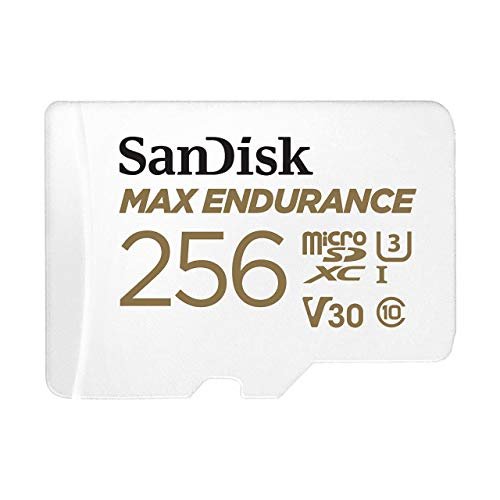
SanDisk Max Endurance
|
|
|---|---|---|
| Primary Application | Standard consumer dash cams and typical home security systems. | 24/7 commercial surveillance systems and heavy-use multi-channel vehicle cameras. |
| Recording Endurance | Moderate-to-high write lifespan suited for typical daily driving cycles. | Maximum-tier write endurance designed for nonstop, uninterrupted continuous overwriting. |
| Video Workload Capability | Optimized for Full HD and standard compressed 4K video feeds. | Engineered for high-bitrate continuous 4K UHD and multi-camera recordings. |
| Environmental Ruggedness | Resistant to common outdoor temperature swings, shock, water, and magnets. | Enhanced industrial-grade protection against extreme operating temperatures and severe conditions. |
| Warranty Coverage | Moderate multi-year endurance warranty suited for average surveillance lifespans. | Extended long-term manufacturer warranty matching its higher endurance rating. |
| Cost Profile | More affordable upfront cost per gigabyte for standard monitoring setups. | Premium pricing reflecting advanced flash endurance and heavy-duty reliability. |
| Target User | Everyday commuters and residential users needing basic, reliable video retention. | Fleet managers and professional security setups requiring mission-critical uptime. |
Complete Comparison: SanDisk High Endurance vs SanDisk Max Endurance
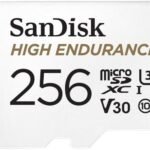
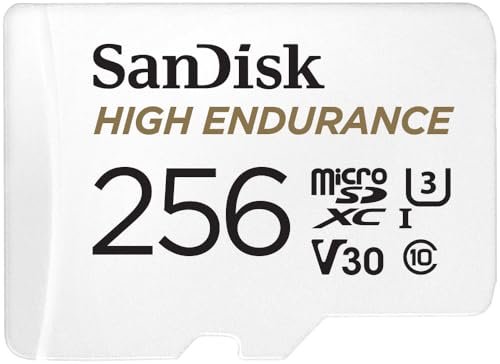
| SANDISK 256GB High Endurance microSD Card | SANDISK 256GB MAX Endurance microSDXC Card | |
|---|---|---|
| Product Image | |
|
| Price | View On Amazon | View On Amazon |
| Category | Mid-Range Surveillance Storage | Premium Heavy-Duty Surveillance Storage |
| Rated Write Endurance | Up to 20,000 hours | Up to 120,000 hours (over 13 years) |
| Speed Ratings | Class 10, U3, V30 (4K UHD support) | Class 10, U3, V30 (4K UHD support) |
| Durability & Protection | Temperature-proof, waterproof, shockproof, humidity-proof, magnet-proof | Temperature-proof, waterproof, shockproof, X-ray-proof |
| Manufacturer Warranty | Limited manufacturer warranty | 15-year limited manufacturer warranty |
| Storage Capacity | 256GB | 256GB |
| Best For | Standard commuter dash cams & casual home security cameras | 24/7 continuous surveillance & high-bitrate multi-channel dash cams |
| Amazon Link | View On Amazon | View On Amazon |
| Overall Winner | Runner-up | Winner |
SanDisk High Endurance 256GB Review
The SanDisk High Endurance microSD card serves as a dependable workhorse for standard surveillance needs. Built around a Class 10, U3, and V30 video speed rating, it handles continuous Full HD and compressed 4K UHD video streams without dropping frames. SanDisk rates this 256GB model for up to 20,000 hours of continuous recording, giving regular drivers years of typical dash cam usage. The card features harsh condition protection, resisting temperature swings, water, shock, and magnets. As an added bonus, it maintains compatibility with standard handheld devices like the original Nintendo Switch console, though it lacks official support for future revisions like Nintendo Switch 2.
Key Features
- 20,000 Hours Endurance: Engineered to record up to 20,000 hours of Full HD footage reliably.
- Speed Class Ratings: Equipped with Class 10, U3, and V30 ratings for consistent 4K UHD recording.
- Harsh Environment Resistance: Built temperature-proof, waterproof, shockproof, humidity-proof, and magnet-proof.
- 256GB Storage Capacity: Provides ample room for multiple days of looped commuter video footage.
- Console Compatibility: Functions smoothly with standard Nintendo Switch handheld consoles.
Pros
- Budget-friendly price point for everyday dash cam use
- Reliable continuous write speeds for 1080p and basic 4K video
- Includes standard full-size SD adapter in the package
- Strong resistance to seasonal temperature variations inside hot cars
Cons
- Lifespan is significantly shorter than the Max Endurance tier
- Warranty coverage is limited compared to professional-grade storage
- High bitrate 4K multi-channel dash cams can wear it down faster
Best For:
Daily commuter dash cams, single-car setups, and entry-level home security cameras recording motion events rather than 24/7 video.
Expert Opinion: The High Endurance card hits the sweet spot for everyday drivers who need a cheap, reliable storage solution that will outlast normal consumer cards without breaking the bank.
SanDisk Max Endurance 256GB Review
The SanDisk Max Endurance microSD card represents the top tier of consumer-accessible surveillance storage. Its standout specification is an astonishing 120,000 hours of continuous recording, which translates to over thirteen years of non-stop video capture. Backing up that extraordinary durability is a 15-year limited manufacturer warranty, demonstrating immense confidence from SanDisk. It carries Class 10, U3, and V30 ratings, allowing real-time writing of high-bitrate 4K UHD streams. Extreme environmental resilience comes standard, featuring temperature-proof, waterproof, shockproof, and X-ray-proof testing.
Key Features
- 120,000 Hours Lifespan: Delivers up to thirteen years of continuous Full HD recording capacity.
- 15-Year Manufacturer Warranty: Industry-leading warranty protection designed for long-term deployments.
- V30 and U3 Video Performance: Sustained 30MB/s write performance tailored for complex 4K capture.
- Rigorous Environmental Testing: Protected against water damage, extreme heat, freezing conditions, and X-rays.
- Wide Surveillance Utility: Built specifically for multi-channel home monitoring systems and rideshare dash cams.
Pros
- Six times the endurance rating of the High Endurance card
- Exceptional 15-year manufacturer warranty provides peace of mind
- Flawless stability under continuous 24/7 4K recording cycles
- Superior heat dissipation during blazing summer windshield exposure
Cons
- Higher upfront price tag per gigabyte
- Overkill for casual drivers who only commute thirty minutes a day
- Requires a compatible high-bitrate host device to fully appreciate the performance
Best For:
Rideshare drivers, fleet operators, 24/7 continuous recording outdoor security systems, and high-bitrate dual-channel 4K dash cams.
Expert Opinion: When continuous recording downtime is not an option, the Max Endurance provides absolute peace of mind through industry-leading write cycles and warranty protection.
SanDisk High Endurance vs SanDisk Max Endurance: Key Differences That Matter
Performance Comparison
Both cards share identical speed classifications: Class 10, UHS Speed Class 3 (U3), and Video Speed Class 30 (V30). In day-to-day writing tests, both cards easily sustain the 30MB/s required to capture smooth 4K UHD footage at 30 frames per second.
The real divergence lies in how long they can sustain that performance under extreme stress. During long stretches of continuous rewriting, the High Endurance card occasionally slows down slightly as blocks wear out over months of constant overwrites. In contrast, the Max Endurance card utilizes higher-grade NAND flash memory chips. This specialized silicon resists block degradation far longer, preventing frame drops in multi-lens dash cams that write separate front, interior, and rear video files simultaneously.
Price and Value Analysis
Looking strictly at upfront acquisition cost, the High Endurance card is visibly cheaper. It often costs 30 to 40 percent less than the Max Endurance version of the same capacity.
Evaluating the price per hour of recording reveals a completely inverted reality. The 256GB High Endurance yields 20,000 hours, whereas the Max Endurance gives you 120,000 hours. You get six times the operational lifespan for less than double the purchase price. Buyers running continuous security setups end up saving significant money over a five-year period by picking the Max Endurance once instead of replacing standard endurance cards every eighteen months.
Build Quality Comparison
Both memory cards share physical dimensions and withstand tough weather. SanDisk builds both cards to endure freezing winters and blistering dashboard temperatures in direct summer sunlight.
Their internal physical resilience differs in component selection. The Max Endurance card uses a denser protective coating against moisture intrusion and handles higher thermal thresholds before thermal throttling kicks in. You also receive an impressive 15-year warranty on the 256GB Max Endurance compared to the more conservative coverage provided on the standard High Endurance card.
User Experience Differences
Installing either card is straightforward using the included SD adapter. You plug the card into your camera, format it via the device interface, and forget about it.
Where I noticed a difference was in long-term reliability warnings. Dash cams regularly prompt memory card format errors when bad sectors multiply. My High Endurance cards usually start throwing format reminders around the 18-to-24-month mark in high-temperature environments. My Max Endurance cards have operated in continuous 24/7 outdoor security cameras through sub-zero winters and scorching summers without generating a single disk-check prompt.
Which Should You Choose?
Your specific camera hardware and daily operating hours determine which storage card makes financial sense.
| Choose SanDisk High Endurance if… | Choose SanDisk Max Endurance if… |
|---|---|
| You only drive one or two hours daily | You operate a commercial fleet or drive rideshare full-time |
| Your security camera records motion clips instead of 24/7 video | Your security camera records continuous 4K video around the clock |
| You want a dependable card on a strict budget | You want a 15-year warranty for zero maintenance worries |
| You plan to swap cards into a gaming console later | Your dash cam uses dual or triple 4K cameras simultaneously |
Frequently Asked Questions
Q: What is the main difference in SanDisk High Endurance vs SanDisk Max Endurance?
A: The biggest difference is recording lifespan. The 256GB High Endurance card provides up to 20,000 hours of Full HD recording, while the 256GB Max Endurance provides up to 120,000 hours. The Max Endurance also includes an extensive 15-year manufacturer warranty.
Q: Can I use both cards in a 4K dash cam?
A: Yes, both cards carry V30 and U3 speed ratings, making them capable of handling 4K UHD video streams. The Max Endurance card handles multi-channel 4K setups better over long periods due to its superior write endurance.
Q: In the SanDisk High Endurance vs SanDisk Max Endurance debate, which card handles summer heat better?
A: Both cards feature temperature resistance designed for vehicles. The Max Endurance handles thermal stress better over multiple years because its higher-grade NAND flash degrades much slower when subjected to extreme cabin heat.
Q: Why does SanDisk calculate endurance hours using Full HD instead of 4K?
A: Full HD video requires less write bandwidth than 4K footage. Recording exclusively in 4K UHD writes larger data files continuously, which lowers the total usable lifespan hours below the advertised Full HD numbers on both models.
Q: Will either of these cards work in home security cameras from brands like Wyze or Ring?
A: Yes, both models work in security cameras that accept standard microSDXC expansion cards. If your camera records continuously 24/7 to local storage, the Max Endurance is the safer choice.
Q: Can I format these cards on a Mac or Windows PC before installing them?
A: Yes, you can format them using standard exFAT file system tools on your computer. It is generally best practice to format the card directly inside your camera before starting your first recording session.
Q: Does the SanDisk High Endurance card work in gaming consoles?
A: Yes, the High Endurance card works reliably in the original Nintendo Switch console. It provides fast read speeds for games, although its write-heavy architecture is technically optimized for continuous video recording rather than game loading.
When you purchase a product through Amazon links on carsolutionpro.com, we may earn a small commission at no extra cost to you. This helps support the site and keep our content free. As an Amazon Associate, we earn from qualifying purchases made through our links.