Car polish corrects paint imperfections by gently leveling clear coat defects and removing light swirls, while car wax adds a protective sacrificial layer against UV rays and moisture. Use car polish when paint looks dull or scratched, and apply car wax afterward to protect the finish and seal in the shine.
Having detailed dozens of daily drivers and show cars over the years, I regularly see vehicle owners confuse these two essential detailing liquids. In this guide, I break down the exact real-world roles of car polish and car wax using two of Meguiar’s most popular formulas. You will learn how each product alters your paint and how to sequence them for a deep, long-lasting shine.
Car Wax vs Car Polish: At a Glance
Car Wax
|
Car Polish
|
|
|---|---|---|
| Primary Purpose | Protects paintwork and seals shine with a sacrificial barrier. | Levels clear coat to eliminate surface scratches and oxidation. |
| Abrasiveness | Non-abrasive formula that sits on top of the clear coat. | Contains fine abrasives that shave away microscopic paint layers. |
| Defect Removal | Temporarily fills or masks minor surface swirls and blemishes. | Permanently eliminates light scratches, oxidation, and swirl marks. |
| Environmental Protection | Provides vital defense against UV rays, water spots, and contaminants. | Offers no barrier protection against environmental elements or weathering. |
| Application Order | Applied as the final protective step after paint correction. | Applied before wax or sealant to prepare the paint surface. |
| Longevity of Results | Temporary protection lasting from several weeks to a few months. | Permanent surface correction until new physical scratches develop. |
| Frequency of Use | Safe for regular reapplication every one to three months. | Used sparingly as needed to avoid over-thinning clear coat. |
Complete Comparison: Car Wax vs Car Polish
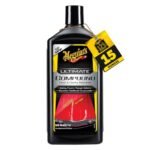
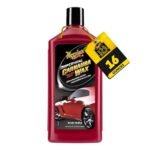
| Meguiar’s Deep Crystal Carnauba Wax, 16 | Meguiar’s Ultimate Polish, High-Gloss Polish for | |
|---|---|---|
| Product Image | |
|
| Price | View On Amazon | View On Amazon |
| Category | Mid-Range Protective Wax | Mid-Range Pre-Wax Polish |
| Primary Detailing Step | Post-polishing wax to seal and protect paint | Pre-waxing glaze to prep surface and enhance gloss |
| Defect & Swirl Removal | None (non-abrasive sealing wax) | Quickly removes fine swirls and towel marks |
| UV & Environmental Protection | Blocks UV rays to prevent sun damage and fading | No UV barrier (requires wax or sealant topper) |
| Gloss & Reflection Mechanism | Locks in shine with a brilliant carnauba coat | Conditioning oils produce deep, wet show car reflections |
| Application Versatility | Hand application (foam applicator or microfiber) | Hand or Dual Action (DA) machine polisher compatible |
| Paint Compatibility | Safe on clear coats and single-stage paints | Safe on all glossy paints, including clear coats |
| Best For | Locking in gloss and adding long-lasting UV barrier | Removing light paint defects and creating deep reflections |
| Amazon Link | View On Amazon | View On Amazon |
| Overall Winner | Runner-up | Winner |
Meguiar’s Deep Crystal Carnauba Wax Review
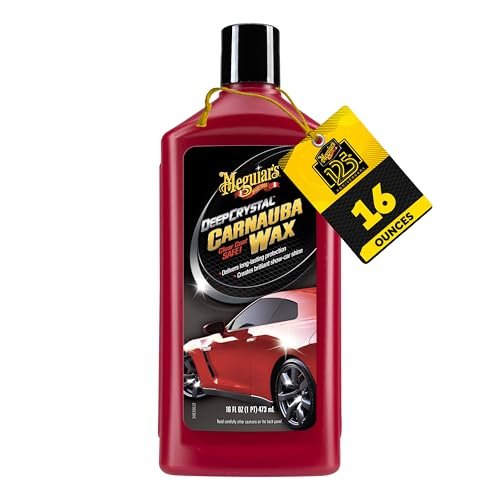
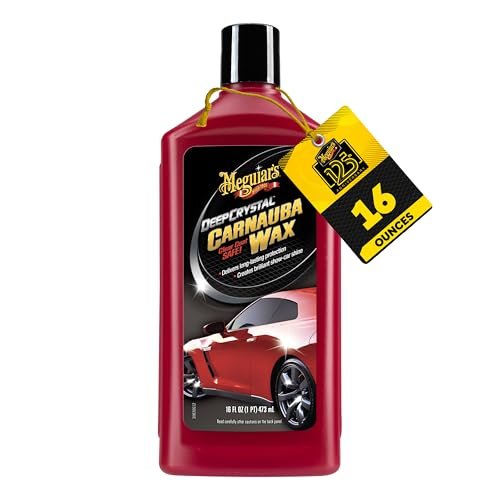
Meguiar’s Deep Crystal Carnauba Wax is formulated specifically to deliver long-lasting protection after your vehicle has been washed and prepped. In my shop, I reach for this traditional liquid carnauba wax when a vehicle needs a rich, wet look without abrasive action. The formula relies on high-grade carnauba to create a sacrificial barrier, giving your vehicle vital UV protection against sun fade and oxidation. It functions as the ultimate post-polishing step, locking in all the gloss achieved during earlier paint correction stages. Because the blend is non-abrasive, it remains completely safe for clear coats and single-stage paint finishes alike. Wiping away the hazed residue requires very little effort when applied in a thin, even coat.
Key Features
- Carnauba-based formula that locks in high gloss and creates a warm, wet reflection
- Durable UV blockers designed to defend clear coats against sun damage and fading
- Post-polishing step intended to preserve corrected paintwork without stripping previous layers
- Clear coat compatible blend that works safely across all glossy automotive finishes
- Versatile liquid consistency compatible with hand applicator pads and microfiber towels
Pros
- Imparts a warm, traditional carnauba glow on darker paints
- Buffs off smoothly with minimal friction once hazed
- Non-abrasive formula keeps your clear coat thickness intact
- Provides reliable water-beading performance
Cons
- Durability is shorter than modern synthetic ceramic coatings
- Does not remove or fill scratches, swirls, or oxidation
Best for: Car owners who want to seal clean, swirl-free paint with a warm carnauba shine while shielding their clear coat from outdoor elements.
Expert Opinion: This is a dependable, time-tested liquid carnauba topper that shields your clear coat effectively, provided you remember its job is solely to protect rather than correct existing paint defects.
Meguiar’s Ultimate Polish Review
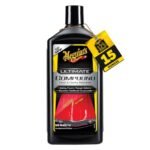
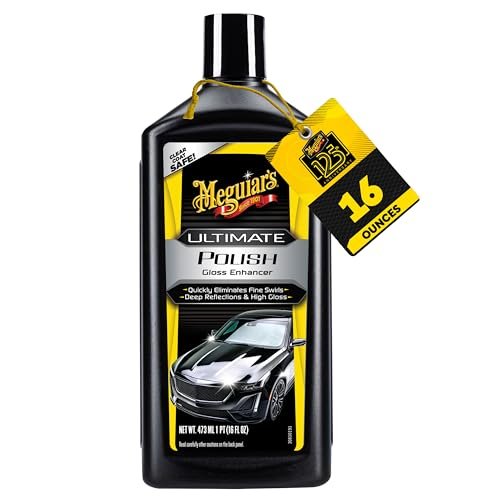
Meguiar’s Ultimate Polish serves as a dedicated pre-wax glaze designed to refine clear coats before you lay down protection. When working on black or dark blue vehicles, I rely on its rich conditioning oils to add depth of color and maximize surface clarity. The micro-abrasives within the liquid permanently remove light swirls, minor water spots, and towel marks instead of merely masking them. This formula acts as an essential surface prep step, evening out microscopic paint texture so reflections appear sharp and mirror-like. Its mild nature makes it entirely safe for clear coats, reducing the risk of burning through thin factory paint. You can apply it comfortably by hand or hook it up to a dual-action orbital machine for faster, more uniform coverage.
Key Features
- Rich conditioning oils that restore color depth, particularly on dark paint finishes
- Mild micro-abrasives that gently eliminate towel marks, haze, and light swirl patterns
- Pre-wax glaze action that levels microscopic clear coat imperfections for mirror-like reflections
- Clear coat safe formulation that preserves factory paint thickness during refinement
- Dual application capability allowing easy work by hand or dual-action orbital polishers
Pros
- Noticeably enhances paint depth and eliminates light micro-marring
- Leaves a slick, smooth surface that helps wax bond properly
- Cleans away light oxidation without aggressive cutting action
- Works effectively with both foam hand pads and DA machines
Cons
- Provides no environmental or UV protection on its own
- Cannot tackle moderate to heavy clear coat scratch damage
Best for: Detailers and DIYers dealing with dull paint, light wash scratches, or towel marks who want to maximize gloss before applying a protective wax.
Expert Opinion: Meguiar’s Ultimate Polish is an outstanding, user-friendly pre-wax treatment that brings remarkable optical clarity to dull paint without posing a risk to delicate clear coats.
Car Wax vs Car Polish: Key Differences That Matter
Performance Comparison
The core distinction lies in what each chemical does to your clear coat. Car polish is abrasive or chemically cleansing. It physically levels microscopic edges of scratches, removes embedded oxidation, and smooths the paint surface so incoming light reflects straight back to your eye. Meguiar’s Ultimate Polish uses conditioning oils and fine diminishing abrasives to achieve this reflective leveling.
Car wax, by contrast, is purely additive. Meguiar’s Deep Crystal Carnauba Wax deposits natural wax and silicones on top of the clear coat. It does not smooth down high spots or eliminate scratches. Instead, it coats the clear coat in a protective blanket that forces water to bead up and shields the pigment from environmental fallout. Polishing creates the reflection; wax shields the reflection from weather damage.
Price and Value Analysis
Both products are priced closely within the budget-friendly consumer detailing tier, typically costing under fifteen dollars per 16-ounce bottle. The value dynamic between them depends on your detailing goals. A single bottle of Meguiar’s Ultimate Polish goes a long way because you only need a few pea-sized drops per panel, and you will likely polish your car once or twice a year.
A bottle of Deep Crystal Carnauba Wax sees more frequent duty. Carnauba waxes degrade naturally within four to eight weeks under direct sun exposure and rain. You will consume wax faster through routine maintenance coats, yet it prevents clear coat failure, saving you thousands in body shop repaint fees over the life of your vehicle.
Build and Formulation Quality
Meguiar’s formulated these two products for distinct chemistry steps. Ultimate Polish contains refined lubricating oils and micro-fine abrasives suspended in a lotion-like carrier. The carrier prevents the pad from scouring the finish dry, allowing the abrasives to break down cleanly into an ultra-fine burnishing paste.
Deep Crystal Carnauba Wax relies on liquid carnauba extracts and protective polymers. It contains zero abrasives. The carrier solvent is formulated to evaporate quickly once spread thin, leaving behind a stable, uniform film of hardened wax that resists water rinse-off and repels road grime.
User Experience Differences
Working with each liquid requires a different physical technique. When using Ultimate Polish, you work the product directly into the paint in small two-foot by two-foot sections. You apply light to moderate pressure to let the abrasives clean the clear coat, buffing the residue off immediately with a microfiber towel before it dries completely.
Deep Crystal Carnauba Wax demands the opposite approach. You apply it with minimal pressure in a thin, continuous coat across an entire panel, or even the whole car. You must wait for it to dry to a light haze, which takes five to ten minutes, then glide a clean microfiber towel over the surface to buff it away. Waxing requires less muscle work, while polishing demands patience and consistent pad movement.
Which Should You Choose?
Your vehicle's current paint condition determines which detailing liquid you need to grab first.
| Choose Car Wax if… | Choose Car Polish if… |
|---|---|
| Your paint is already smooth, glossy, and free of visible swirl marks | Your clear coat shows light spiderweb swirls under direct sunlight |
| You need UV and moisture protection against harsh daily outdoor parking | The paint looks dull, oxidized, or lacks deep color richness |
| You want quick maintenance after a routine two-bucket hand wash | You want to prep the vehicle surface prior to applying a sealant |
| You have just polished your car and need to lock in the finish | You own a dark vehicle that needs higher optical clarity and gloss |
Frequently Asked Questions
Q: In the debate of Car Wax vs Car Polish, what is the main functional difference?
A: Car polish cleans, smooths, and levels the microscopic texture of your clear coat by removing fine scratches and oxidation. Car wax does not remove imperfections. Instead, car wax forms an invisible sacrificial coating over the paint to block UV rays, shed moisture, and keep the surface protected.
Q: Should I apply polish before or after wax?
A: You should always polish before applying wax. Polishing removes surface defects and smooths out the paint so the wax can bond directly to clean clear coat. If you put polish over wax, the abrasives in the polish will instantly scrub the protective wax layer away.
Q: When comparing Car Wax vs Car Polish, which one removes scratch marks?
A: Car polish removes scratch marks. Because polish contains fine abrasives, it gently removes a microscopic fraction of clear coat around the scratch to level the surface. Wax can sometimes temporarily fill very faint scratches with oils, but it cannot permanently remove them.
Q: Can I use car wax without polishing first?
A: Yes, you can apply car wax without polishing. If your paint is relatively new, smooth to the touch, and free of swirls or oxidation, a thorough hand wash followed directly by wax is fine for regular protection.
Q: How often should I polish my car compared to waxing it?
A: Most daily drivers only require polishing once or twice a year, as over-polishing can slowly thin out your factory clear coat. Carnauba car wax, on the other hand, should be reapplied every one to two months to ensure continuous protection against environmental damage.
Q: Does car polish protect my paint from sunlight and rain?
A: No, car polish does not provide protection. Once you buff away polish residue, the bare clear coat remains completely exposed to ultraviolet light, acid rain, and bird droppings. You must apply a coat of wax or synthetic sealant right after polishing to safeguard the paint.
Q: Can I mix car wax and car polish together to save detailing time?
A: Mixing individual bottles of wax and polish yourself is not recommended because the chemical carriers will clash. If you want a quick one-step process, purchase a dedicated all-in-one product formulated by chemists to clean and protect simultaneously.
When you purchase a product through Amazon links on carsolutionpro.com, we may earn a small commission at no extra cost to you. This helps support the site and keep our content free. As an Amazon Associate, we earn from qualifying purchases made through our links.