Car soap is chemically formulated with pH-balanced lubricants to lift road grime without stripping protective wax or drying clear coats. Dish soap contains harsh degreasers engineered to break down food oils, which will strip automotive sealant and degrade rubber trim. Use dedicated car soap for routine vehicle washing and save dish soap strictly for stripping old wax before paint correction.
I have washed vehicles with everything from specialized automotive shampoos to a quick squirt of kitchen liquid when supplies ran low on a Sunday afternoon. Testing both side by side on dirty panels revealed stark differences in slickness, water sheeting, and clear coat health. This guide breaks down the chemical differences, wash performance, and long-term impact on your vehicle finish.
Car Soap vs Dish Soap: At a Glance

Car Soap
|
Dish Soap
|
|
|---|---|---|
| pH Balance | Typically pH-neutral, designed to be gentle on automotive clear coats. | Often alkaline or formulated with harsh surfactants to cut food grease. |
| Effect on Wax and Sealants | Preserves existing waxes, paint sealants, and ceramic coatings. | Strips away waxes and protective sealants down to bare paint. |
| Surface Lubrication | High lubricity encapsulates grit to prevent swirl marks and scratches. | Low lubricity increases friction, raising the risk of micro-scratches. |
| Primary Target Soil | Formulated for road grime, traffic film, dust, and pollen. | Formulated to break down heavy cooking oils, fats, and food residues. |
| Impact on Rubber and Trim | Gentle on exterior plastics, vinyl, and rubber window seals. | Tends to dry out rubber moldings and fade unpainted plastic trim. |
| Rinsing Performance | Rinses away cleanly without leaving streaks or dull residue. | Difficult to rinse completely and can leave a dulling film behind. |
| Recommended Frequency | Safe and ideal for routine weekly or bi-weekly maintenance washes. | Not recommended for routine washing; only for occasional pre-wax stripping. |
Complete Comparison: Car Soap vs Dish Soap
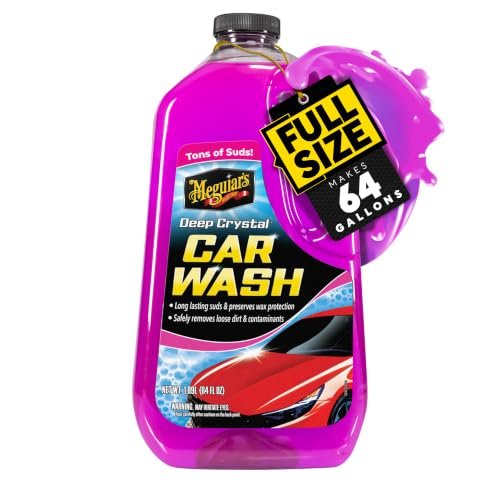
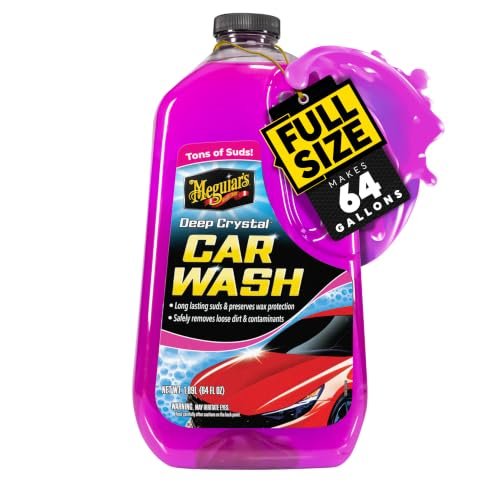
| Meguiar’s Deep Crystal Car Wash, 64 | Meguiar’s Deep Crystal Car Wash, 64 | |
|---|---|---|
| Product Image | |
|
| Price | View On Amazon | View On Amazon |
| Category | Budget / Maintenance Car Wash | Budget / Maintenance Car Wash |
| Volume & Yield | 64 oz (Makes up to 64 Gallons) | 64 oz (Makes up to 64 Gallons) |
| pH Balance & Wax Safety | pH neutral; preserves existing wax & sealants | pH neutral; preserves existing wax & sealants |
| Foam & Suds Performance | High-lubricity, long-lasting encapsulating suds | High-lubricity, long-lasting encapsulating suds |
| Finish Quality | Streak-free, glossy shine | Streak-free, glossy shine |
| Best For | Routine maintenance washing without stripping protection | Routine maintenance washing without stripping protection |
| Amazon Link | View On Amazon | View On Amazon |
| Overall Winner | Tie | Tie |
Meguiar’s Deep Crystal Car Wash Review
Meguiar’s Deep Crystal Car Wash is built specifically for regular vehicle maintenance without risking damage to existing exterior protection. The pH balanced car wash soap formula glides easily across body panels to break up road grime and traffic film safely. Thick suds encapsulate grit so you can wipe it away without introducing swirl marks into your clear coat. Its streak-free shine formula rinses off cleanly even under moderate sun, leaving behind a crisp, reflective surface. Because it is exceptionally gentle on paint, you can wash weekly without deteriorating your underlying wax, sealant, or ceramic topper. The concentrated 64-ounce bottle produces long-lasting suds that hold up through the entire wash process across multiple buckets.
- pH Balanced Formula: Neutral chemistry cleans dirt and road contaminants without degrading pre-existing wax coatings or paint sealants
- Dirt-Encapsulating Foam: Generates rich, lubricating suds that cushion the wash mitt to lift grime away from the clear coat safely
- Streak-Free Rinsing: Sheets off rapidly with clean water, preventing soapy residue and water spots from clinging to the paint
- Paint-Safe Surfactants: Formulated without harsh degreasers, keeping rubber seals, plastic trim, and clear coats supple and hydrated
-
High-Yield Concentrate: The 64-ounce container dilutes at one ounce per gallon to produce 64 full gallons of wash solution
-
Preserves wax and synthetic sealant layers
- Provides superior lubricity to prevent swirl marks
- Rinses clean with minimal water spot risk
-
Excellent value per wash due to high dilution ratio
-
Will not remove stubborn tree sap or heavy baked-on tar
- Produces thinner foam in a foam cannon compared to dedicated snow foams
Best for: Daily drivers and car enthusiasts who wash their vehicles regularly and want to protect their clear coat, wax layers, and plastic trim.
Expert Opinion: This is a dependable baseline car wash shampoo that delivers high lubricity and a clean finish without ever risking your vehicle’s delicate clear coat.
Dish Soap (Dawn Ultra) Review
Dish soap is formulated to emulsify food oils, animal fats, and thick kitchen grease on ceramic, glass, and cookware. A tiny drop of this heavy grease-cutting concentrate creates dense, persistent bubbles that strip away oily residue almost instantly. Its high surfactant strength dissolves surface films with aggressive efficiency, which makes quick work of thick grime. However, the alkaline degreasing agents do not distinguish between cooking oil and the protective carnauba wax or synthetic polymers on your vehicle paint. The chemical composition is distinctly abrasive to vehicle sealants, drying out exterior rubber gaskets and unfinished plastic molding with repeated exposure. While it provides dense cleaning foam, it offers very little glide under a wash mitt, leaving paint susceptible to micro-scratches.
- Aggressive Oil Emulsifiers: Strong surfactants rapidly dissolve stubborn greasy films and organic build-up on hard surfaces
- High Alkaline Chemistry: Formulated with a higher pH designed to attack heavy grease rather than maintain delicate synthetic coatings
- Concentrated Grease Cutters: Strips synthetic polymers, natural carnauba oils, and road film down to the bare surface
- High-Tension Foaming: Produces thick, resilient suds that stay active until thoroughly rinsed with heavy water pressure
-
Everyday Availability: Readily accessible in nearly every home at a low upfront purchase cost
-
Strips away old wax, road oils, and silicone residues quickly
- Inexpensive and universally accessible in emergencies
-
Cleans heavy grease from untreated metal suspension parts
-
Completely strips protective wax and paint sealants in a single wash
- Leaches plasticizers out of rubber window seals and plastic molding
- Lacks surface lubricity, dramatically increasing swirl marks during washing
Best for: Stripping off failed wax layers prior to a full paint correction or deep cleaning greasy mechanical underbody parts.
Expert Opinion: While dish soap strips grease exceptionally well, its harsh chemical profile will ruin protective sealants and dry out vehicle trim when used for routine washing.
Car Soap vs Dish Soap: Key Differences That Matter
Performance Comparison
When you drag a wash mitt across your car, friction is your biggest enemy. Dedicated car soap relies on specialized lubricating polymers designed to sit between the mitt fibers and your clear coat. As you wipe, dirt particles slip into the suds rather than grinding across the paint.
Dish soap behaves in an entirely different manner. It is formulated to cut grease, not lubricate moving fibers against delicate clear coats. When I wash a vehicle with dish soap, the mitt drags noticeably against the panel. Dirt gets pulled across the surface rather than lifted, creating micro-abrasions and swirl marks. Dish soap will leave the paint squeaky clean, but that squeak is the sound of totally bare paint stripped of all natural and synthetic oils.
Price and Value Analysis
At first glance, a four-dollar bottle of kitchen soap looks much cheaper than a specialized automotive shampoo. That math falls apart once you look at dilution ratios and long-term paint maintenance.
A 64-ounce bottle of Meguiar’s Deep Crystal costs around ten dollars and yields 64 wash buckets. That works out to roughly fifteen cents per wash. Dish soap requires less liquid per bucket, but the collateral cost is steep. Stripping your wax means you must spend time and money reapplying protection after every single wash. Neglecting that step leaves your clear coat exposed to UV rays, acid rain, and bird dropping etchings, turning an inexpensive wash into an expensive repainting bill down the road.
Chemical Composition and Surface Impact
Car soaps use pH-neutral surfactants that gently float dirt without dissolving the cross-linked polymers in modern sealants. They keep the surface conditioned while preserving vinyl wraps, ceramic coatings, and delicate emblems.
Dish detergents are formulated with strong surfactants like sodium lauryl sulfate, built specifically to tackle animal fats and cooking oils. These agents strip away wax in minutes. Repeated use pulls essential moisture and plasticizers out of your exterior components. Window moldings dry out, wiper blades turn brittle, and black plastic trim fades into an oxidized gray far ahead of its time.
User Experience Differences
Washing with a dedicated car shampoo feels smooth and forgiving. Water sheets off during the final rinse, leaving fewer droplets behind and speeding up the drying process. You spend less time chasing water spots and buffing out streaks.
Dish soap creates high-friction drag that makes washing physically harder. Rinsing requires significantly more water because the degreasers cling stubbornly to vertical panels. Any residue left to dry in direct sunlight bakes into cloudy, stubborn streaks that take a dedicated detail spray to remove.
Which Should You Choose?
Your vehicle's current paint condition and your maintenance goals should determine which soap you pour into the wash bucket.
| Choose Car Soap if… | Choose Dish Soap if… |
|---|---|
| You want to maintain existing wax, sealant, or ceramic coating layers | You plan to machine polish your paint and need to strip old wax |
| You wash your car weekly or bi-weekly as routine maintenance | You need to degrease untreated metal components or dirty shop tools |
| You want to prevent fine scratches, marring, and swirl marks | You are preparing a bare surface to apply a fresh ceramic coating |
| You want to protect rubber window moldings and plastic trim from drying out | You need a one-time emergency wash to remove heavy petroleum oil spills |
Frequently Asked Questions
Q: Can you use Car Soap vs Dish Soap interchangeably for weekly washes?
A: No, you should never swap them during regular maintenance. Car soap is pH-balanced to preserve protective layers, while dish soap will strip off all wax and dry out exterior rubber moldings after just one or two washes.
Q: In the debate of Car Soap vs Dish Soap, which one is better for removing old wax?
A: Dish soap is much more effective at stripping old wax because its aggressive degreasing agents break down natural oils and synthetic polymers. Dedicated car soap is intentionally formulated to leave those protective layers intact.
Q: Will washing my car once with dish soap permanently ruin my clear coat?
A: A single wash with dish soap will not eat through your clear coat, but it will completely remove any wax or sealant on the surface. If you do use it, apply a fresh coat of wax or synthetic sealant immediately after the paint dries to restore UV protection.
Q: Why does dish soap cause swirl marks on car paint?
A: Dish soap lacks the lubricating agents found in automotive wash shampoos. Without these slick polymers cushioning your wash mitt, dirt particles scrape directly against the clear coat, creating micro-scratches and spider-web swirls.
Q: Does dish soap harm rubber seals and plastic trim?
A: Yes, dish soap draws out the natural oils and plasticizers that keep rubber and trim flexible. Frequent use turns black trim chalky gray and causes rubber door gaskets to dry out and crack prematurely.
Q: Can I put dish soap in a foam cannon?
A: Dish soap will produce thick foam in a cannon, but the suds lack the lubricity required for safe vehicle washing. The dense foam will still strip your wax and leave high-friction residue that is difficult to rinse away completely.
When you purchase a product through Amazon links on carsolutionpro.com, we may earn a small commission at no extra cost to you. This helps support the site and keep our content free. As an Amazon Associate, we earn from qualifying purchases made through our links.