The main difference is vehicle coverage: a 2-channel dash cam monitors the road ahead and behind, while a 3-channel system adds an interior cabin lens. Choose a 2-channel setup for higher video fidelity during daily commutes, or pick a 3-channel unit if you drive rideshare, manage a commercial fleet, or want in-cabin passenger security.
I have spent months testing both dual-lens and triple-lens setups across city traffic, dark rural roads, and highway commutes. Putting both the 2-channel VIOFO A229 Plus and a dedicated 3-channel cabin system through their paces revealed clear tradeoffs between maximum outside image quality and complete cabin visibility. In this guide, you will learn how these hardware configurations balance processor load, night vision, and storage so you can pick the right setup for your daily driving.
2 Channel Dash Cam vs 3 Channel Dash Cam: At a Glance

2 Channel Dash Cam
|

3 Channel Dash Cam
|
|
|---|---|---|
| Coverage Area | Monitors the road directly ahead and behind the vehicle exterior. | Captures the front exterior, rear exterior, and entire interior cabin. |
| Video Resolution Allocation | Allocates processor bandwidth to fewer streams, often enabling higher individual resolutions. | Splits processing power across three streams, often requiring lower per-camera resolution. |
| Interior Night Vision | Lacks cabin coverage and dedicated interior infrared illumination. | Equipped with infrared (IR) LEDs to record cabin activity in total darkness. |
| Storage & Card Wear | Moderate memory card usage with slower loop overwrite cycles. | Heavy data throughput requiring larger capacity, high-endurance memory cards. |
| Installation Complexity | Straightforward installation requiring cable routing only between front and rear windows. | More complex setup involving additional cabin camera positioning and wiring. |
| Power & Heat Management | Lower power consumption and reduced thermal stress on the processor. | Higher power draw and increased heat generation from encoding three simultaneous streams. |
| Primary Use Case | Best for everyday commuters, personal vehicles, and general liability protection. | Ideal for rideshare, taxi, and fleet drivers needing proof of passenger interactions. |
Complete Comparison: 2 Channel Dash Cam vs 3 Channel Dash Cam
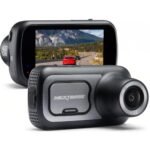
| VIOFO A229 Plus Dash Cam Front | 2.5K 3 Channel Dash Cam Front | |
|---|---|---|
| Product Image | |
|
| Price | View On Amazon | View On Amazon |
| Category | Premium Dual-Channel | Budget Triple-Channel |
| Camera Channels & Coverage | 2-Channel (Front + Rear) | 3-Channel (Front + Rear + Inside Cabin) |
| Video Resolution | 2K 1440P Front + 2K 1440P Rear (up to 60fps Front) | 2.5K Front + 1080P Rear + 1080P Cabin |
| Image Sensors & Night Vision | Dual Sony STARVIS 2 IMX675 Sensors with Dual HDR | Standard sensors with Cabin Infrared (IR) Lights |
| Wi-Fi Connectivity | Ultra-Fast 5GHz Wi-Fi with VIOFO App | Standard Wi-Fi with App Connect |
| GPS Logging | Ultra-Precise Quad-Mode GPS (GPS, BEIDOU, GALILEO, GLONASS) | Not Specified / No Built-in GPS |
| Hands-Free Control | Smart Voice Control (12 Voice Commands) & Audio Alerts | Audio Status Alerts Only |
| Parking Mode Options | 3 Solutions: Buffered Auto Event, Time Lapse, Low Bitrate | 24-Hour Parking Monitoring (Impact/Motion) |
| Display Screen | Compact Unit with Status Menu | 2-inch IPS Screen |
| Max MicroSD Storage | Up to 512GB (Card Not Included) | Up to 512GB (Card Not Included) |
| Best For | Maximum front/rear clarity, night driving, and license plate capture | Rideshare drivers needing complete interior and exterior cabin monitoring |
| Amazon Link | View On Amazon | View On Amazon |
| Overall Winner | Winner | Runner-up |
VIOFO A229 Plus 2-Channel Dash Cam Review
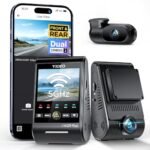
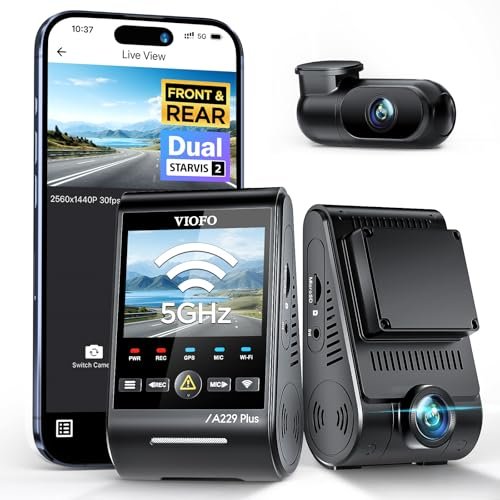
The VIOFO A229 Plus represents what modern dual-lens hardware can achieve when engineering focuses entirely on outside coverage. I mounted this unit behind my rearview mirror, immediately noticing how the dual Sony STARVIS 2 IMX675 sensors transform nighttime license plate readability. Both the front and rear cameras record in sharp 1440P Quad HD resolution, delivering matched visual fidelity across both driving angles. Hardware-level dual-channel HDR balances challenging lighting transitions, such as driving out of dark highway tunnels directly into blinding midday sun. The system relies on a heat-resistant built-in supercapacitor, which easily handled scorching afternoons parked on black asphalt without battery swelling risks. Navigating settings on the fly proved simple thanks to responsive smart voice control, letting me save critical video files with quick spoken commands without pulling my eyes off the asphalt.
Key Features
- Dual STARVIS 2 IMX675 Sensors: Outfitted on both front and rear units to maximize light capture and drastically cut down visual noise during late-night drives.
- Dual 1440P at 60fps or HDR: Records crisp 2K video on both channels, maintaining license plate legibility even when traffic moves quickly.
- Hands-Free Voice Control: Recognizes 12 spoken prompts for locking videos, turning on the Wi-Fi module, and switching camera screen views safely.
- Quad-Mode Satellite GPS: Integrates four positioning constellations (GPS, BEIDOU, GALILEO, GLONASS) for accurate speed stamps and mapping accuracy.
- 5GHz High-Speed Wi-Fi: Allows rapid clip downloads to your smartphone using the companion mobile app without long transfer delays.
Pros
- Outstanding license plate capture at night thanks to matched STARVIS 2 sensors on both channels
- Reliable heat and cold tolerance using a durable supercapacitor design instead of standard lithium batteries
- Rapid clip transfers via dual-band 5GHz wireless networking
- Hands-free spoken commands let you lock footage instantly without fumbling for small physical buttons
Cons
- Front 60fps recording turns off automatically when enabling dual-channel HDR mode
- No interior coverage to document passenger interactions or side window break-ins
Best For
Daily commuters, long-distance road trippers, and private car owners who prioritize pristine license plate clarity and rear-end collision documentation over interior cabin views.
Expert Opinion: The VIOFO A229 Plus is arguably the cleanest dual-camera configuration on the market right now, directing all its processing power into crisp front and rear optics without the compromise of splitting bitrate across an extra interior feed.
2.5K 3-Channel Dash Cam Review
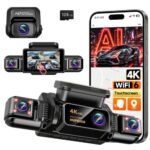
Installing a full three-channel dash cam changes your security posture by monitoring the road ahead, the cabin space, and the rear bumper simultaneously. This system mounts a 2.5K front camera along with an integrated 1080P IR interior lens, connecting to a separate 1080P rear camera with a long running wire. During evening tests, four built-in infrared lights illuminated the inside of my car completely, recording passenger activity in sharp monochrome even in pitch-black conditions. Connecting my smartphone to the built-in WiFi app control allowed me to review multi-angle video feeds quickly without taking out the memory card. The unit relies on continuous loop recording backed by an adjustable 3-axis G-sensor, locking accident files the moment the car registers a sudden impact or sharp braking event. Expanding your storage is straightforward because the camera supports up to 512GB cards, which is necessary for managing three separate simultaneous video streams.
Key Features
- Three-Way Simultaneous Recording: Captures 2.5K front video alongside 1080P cabin footage and 1080P rear traffic angles.
- Infrared Night Vision Cabin Cam: Uses dedicated IR LEDs to document the interior passenger space clearly in zero-light conditions.
- Integrated Smartphone Wi-Fi: Connects to an iOS or Android app for live framing, configuration adjustments, and quick file downloads.
- 3-Axis Impact Sensor: Automatically detects rough road impacts or fender benders, locking the active video files from being overwritten.
- 512GB High-Capacity Storage Support: Handles massive file writes across three video streams without running out of room on longer road trips.
Pros
- Complete 360-degree awareness covering the road, the driver, passengers, and the rear bumper
- Infrared cabin lights produce clean footage inside dark vehicle interiors
- Budget-friendly entry point for drivers wanting multi-angle security
- Large 512GB card compatibility gives you days of recorded history before loop overwrites begin
Cons
- Video compression is noticeably higher because the single chipset must process three live camera feeds at once
- Packaging does not include a microSD card, requiring an extra purchase before your first trip
- Uses an internal battery system that is less resilient to extreme summer heat than a supercapacitor
Best For
Rideshare drivers working for Uber or Lyft, taxi operators, delivery workers, and parents sharing vehicles with teen drivers who need interior accountability.
Expert Opinion: While you sacrifice raw bitrate and ultra-sharp distant plate identification on the outside cameras, the peace of mind gained from full-cabin infrared coverage makes a three-channel unit an essential operational tool for commercial and rideshare motorists.
2 Channel Dash Cam vs 3 Channel Dash Cam: Key Differences That Matter
Performance Comparison
A 2-channel dash cam dedicates its processor to two video feeds. In the A229 Plus, that processing freedom allows genuine 1440P recording at high bitrates on both channels, backed by Sony STARVIS 2 sensors that read moving license plates in rainy or dark environments. A 3-channel dash cam must split its processor budget across three feeds. As a result, the 3-channel front 2.5K image exhibits more compression artifacts around fine text. The interior cabin feed makes up for this deficit by using infrared illumination, capturing inside details, passenger faces, and driver habits that an exterior-only dual-channel camera misses completely.
Price/Value Analysis
The initial price tags might look similar on store shelves, but you must evaluate where the manufacturer spent the budget. Dual-channel cameras put that money into high-end optics, premium image sensors, and supercapacitors that survive years of harsh weather. Budget-oriented 3-channel units often stretch manufacturing budgets thin to deliver three separate camera modules, frequently omitting high-end sensors and skipping included memory cards. If you never carry paying passengers, paying for an interior camera takes away valuable budget that could otherwise give you better nighttime plate legibility.
Build Quality Comparison
Dual-channel cameras designed for heavy use almost always feature supercapacitors. These components endure sweltering summer heat windshield exposure without swollen batteries or thermal shutdowns. Many entry-level three-channel cameras rely on small rechargeable lithium-ion battery packs, which can degrade quickly under constant direct sun exposure. Cable management also differs. Running a 2-channel system requires routing one long cable to the back window. A 3-channel dash cam typically houses the interior camera directly on the windshield body, meaning your main windshield unit is slightly bulkier and more visible to passing pedestrians.
User Experience Differences
Daily operation reveals distinct behavioral variations between the two setups. The VIOFO A229 Plus operates quietly in the background, utilizing accurate voice prompts to inform you of card write speeds, recording errors, or file locking. Its 5GHz Wi-Fi transfers dense 2K files in seconds. In contrast, running a 3-channel camera means managing three distinct video folders for every drive. Pulling clips over standard Wi-Fi takes longer simply because the data payload across all three angles is larger. You will also spend more time monitoring memory card health, since three video channels write data at triple the speed, cycling through card endurance thresholds much faster.
Which Should You Choose?
Your specific passenger profile and primary security concerns should determine your camera layout.
| Choose VIOFO A229 Plus 2-Channel if… | Choose Generic 2.5K 3-Channel if… |
|---|---|
| You want the best possible nighttime license plate capture | You drive passengers commercially for Uber, Lyft, or taxi services |
| You park under extreme summer heat or sub-zero winter temperatures | You need video proof against false claims of driver misconduct |
| You only carry family members and do not need passenger surveillance | You want to record through side windows during traffic stops |
| You prefer fast 5GHz wireless downloads to your smartphone | You share your vehicle with a teenage driver for monitoring driving habits |
Frequently Asked Questions
Q: In the debate of 2 Channel Dash Cam vs 3 Channel Dash Cam, which system handles memory cards better?
A: A 2-channel dash cam writes only two video streams, making it significantly easier on your memory card. A 3-channel dash cam writes three separate video files simultaneously, filling up your storage space much faster. You will experience quicker loop overwrite cycles on a 3-channel system, meaning you should buy a high-endurance memory card rated for continuous writing to prevent card failure.
Q: Does a 3-channel dash cam drain the car battery faster in parking mode?
A: Yes, it draws more power. Powering three distinct camera sensors along with interior infrared lights demands more continuous electrical current than running two lenses. If you use parking mode often, a 3-channel dash cam will trigger your hardwire kit’s low-voltage battery cutoff sooner than a 2-channel setup would.
Q: When comparing 2 Channel Dash Cam vs 3 Channel Dash Cam, does a 2-channel unit provide any view of the interior?
A: Not in any practical way. Standard dual-channel systems place one camera facing outward through the front windshield and the other looking through the rear glass. Neither camera has a clear angle of the vehicle cabin, and neither features the infrared lights needed to see inside a dark car at night.
Q: Can the interior lens on a 3-channel dash cam see through side windows?
A: The wide-angle lens on an interior cabin camera typically captures the front side windows clearly. This coverage is helpful for documenting police interactions during traffic stops, recording interactions with aggressive drivers stepping up to your door, or identifying thieves trying to force your side glass.
Q: Will an interior cabin camera work in total darkness?
A: Quality cabin cameras feature built-in infrared (IR) LED lights that turn on automatically when cabin light drops. These IR lights illuminate human faces, clothing, and interior controls without casting bright visible light that distracts the driver. The resulting footage shows up as sharp, high-contrast monochrome video.
Q: Can I easily upgrade a 2-channel dash cam to a 3-channel system later?
A: Upgrades depend entirely on the main camera body. Some modular systems have an extra port waiting for an interior camera attachment, while others feature locked motherboards designed strictly for dual input. If you buy a dedicated 2-channel system without extra auxiliary ports, you must replace the front unit or run a completely independent camera to add interior monitoring later.
When you purchase a product through Amazon links on carsolutionpro.com, we may earn a small commission at no extra cost to you. This helps support the site and keep our content free. As an Amazon Associate, we earn from qualifying purchases made through our links.