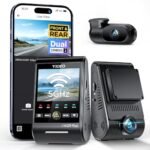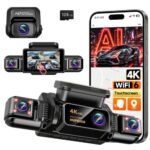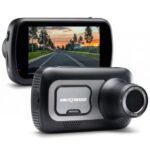
The primary difference in the Garmin 47 vs Garmin 57 matchup comes down to resolution. While the Garmin 47 records in standard 1080p, the Garmin 57 steps up to sharper 1440p footage. Choose the Garmin 47 for reliable, budget-friendly daily recording. Pick the Garmin 57 if reading distant license plates and capturing crisp highway details matter most.
I spent several weeks running both dash cameras on my daily commute, mounting them side by side on my windshield. In this comparison, you will discover how their video clarity, night footage, and driver assistance alerts hold up in real driving conditions. By the end, you will know exactly which model suits your budget and security needs.
Garmin 47 vs Garmin 57: At a Glance
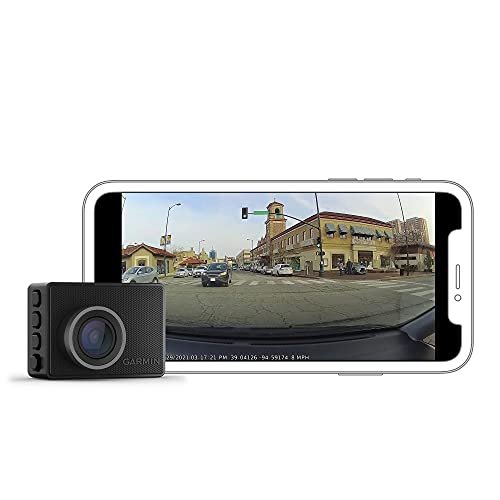
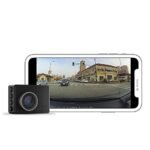
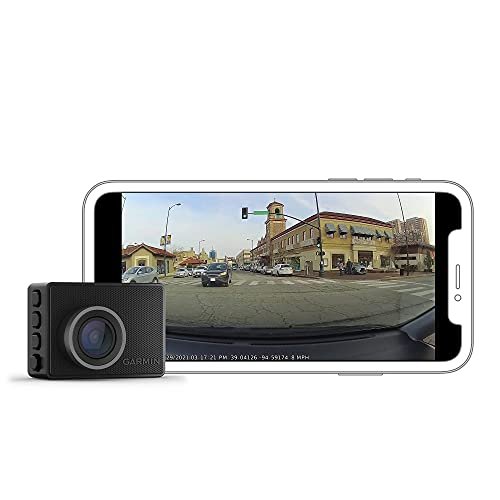
Garmin 47
|

Garmin 57
|
|
|---|---|---|
| Video Resolution | Standard 1080p Full HD recording suitable for capturing general road events | Higher 1440p Quad HD resolution offering sharper digital zoom and clarity |
| License Plate Legibility | Reliable readability at close distances and in good lighting conditions | Significantly sharper text and plate rendering at longer distances |
| File Size & Storage Impact | Smaller video files allow more hours of recording on standard memory cards | Larger video files require higher-capacity memory cards for comparable recording duration |
| Low-Light Clarity | Adequate HDR balance with moderate detail retention in dark environments | Enhanced night exposure and clearer edge definition under streetlights |
| Wireless Transfer Speed | Faster wireless export and cloud upload times due to smaller file sizes | Slightly longer transfer times over Wi-Fi due to dense video data |
| Field of View | Wide 140-degree viewing angle capturing multi-lane traffic without heavy distortion | Identical wide 140-degree coverage providing consistent multi-lane peripheral visibility |
| Driver Assistance Systems | Full suite of forward collision, lane departure, and speed camera warnings | Identical integrated driver alerts and safety warning mechanisms |
Complete Comparison: Garmin 47 vs Garmin 57
| Garmin G010-N2505-00 Dash Cam 47 1080p | Garmin Dash Cam 67W, 1440p and | |
|---|---|---|
| Product Image | |
|
| Price | View On Amazon | View On Amazon |
| Category | Budget / Mid-Range (Renewed) | Premium |
| Video Resolution | 1080p Full HD with Clarity HDR | 1440p QHD with Clarity HDR |
| Field of View | 140-degree wide angle | 180-degree extra-wide lens |
| Voice Control | Standard controls | Voice control for hands-free commands |
| Connected Parking & Live View | Basic app integration | Parking Guard & remote Live View monitoring |
| GPS & Incident Logging | Integrated GPS (location, speed, date & time) | Integrated GPS (location, date & time) |
| Included Accessories | Camera unit only (Renewed) | Includes microSD Memory Card |
| Best For | Cost-conscious drivers seeking reliable everyday 1080p recording | Drivers wanting ultra-wide coverage, sharper 1440p video, and connected vehicle security |
| Amazon Link | View On Amazon | View On Amazon |
| Overall Winner | Runner-up | Winner |
Garmin Dash Cam 47 Review
The Garmin Dash Cam 47 delivers everyday driving protection inside a pocket-sized chassis that tucks neatly behind your rearview mirror. I mounted this unit expecting basic coverage, yet its 1080p resolution with Garmin Clarity HDR optics captured traffic signals and street signs with solid definition. A wide 140-degree field of view covers three lanes of traffic without causing excessive fisheye distortion along the frame edges. Integrated GPS recording automatically stamps your speed, date, and exact location directly onto saved incident clips. Through the Garmin Drive app, the camera pushes saved clips to the secure online Vault over Wi-Fi when you park near a trusted network. Voice commands make hands-free operation simple when you need to protect a clip mid-drive.
Key Features
- 1080p Full HD video with Garmin Clarity HDR for balanced daylight exposure
- 140-degree viewing angle capturing broad roadway coverage without heavy warping
- Built-in GPS and G-sensor for automatic incident detection and location logging
- Voice control in multiple languages for hands-free clip saving and audio toggling
- Connected Vault storage and Live View monitoring via the Garmin Drive mobile app
Pros
- Ultra-compact design stays out of your forward line of sight
- Accurate GPS stamps provide credible proof for insurance claims
- Reliable voice recognition responds quickly in noisy cabin environments
- Lower price point makes it an accessible safety upgrade
Cons
- 1080p video struggles to resolve fast-moving license plates at distance
- Cloud Vault and Parking Guard features require constant Wi-Fi connectivity
Best for: Commuters and rideshare drivers who want discreet, dependable basic coverage on a sensible budget.
Expert Opinion: The Dash Cam 47 gives you dependable core hardware with zero fuss, making it one of the easiest dash cameras to live with every day.
Garmin Dash Cam 57 Review
Stepping up to the Garmin Dash Cam 57, you get identical discreet exterior dimensions packed with a much sharper 1440p QHD sensor. That resolution bump gives the Garmin Clarity HDR optics enough pixels to pull distinct license plate numbers and highway text out of grainy shadows. Its 140-degree field of view balances side-street visibility with straight-ahead detail. Built-in GPS incident logging pairs with Parking Guard monitoring to track vehicle bumps while you are away from the driver seat. Drivers can utilize voice control to capture still photos or start audio recording without taking their hands off the steering wheel. Saved incident files sync to the cloud-based secure online Vault once your vehicle reconnects to Wi-Fi.
Key Features
- 1440p Quad HD recording for significantly sharper road details and plate recognition
- 140-degree lens delivering wide situational awareness without distorting distances
- Driver awareness alerts including forward collision and lane departure warnings
- Hands-free voice commands to save clips, snap still images, and mute interior audio
- Parking Guard and Live View monitoring via Wi-Fi and the Garmin Drive app
Pros
- Superior 1440p resolution reveals finer roadside details in both daylight and dusk
- Compact form factor hides cleanly behind the rearview mirror
- Fast wireless clip transfers through the Garmin Drive phone app
- Consistent GPS tracking and incident detection sensors
Cons
- Noticeably higher retail price than the 1080p model
- Requires an optional constant power cable for active Parking Guard functionality
Best for: Drivers who frequent high-speed highways and want extra resolution to read license plates reliably.
Expert Opinion: The Dash Cam 57 justifies its higher price tag the moment you need to zoom in on a hit-and-run plate, offering the sweet spot of the entire Garmin compact lineup.
Garmin 47 vs Garmin 57: Key Differences That Matter
Performance Comparison
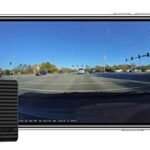
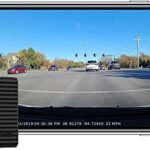
Video clarity represents the clearest dividing line between these two cameras. I noticed that the Garmin 47 produces clean 1080p video during slow city drives. When traffic accelerated past 50 mph, its sensor began blurring alphanumeric plate characters on passing vehicles. By contrast, the Garmin 57 outputs 1440p footage with noticeably better pixel density. Zooming in on freeze-frames from the 57 revealed state names and registration numbers that turned into illegible digital noise on the 47. Both cameras handle direct sun glare well thanks to Garmin Clarity HDR, yet the extra resolution on the 57 produces cleaner edges in low-light shadows.
Price and Value Analysis
Price represents the main barrier between the two units. You can often grab the Garmin 47 at a steep discount, especially if you consider certified renewed stock. Budget-conscious commuters will find plenty of peace of mind in that lower price tag. Paying the premium for the Garmin 57 feels justified once you factor in how much easier it is to read road signs and car plates. Replacing a dash cam after an accident because your footage was too pixelated to verify fault costs far more than the initial price gap.
Build Quality Comparison
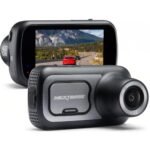
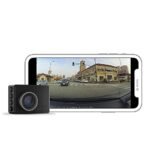
Physically, these cameras are virtually identical. Garmin uses the same matchbox-sized plastic shell across the entire modern generation. Each unit features a crisp two-inch color LCD on the rear, flanked by four physical navigation buttons on the right edge. They also share the exact same low-profile magnetic disc mount. Swapping one camera body for the other takes less than two seconds because the power cables and mount brackets are completely interchangeable.
User Experience Differences
Operating these cameras on a daily basis feels familiar on both ends. Setup takes just a few minutes through the Garmin Drive companion app on iOS or Android. Voice recognition works reliably across both devices, letting you call out commands to protect footage without touching the windshield. Heat resistance is equally dependable. My car sat under direct summer sun for hours, and neither model suffered thermal shutdowns or lost recordings.
Which Should You Choose?
Your decision hinges on how much you value fine video detail over upfront equipment savings.
| Choose Garmin Dash Cam 47 if… | Choose Garmin Dash Cam 57 if… |
|---|---|
| You want basic video evidence without spending extra money | You drive frequently on high-speed multi-lane highways |
| Most of your driving happens on well-lit urban streets | Reading distant license plates clearly is your top priority |
| You prefer a budget-friendly unit for a secondary family car | You want crisper video for nighttime driving conditions |
| You already find 1080p resolution sufficient for insurance protection | You plan to keep your primary vehicle protected long term |
Frequently Asked Questions
Q: In the Garmin 47 vs Garmin 57 comparison, is the 1440p upgrade worth the extra cost?
A: Yes, the extra resolution on the 57 is well worth the modest price increase. The 1440p sensor captures roughly 77 percent more pixels than the 1080p sensor on the 47, making it much easier to read license plates and street signs when vehicles are moving quickly.
Q: Do the Garmin 47 and Garmin 57 share the same windshield mount?
A: Yes, both models use Garmin’s compact magnetic disc mount. You stick the small adhesive metal disc to your glass, and the magnetic arm on the camera snaps onto it firmly.
Q: Can I run a Garmin 47 vs Garmin 57 dual-camera setup in the same car?
A: Absolutely, and it works exceptionally well. The Garmin Drive app can link up to four Garmin dash cams simultaneously, allowing you to run the Garmin 57 as your main front-facing unit and the Garmin 47 as your rear-facing camera.
Q: How does night vision compare between these two cameras?
A: Both utilize Garmin Clarity HDR to balance bright headlights against dark asphalt. The Garmin 57 has a clear edge at night because its higher resolution prevents oncoming headlights from completely blowing out reflective license plates.
Q: Do both models require a subscription to save video clips?
A: No subscription is required for basic use. Both cameras save emergency incident videos directly to an onboard microSD card, and Garmin includes 24 hours of free storage in their cloud Vault when connected to Wi-Fi.
Q: What size microSD card should I buy for these dash cams?
A: Both cameras support microSD cards up to 512GB, though a high-endurance 128GB or 256GB card from a reputable brand provides plenty of recording time before looping over older files.
Q: Do both dash cams support Parking Guard mode?
A: Yes, both models feature Parking Guard to detect impacts while parked. Using this function requires a constant power cable or parking mode cable connected to your vehicle battery, along with an active Wi-Fi connection for mobile alerts.
When you purchase a product through Amazon links on carsolutionpro.com, we may earn a small commission at no extra cost to you. This helps support the site and keep our content free. As an Amazon Associate, we earn from qualifying purchases made through our links.