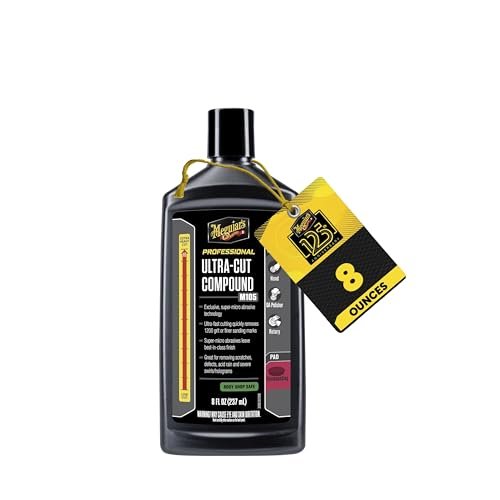
The main difference comes down to abrasive design and finish quality. Cutting compounds utilize refined micro-abrasives to eliminate heavy scratches while preserving gloss. Rubbing compounds feature coarser abrasives aimed at aggressive leveling and stubborn stain removal. Use cutting compound with a machine for full paint correction, and pick rubbing compound for quick hand spot repairs.
Over the past decade of detailing cars in my garage, I have reached for both bottles hundreds of times to revive tired, weathered finishes. In this guide, you will learn how their abrasives behave differently, how each formula handles severe defects, and how to pick the right bottle for your detailing project.
Cutting Compound vs Rubbing Compound: At a Glance
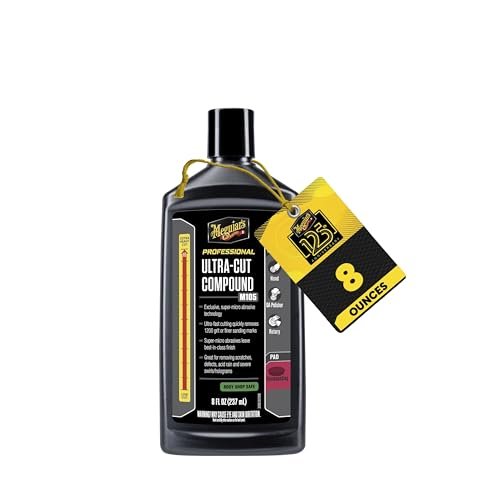
Cutting Compound
|
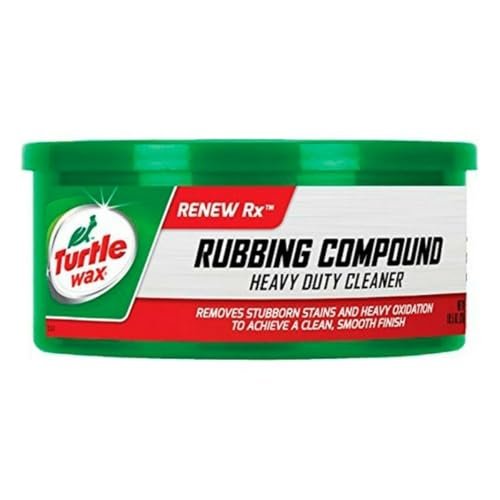
Rubbing Compound
|
|
|---|---|---|
| Primary Purpose | Rapidly levels deep paint defects while maintaining workable finish clarity. | Aggressively abrades surfaces to strip severe oxidation and heavy damage. |
| Abrasive Technology | Uses engineered micro-abrasives designed for controlled, uniform material removal. | Features coarse, gritty abrasives designed for maximum, fast-acting leveling power. |
| Finish Quality | Leaves minimal hazing that easily refines into a glossy, clear surface. | Typically leaves noticeable dullness and scouring that demands intensive secondary polishing. |
| Clear Coat Removal Rate | Moderate and uniform removal rate with lower risk of paint strike-through. | High removal rate; requires extreme care to prevent burning clear coats. |
| Target Paint Defects | Severe swirl marks, acid rain etching, and fine sanding marks (1200–2000 grit). | Heavy surface weathering, deep scratches, and coarse sanding or repair marks. |
| Application Method | Optimized for dual-action or rotary machine polishers with foam/microfiber pads. | Works via rotary polishers, wool pads, or firm hand-applied pressure. |
| Subsequent Finishing Steps | Typically requires just one finishing polish step to achieve mirror shine. | Mandates multi-stage intermediate and fine polishing to eliminate compound micro-scratches. |
Complete Comparison: Cutting Compound vs Rubbing Compound
| Meguiar’s Professional M105 Ultra Cut Compound, | Turtle Wax T230A 10.5 Oz Rubbing | |
|---|---|---|
| Product Image | |
|
| Price | View On Amazon | View On Amazon |
| Category | Premium | Budget |
| Container Size | 8 oz | 10.5 oz |
| Abrasive Technology | Super Micro-Abrasive Technology (cuts fast while boosting gloss) | Heavy-duty paste cleaner formula |
| Defect & Scratch Removal | Cuts up to 1200 grit sanding marks, heavy swirls, acid rain, and oxidation | Removes deep scratches, swirl marks, oxidation, and road grime |
| Finish Quality | High gloss, best-in-class finish with minimal swirling | Smooth, glossy finish |
| Paint Compatibility | Safe on all glossy paint finishes including clear coats | Suitable for clear coats, single-stage, and lacquers |
| Application Versatility | Hand, Dual Action (DA) polisher, or Rotary buffer | Hand or machine buffer |
| Best For | Serious paint correction, heavy swirl removal, and 1200 grit sanding mark leveling | Budget-friendly heavy cleaning and removing stubborn stains or surface scratches |
| Amazon Link | View On Amazon | View On Amazon |
| Overall Winner | Winner | Runner-up |
Meguiar’s Professional M105 Ultra Cut Compound
Meguiar’s M105 is built around super micro-abrasive technology, which cuts fast without scouring paint to death. I usually run this liquid on a dual-action polisher when faced with severe clear coat damage, though it delivers results with a rotary or a hand pad too. Its aggressive bite reliably levels moderate to heavy paint defects like deep acid rain etching and severe swirl clusters. It even handles up to 1200 grit sanding marks without breaking a sweat. Despite that heavy cutting power, the formulation stays clear coat safe and finishes with an impressive depth of gloss. Dusting can be heavy if worked in dry heat, so keeping your working cycles short remains essential.
Key Features
- Defect removal: Cuts through 1200 grit wet-sanding scratches, severe oxidation, and acid rain etching
- Super micro-abrasives: Diminishes deep scratches quickly without scouring the surface
- Clear coat safe: Compatible with modern glossy clear coats and single-stage paint systems
- Multiple application methods: Works via rotary buffer, dual-action polisher, or microfiber hand pad
Pros
- Cuts fast on hard factory clear coats
- Leaves high gloss for a heavy compound
- Cleans up sanding marks quickly
- Works across multiple machine platforms
Cons
- Generates noticeable dust if worked past its short work cycle
- Wipes off stiffly if allowed to dry on the panel
Best For
Detailers tackling severe swirl marks, deep scratches, and sanding marks on modern factory clear coats who plan on following up with a finishing polish.
Expert Opinion: Meguiar’s M105 delivers unmatched speed on tough factory clear coats, though you need disciplined technique to manage its quick drying time and powder residue.
Turtle Wax T230A Rubbing Compound
Turtle Wax T230A represents the traditional, paste-style approach to heavy-duty surface correction. The formula packs heavy-duty cleaning power that chews through road film, deep oxidation, and stubborn transfer marks effortlessly. Formulated as an advanced formula paste, it relies on classic abrasive minerals that scour away surface contamination on contact. Beginners often appreciate how forgiving it feels when tackling localized scuffs by hand with a simple applicator pad. The resulting finish is designed to deliver professional-grade results on neglected panels, though it generally leaves a hazy surface that demands a secondary polish. Thanks to its versatile application, you can spread it across single-stage enamels, lacquers, and standard clear coats without special equipment.
Key Features
- Heavy-duty cleaning power: Cuts through embedded road grime, severe stains, and scuffed clear coat
- Thick paste consistency: Clings well to vertical panels for controlled hand application
- Versatile application: Works across clear coats, lacquers, enamel finishes, and single-stage paints
- Accessible defect removal: Formulated to level transfer marks and oxidation with basic microfiber pads
Pros
- Extremely budget-friendly and widely available
- Thick paste consistency prevents slinging on vertical panels
- Excellent for spot-treating paint transfer and scuffs by hand
Cons
- Leaves noticeable haze and micro-marring that requires a second polishing step
- Too aggressive and coarse for soft, sensitive clear coats
Best For
Budget-conscious car owners looking to remove paint transfer, heavy oxidation, or isolated scuffs by hand on daily drivers.
Expert Opinion: This classic paste provides strong brute-force cleaning for isolated scuffs, but its abrasive profile is too coarse for complete, high-end vehicle corrections.
Cutting Compound vs Rubbing Compound: Key Differences That Matter
Performance and Abrasive Technology
Abrasive behavior marks the biggest divide between these two products. Modern cutting compounds rely on micro-abrasives that maintain their size or break down evenly, allowing them to slice through deep scratches while leaving the surface relatively glossy. When I use M105, it cuts deep into the clear coat, but the panel still reflects light cleanly.
Traditional rubbing compounds work differently. They use harder, jagged mineral abrasives designed to grind away surface layers quickly. That coarse grit easily removes paint transfer or dead oxidation, but it leaves behind micro-marring and a dull, cloudy haze. You solve the initial blemish, yet you create fine scratches that require an intermediate polish to fix.
Price and Value Analysis
Rubbing compounds are undeniably cheaper upfront. A tub of Turtle Wax paste costs very little and sits on the shelf of almost every local auto parts store. If you only need to scrub away scuff marks from a garage door scrape once a year, that paste delivers unbeatable cost efficiency.
Cutting compounds sit at a higher price point per ounce. You are paying for specialized chemical carriers, lubricating oils, and precision-milled aluminum oxide abrasives. Because a dedicated cutting liquid saves you hours of corrective labor and preserves clear coat thickness, the extra investment pays for itself during full-vehicle details.
Formulation and Chemistry
Consistency dictates how each product interacts with your pads. Cutting compounds are formulated as viscous liquids loaded with lubricants. Those oils keep the abrasives sliding smoothly under a high-speed foam or microfiber buffing pad, reducing heat buildup.
Rubbing compound paste feels thick, gritty, and heavy. It dries out faster on machine pads, which often results in gummy residue if you try to spread it over an entire hood. The paste stays right where you put it, making it manageable for manual spot rubbing on a bumper corner.
User Experience and Workability
Working with cutting compound requires attention to your technique. M105 has a famously short working window. You must work in small two-by-two-foot sections, clean your pads frequently, and wipe the residue before it cooks onto the warm paint.
Rubbing compound feels far more basic. You scoop a small dab onto a damp terry cloth, rub back and forth with moderate finger pressure, and buff it clean. It gives you instant physical feedback. Machine buffing an entire car with rubbing compound paste proves tiring, messy, and prone to severe buffer trails.
Which Should You Choose?
Your equipment and the scope of paint damage should determine your choice.
| Choose Cutting Compound if… | Choose Rubbing Compound if… |
|---|---|
| You own a dual-action polisher or rotary buffer | You are removing paint transfer from a bumper scuff by hand |
| You want to remove heavy swirl marks across the entire vehicle | You need a fast, low-cost fix for oxidized single-stage paint |
| You need to finish out with minimal paint hazing | You do not own a dedicated machine polisher |
| You are leveling wet-sanding marks on modern clear coats | You are spot-treating isolated blemishes on an older daily driver |
Frequently Asked Questions
Q: In the battle of Cutting Compound vs Rubbing Compound, which is more aggressive on car paint?
A: Traditional rubbing compound is generally more abrasive to the touch because of its coarse particle size. Cutting compounds cut deep into clear coat defects as well, but their micro-abrasives leave a much smoother surface profile with far less gouging.
Q: Can I use Cutting Compound vs Rubbing Compound by hand without a machine buffer?
A: Yes, you can apply both products by hand using a microfiber or foam applicator pad. Rubbing compound paste is naturally suited for hand spot-treatments on small scuffs, whereas cutting compound works better by machine because the tool speed helps the micro-abrasives level the surface evenly.
Q: Will either of these products replace a car wax or sealant?
A: Neither product protects your paint. Both formulas are purely corrective abrasives designed to level clear coat defects and remove dead paint. Once you finish compounding and polishing, you must apply a wax, ceramic coating, or synthetic sealant to shield the bare paint from UV rays and moisture.
Q: Do I always need to polish after using a compound?
A: Yes, following up with a finishing polish is an essential step. Even refined cutting compounds leave behind light micro-marring or slight dullness on softer clear coats. A dedicated finishing polish refines those microscopic marks, deepens color reflection, and creates true optical clarity.
Q: Can a cutting compound remove scratches that go down to the primer?
A: No compound can fix a scratch that has penetrated through the color basecoat or primer. You can test this by running your fingernail gently across the scratch. If your nail catches in the groove, the scratch is too deep to safely buff out, requiring touch-up paint rather than compound.
Q: How much clear coat do these compounds remove during paint correction?
A: When used correctly with a dual-action polisher, a modern cutting compound removes only a few microns of clear coat, roughly equivalent to a fraction of a sheet of paper. Rubbing compounds used aggressively by hand with heavy pressure can strip clear coat unevenly, so always use the least aggressive method needed to fix the defect.
When you purchase a product through Amazon links on carsolutionpro.com, we may earn a small commission at no extra cost to you. This helps support the site and keep our content free. As an Amazon Associate, we earn from qualifying purchases made through our links.