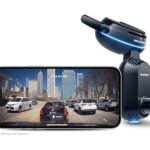
A single dash cam monitors only the road ahead, whereas a dual dash cam records both front and rear perspectives simultaneously. Choose a single camera if you want an affordable, discrete setup that installs in minutes. Opt for a dual setup if you want complete coverage against rear-end collisions and tailgating incidents.
I have spent months testing both the Galphi 4K single front camera and the LHSYJ 4K dual front-and-rear system in my daily drivers. Navigating congested city commutes and quiet highway stretches showed me exactly where each setup shines. Here is what you need to know about video clarity, installation challenges, and overall road security before deciding between single and dual channel protection.
Single Dash Cam vs Dual Dash Cam: At a Glance
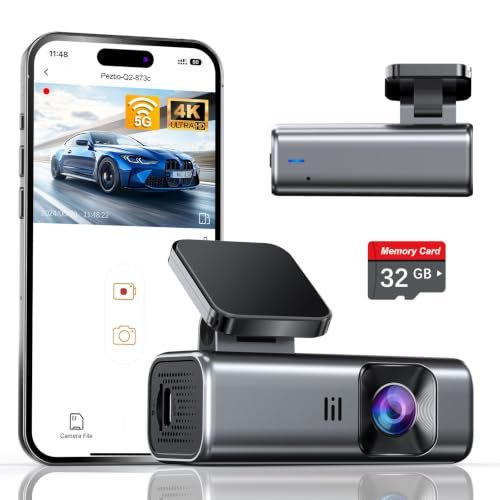
Single Dash Cam
|
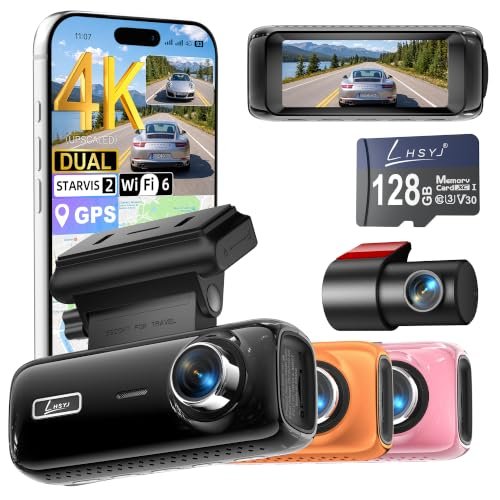
Dual Dash Cam
|
|
|---|---|---|
| Coverage Area | Monitors the front roadway only, leaving rear traffic unrecorded. | Simultaneously records both the front windshield view and rear traffic. |
| Installation Complexity | Quick and simple plug-and-play setup using a single power cord. | Requires routing long cables through cabin headliners and trim panels. |
| Rear Collision Evidence | Provides only indirect evidence based on vehicle movement after impact. | Captures direct visual proof of tailgating, rear-end crashes, and hit-and-runs. |
| Memory Card Usage | Generates a single video stream, maximizing storage space on memory cards. | Doubles file volume, requiring larger memory cards and frequent write cycles. |
| Power Consumption | Draws minimal power, reducing strain on vehicle battery during parking mode. | Consumes more power to run dual camera sensors simultaneously. |
| Vehicle Clutter | Discreet, compact profile easily concealed behind the rearview mirror. | Adds extra hardware and visible wiring on the rear window. |
| Ideal Application | Best for basic commuting, budget-conscious drivers, or temporary vehicle use. | Ideal for comprehensive insurance protection, city driving, and rideshare operators. |
Complete Comparison: Single Dash Cam vs Dual Dash Cam
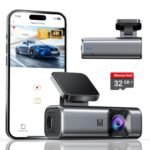
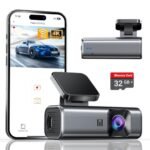
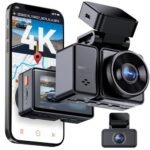
| galphi 4K Dash Cam Front, 5GHz | LHSYJ 4K Dual Dash Cam Front | |
|---|---|---|
| Product Image | |
|
| Price | View On Amazon | View On Amazon |
| Category | Compact Front-Only / Budget | Dual-Channel 4K+2K / Premium |
| Camera Channels & Resolution | Front Only: 4K 2160P UHD | Dual: 4K 2160P Front + 2K 1440P Rear |
| Image Sensor & Optics | F/1.6 Aperture with WDR Night Vision | Sony IMX675 STARVIS 2 (F1.5 Front / F1.8 Rear) |
| Field of View (FOV) | 160° Front Wide Angle | 150° Front + 140° Rear (6-Lane Coverage) |
| Display Screen | Screen-Free (Zero-Distraction Stealth Design) | 3.18″ IPS HD Color Display |
| Wi-Fi & App Connectivity | 5GHz Wi-Fi (Up to 8MB/s transfer) | 5.8GHz Wi-Fi / Wi-Fi 6 Ultra-Fast |
| Included Memory Card | 32GB MicroSD Card (Supports up to 256GB) | 128GB High-Speed MicroSD Card |
| GPS Tracking | No Built-In GPS | Built-In GPS (Routes, Speed, & Location Logging) |
| 24H Parking Mode | Time-Lapse Mode (Hardwire kit required) | Time-Lapse & Collision Lock (Hardwire kit required) |
| Best For | Drivers wanting an invisible, distraction-free front camera on a budget | Commuters and rideshare drivers wanting full front & rear evidence with GPS |
| Amazon Link | View On Amazon | View On Amazon |
| Overall Winner | Runner-up (Best Minimalist Pick) | Winner (Best Full Security System) |
Galphi 4K Single Dash Cam Review
Testing the Galphi 4K front dash cam proved that simple designs often make dependable road companions. Its screen-free mini profile tucked neatly behind my rearview mirror, staying completely out of my line of sight while driving. I appreciated that it captures clean 4K 2160P resolution footage through a 160-degree wide-angle lens that spans across multiple lanes without distorting the edges. Setting up the companion mobile app felt quick thanks to the 5GHz Wi-Fi connection, allowing me to pull incident clips directly to my phone at decent transfer speeds. Galphi ships the unit with a 32GB memory card included, meaning you can stick it on the windshield and drive immediately without hunting for extra parts.
Key Features
- 4K UHD 2160P Video: Sharp front-facing resolution coupled with a 160-degree viewing angle to read traffic signs and lane markings.
- High-Speed 5GHz Wi-Fi: Mobile app pairing allows rapid clip transfers up to 8MB/s without buffering.
- Screen-Free Compact Shell: Minimalist housing reduces driver distraction and hides cleanly behind windshield glass.
- Starter Storage Included: Comes with a 32GB microSD card out of the box for instant setup.
- Automated Incident Lock: Built-in G-sensor automatically locks collision files during sudden stops or impacts.
Pros
- Fast installation with no rear wiring needed
- Tiny form factor hides completely behind the rearview mirror
- Quick video downloads over 5GHz Wi-Fi
- Clear daytime recording clarity
Cons
- Leaves your rear bumper unprotected from tailgaters
- Included 32GB card fills up rapidly on 4K loop recording
Best for: Daily commuters and budget-conscious drivers who want reliable front-end accident evidence without routing cables through their vehicle cabin.
Expert Opinion: If you value a clean windshield and zero driving distractions, this compact single camera delivers sharp front video evidence without taking up your weekend to install.
LHSYJ 4K Dual Dash Cam Review
Installing the LHSYJ dual dash cam brought full vehicular awareness to my daily drives. The front unit pairs a Sony IMX675 STARVIS 2 sensor with true 4K front plus 2K rear recording, providing sharp plate legibility even on dimly lit side streets. Glancing at the 3.18-inch IPS display gave me immediate confirmation that both angles were framed properly. Downloading footage happened without lag through the built-in 5.8GHz Wi-Fi, while integrated GPS stamped my exact travel speed and coordinates onto every video file. Handling the main unit revealed solid craftsmanship, finished in an oven-baked high-gloss paint that looks more like a luxury car accessory than cheap plastic.
Key Features
- Dual-Channel 4K + 2K Coverage: Front camera captures 3840×2160 footage while the rear lens monitors trailing traffic at 2560×1440.
- Sony STARVIS 2 Sensor: Advanced low-light hardware and an F1.5 aperture capture clear license plates in the dark.
- 3.18-Inch IPS Screen: Bright on-dash preview display allows quick menu navigation and camera alignment.
- Generous 128GB Storage: Ships with a high-capacity memory card ready for multi-channel video files.
- Integrated GPS & 5.8GHz Wi-Fi: Records travel routes and speeds while enabling fast wireless video transfers.
Pros
- Total front and rear bumper-to-bumper protection
- Superb night vision clarity from the STARVIS 2 hardware
- Large 128GB memory card included in the box
- Built-in GPS logs driving speed and location automatically
Cons
- Routing the rear camera cable through the headliner takes patience
- Larger body with a screen is more visible from outside the vehicle
Best for: Rideshare operators, highway commuters, and drivers who want comprehensive evidence for parking lot bumps and rear-end collisions.
Expert Opinion: Dual coverage takes the guesswork out of rear impacts, and the premium Sony sensor on this unit captures usable plate numbers when standard sensors wash out into blurry noise.
Single Dash Cam vs Dual Dash Cam: Key Differences That Matter
Performance Comparison
During my road tests, the difference in coverage became obvious the moment someone started tailgating me on the highway. The Galphi single camera recorded beautiful, crisp 4K front footage with vibrant color reproduction. However, when a distracted driver braked hard behind me at a red light, the Galphi captured nothing of the incident.
The LHSYJ dual camera covered that vulnerability completely. Its front 4K camera uses the Sony STARVIS 2 sensor, which manages intense headlight glare much better than the Galphi lens. Behind the car, the LHSYJ rear camera recorded 2K footage at 30 frames per second through a 140-degree field of view. When reviewing night clips on my computer, the LHSYJ consistently pulled plate numbers out of the shadows, whereas the Galphi occasionally smeared reflective plates under bright streetlamps.
Price and Value Analysis
Budget plays a major role when picking between these two recording styles. Single cameras like the Galphi retail at a fraction of the cost of high-end dual systems. The Galphi includes a modest 32GB card to get you started, though you will likely want a larger card later because 4K files take up immense space.
The LHSYJ costs significantly more upfront, but it balances that cost with bundled equipment. You get a secondary camera, a long rear connection cable, integrated GPS tracking, and a premium 128GB card right out of the box. Buying those features piecemeal for a single camera setup would erase much of the price gap.
Build Quality Comparison
Holding both cameras in your hands reveals starkly different manufacturing approaches. Galphi designed their unit as a lightweight, screen-free tube made from matte black plastic. It feels purposeful, simple, and light enough that it never threatens to fall off your windshield mount.
LHSYJ opted for an automotive-grade finish. Their camera features an oven-baked high-gloss shell with electroplated accents, giving it noticeable density. The built-in 3.18-inch IPS screen feels sturdy, resisting sun glare without overheating during long afternoon drives in the summer heat.
User Experience Differences
Living with these cameras every day highlighted distinct operational philosophies. Galphi takes a set-and-forget route. You mount it, plug it in, and ignore it. Since there is no display, you never see blinking menus or distracting night glare. Any setting adjustments happen inside their phone app over a fast 5GHz Wi-Fi connection.
LHSYJ offers immediate feedback. The physical screen lets you confirm lens angles at a glance without pulling out your smartphone. Running the rear wire to the back window took me about 45 minutes of tucking rubber weatherstripping, which is the main trade-off for having dual views. Once installed, the LHSYJ felt effortless, feeding speed and heading data right on the screen.
Which Should You Choose?
Your daily driving environment and tolerance for routing interior cables should decide which camera style fits your vehicle.
| Choose Galphi 4K Single Cam if… | Choose LHSYJ 4K Dual Cam if… |
|---|---|
| You want a quick installation without taking apart car interior trim | You want indisputable video evidence if someone rear-ends your vehicle |
| You prefer a hidden screen-free camera that prevents driving distraction | You drive for rideshare platforms and encounter aggressive tailgaters |
| You work with a tighter budget and want simple front protection | You frequently park on busy city streets where hit-and-runs happen |
| You drive a leased car where running permanent wiring is discouraged | You want built-in GPS logging for route and speed verification |
Frequently Asked Questions
Q: Single Dash Cam vs Dual Dash Cam: which is easier to install?
A: A single dash cam is much easier to install. You only need to mount one unit on the front windshield and run a single power cord to your cigarette lighter or fuse box. A dual dash cam requires mounting a second lens on your rear window and tucking a long video cable all the way through your car headliner and pillar trim.
Q: Is a Single Dash Cam vs Dual Dash Cam better for catching hit-and-run accidents?
A: A dual dash cam is significantly better for hit-and-run incidents. Many parking lot accidents and rear-end collisions happen behind your vehicle where a front-only camera cannot see. A dual setup records approaching vehicles from behind, capturing license plates even as an offender drives away.
Q: Does a dual dash cam drain your car battery faster than a single dash cam?
A: Yes, dual systems consume more power because the main unit has to process two simultaneous high-resolution video streams and power the rear sensor. While driving, your alternator easily handles the draw. If you use 24-hour parking mode, a dual camera will trigger your hardwire kit low-voltage cutoff sooner than a single camera would.
Q: Can I add a rear camera to a single dash cam later?
A: Most dedicated single dash cams, including the Galphi 4K, do not have an input port for a secondary rear lens. Their internal processors are calibrated only to handle one video channel. If you think you might want rear coverage later, buy a dual-channel system from the start.
Q: How much storage space do dual cameras need compared to single cameras?
A: Dual cameras consume storage roughly twice as fast as single cameras because they write two separate video files simultaneously. A 4K front and 2K rear system will fill a standard 32GB card in just a few hours of driving. You should use at least a 128GB high-endurance memory card for dual systems to ensure loop recording does not overwrite crucial footage too quickly.
Q: Do rear dash cameras work through tinted windows?
A: Yes, quality rear dash cameras function well through factory and aftermarket window tint. Modern sensors like the Sony STARVIS line adjust exposure to compensate for darker glass. However, extreme limousine tint will reduce your night recording distance and make distant license plates harder to read.
When you purchase a product through Amazon links on carsolutionpro.com, we may earn a small commission at no extra cost to you. This helps support the site and keep our content free. As an Amazon Associate, we earn from qualifying purchases made through our links.