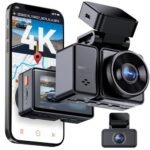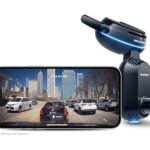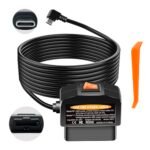
An OBD power cable plugs straight into your car's diagnostic port in seconds, while a fuse hardwire kit taps directly into your interior fuse box. Choose an OBD cable for fast, tool-free installation without touching factory wiring. Pick a fuse kit for a permanent, completely hidden installation that leaves your diagnostic port open.
I spent years installing dash cams in family cars, project builds, and daily drivers, testing both plug-in OBD cables and traditional fuse box kits. Choosing between them usually boils down to how comfortable you are pulling vehicle trim and tampering with live fuses. Here is what I learned after living with both power options across multiple vehicles.
OBD Power Cable vs Fuse Hardwire Kit: At a Glance
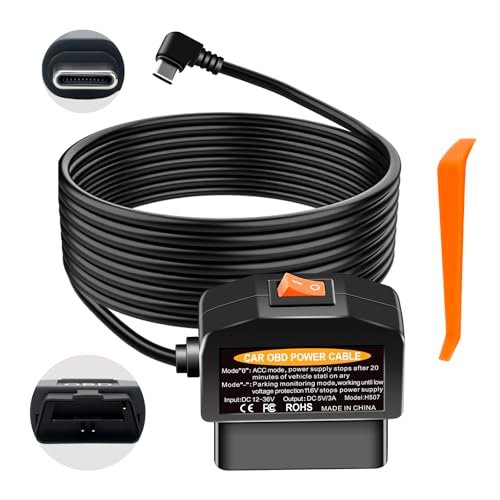
OBD Power Cable
|
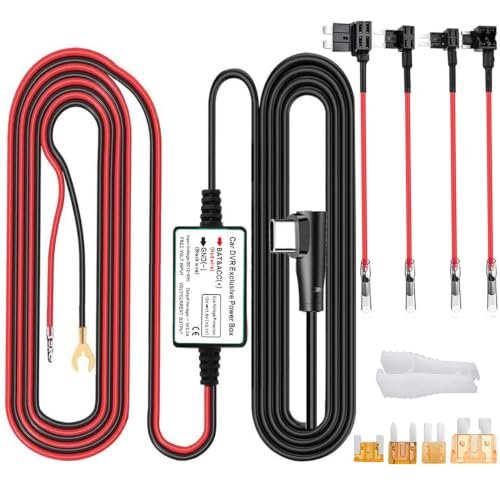
Fuse Hardwire Kit
|
|
|---|---|---|
| Installation Complexity | Tool-free, plug-and-play setup directly into the vehicle’s diagnostic port. | Complex; requires locating appropriate circuits and securing a ground wire. |
| Tool Requirements | None needed; installs by hand in seconds. | Requires a circuit tester or multimeter, crimping tools, and fuse pullers. |
| Reversibility & Portability | Effortlessly unplugged and transferred between different vehicles. | Semi-permanent installation requiring removal of taps and ground bolts to uninstall. |
| Parking Mode Support | Provides continuous power with integrated low-voltage cutoff protection via OBD. | Delivers native dual-wire ACC and constant battery power for advanced surveillance. |
| Diagnostic Port Access | Blocks the OBD-II port, requiring removal for vehicle scans or diagnostics. | Leaves the OBD-II port completely open for mechanics and other devices. |
| Cable Concealment | Mostly hidden along trim, but adapter head remains visible at footwell. | Fully concealed behind the dashboard and fuse cover for an OEM look. |
| Electrical Risk | Near-zero risk of incorrect wiring or blown vehicle fuses. | Moderate risk if tapping incorrect fuses or creating poor chassis grounds. |
Complete Comparison: OBD Power Cable vs Fuse Hardwire Kit
| BNnYY OBD2 to USB-C Dash Cam | Gebildet Dash Cam Hardwire Kit, Type | |
|---|---|---|
| Product Image | |
|
| Price | View On Amazon | View On Amazon |
| Category | OBD-II Power Adapter | Fuse Box Hardwire Kit |
| Installation Method | Plug & Play via OBD-II port (tool-free in ~3 mins) | Fuse box tapping (requires routing to BAT/ACC & ground) |
| Power Output | 5V / 3A (USB-C) | 5V / 2.5A (USB-C) |
| Cable Length | 3.5 meters (11.5 ft) | 3.2 meters (10.5 ft) |
| Parking Mode Control | Dual-mode physical switch (20-min daily delay vs. 24/7 surveillance) | Hardwired BAT/ACC line selection (manual setup) |
| Low-Voltage Protection | 11.6V (12V) / 23.4V (24V) | 11.6V (12V) / 23.2V (24V) |
| Fuse & Tool Accessories | Not required (direct OBD connection) | Includes 4 fuse types (Low-Profile Mini, Mini, ATO, Micro2) & pry bar |
| Best For | Quick, tool-free installation with switchable parking surveillance | Permanent fuse-box integration across varied fuse types |
| Amazon Link | View On Amazon | View On Amazon |
| Overall Winner | Winner | Runner-up |
BNnYY OBD2 to USB-C Dash Cam Power Adapter
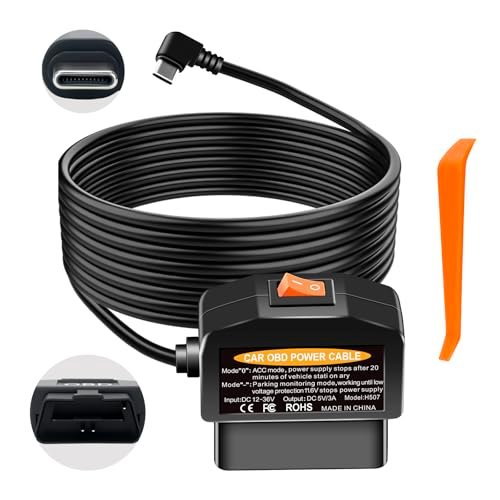
The BNnYY OBD2 adapter converts your car’s diagnostic port into a dedicated power supply without requiring hand tools. I found the physical dual-mode switch especially handy, letting you toggle between a 20-minute delayed shutoff and full 24/7 parking surveillance. Its integrated chip delivers 11.6V/23.4V low-voltage protection, shutting down the camera before your starter battery drains out. With a generous 3.5-meter Type-C cable, routing the wire along the headliner down to the driver footwell takes minimal effort. Because it only draws battery power and grounds itself, it avoids touching your vehicle’s sensitive ECU data lines. You get a steady 5V/3A output that powers modern USB-C dash cams cleanly while leaving your 12V cigarette lighter open for phones.
Key Features
- Physical dual-mode toggle switch for daily driving or round-the-clock parking surveillance
- Automatic low-voltage cutoff at 11.6V for 12V cars and 23.4V for 24V trucks
- Tool-free plug-and-play installation into any standard OBD-II diagnostic port
- 3.5-meter cable length with 5V/3A USB-C output using the A5-B5 pin definition
- Pure power draw design that never accesses or interferes with vehicle ECU data
Pros
- Installs in less than three minutes without opening the fuse panel
- Dedicated switch lets you disable parking mode quickly during long airport stays
- Frees up the 12V accessory socket for other devices
- Generous cable length hides easily behind rubber weatherstripping
Cons
- Blocks the OBD-II port unless you remove it for mechanic diagnostic scans
- Only compatible with USB-C cameras wired to the A5-B5 pin standard
- Bulkier connector head can protrude near driver foot pedals on certain vehicles
Best for: Drivers who want quick parking mode monitoring without probing live fuse slots or modifying leased vehicle wiring.
Expert Opinion: It delivers the easiest parking mode setup on the market today. Just verify your camera uses standard A5-B5 pins before buying.
Gebildet Dash Cam Hardwire Kit
The Gebildet hardwire kit connects directly to your car’s internal fuse box for a completely hidden, factory-style installation. It features 11.6V and 23.2V low-voltage cutoff protection, ensuring your car battery retains enough reserve power to turn the engine over. With four fuse tap varieties included (Low-Profile Mini, Mini, ATO, and Micro2), you rarely have to run to the auto parts store for extra adapters. The cable runs 3.2 meters long and delivers a steady 5V/2.5A USB-C feed suited for dash cams and radar detectors alike. Setting it up requires finding both constant battery power and an accessory fuse, giving you precise control over your parking monitor duration. Tucking the wires behind your A-pillar trim results in an invisible layout that preserves your interior aesthetics.
Key Features
- Direct fuse box wiring with four included fuse tap sizes (Low-Profile Mini, Mini, ATO, Micro2)
- Built-in low-voltage protection cutting power at 11.6V on 12V systems
- 3.2-meter overall length with 5V/2.5A USB-C output
- Clear wiring paths for constant battery (BAT) or ignition-switched (ACC) power
- Includes basic trim pry tool and adhesive pads for cleaner wire routing
Pros
- Leaves your diagnostic port and 12V cigarette socket completely unobstructed
- Four fuse tap types ensure compatibility with virtually any vehicle fuse box
- Completely hidden installation once routed behind trim panels
Cons
- Requires a multimeter or test light to locate correct vehicle fuses
- Changing between parking mode and ignition-only mode requires physical rewiring
- Needs a solid bare metal grounding bolt near the fuse panel
Best for: DIYers looking for a permanent, hidden installation that leaves their diagnostic port completely free for scanners.
Expert Opinion: This kit is my go-to recommendation for permanent dash cam installs when you want an authentic factory appearance.
OBD Power Cable vs Fuse Hardwire Kit: Key Differences That Matter
Performance Comparison
Both setups step down your vehicle’s 12V or 24V electrical system to 5V USB power, but they differ in how they manage your car battery. The BNnYY OBD cable draws continuous power from pins 4, 5, and 16 on the diagnostic port. It relies on an internal timer or constant voltage monitoring controlled by its physical switch. Mode 0 powers down 20 minutes after parking, which works well if you drive daily.
The Gebildet fuse kit handles power management through your fuse box layout. Connecting the red wire to a constant battery circuit grants continuous surveillance, while splicing into an accessory circuit shuts the camera off instantly with the key. Both units cut power around 11.6V, but the OBD cable lets you change behavior with a flick of a switch instead of pulling fuses again.
Price and Value Analysis
Comparing costs reveals near parity in initial purchase price, yet installation costs vary wildly. The BNnYY OBD adapter requires zero extra tools. You open the box, route the wire, plug it in, and drive away.
The Gebildet hardwire kit costs about the same on paper and includes four fuse tap styles. However, you will need a circuit tester, crimpers, and a socket wrench to secure the ground wire to bare chassis metal. If you do not own these tools or plan to pay a professional audio shop, the true cost of the fuse kit increases substantially.
Build Quality Comparison
The BNnYY adapter sports a molded OBD-II connector housing its buck converter and mode switch. Plastic casing feels solid, though the plug itself adds roughly an inch and a half of depth below your lower dashboard.
Gebildet houses its transformer inline along the cable. This creates a slimmer profile that tucks behind the dashboard side panels easily. Its automotive-grade wires resist heat well, and the crimp terminals fit snugly into the included fuse taps.
User Experience Differences
Living with these two cables reveals distinct trade-offs. The OBD cable is unmatched for convenience. When inspection time comes or your mechanic needs to plug in a scanner, you simply unplug the adapter. The downside is that your diagnostic port remains occupied, meaning you cannot run a real-time engine monitor or insurance tracker simultaneously.
The fuse hardwire kit takes roughly 45 minutes of contorted effort under the steering wheel to install. Once finished, you never think about it again. Your OBD port stays empty, no wires dangle near your pedals, and the installation looks like it rolled out of the factory.
Which Should You Choose?
Your comfort with vehicle wiring and your need for an open diagnostic port should decide the choice.
| Choose BNnYY OBD Power Cable if… | Choose Gebildet Fuse Hardwire Kit if… |
|---|---|
| You want parking mode running within five minutes | You regularly use your OBD port for telematics or gauges |
| You drive a leased car where altering fuses is risky | You want an invisible installation with no exposed footwell cords |
| You want a physical switch to toggle parking surveillance | You prefer a permanent connection grounded to the vehicle chassis |
| You lack basic electrical tools like multimeters or crimpers | You want separate ignition and battery trigger circuits |
Frequently Asked Questions
Q: In the debate of OBD Power Cable vs Fuse Hardwire Kit, which is safer for car electronics?
A: Both options are safe when installed correctly. The OBD cable only taps standard battery power and ground pins without reading or writing ECU data. The fuse kit draws power through dedicated, fused circuits that isolate your camera from electrical spikes.
Q: Can an OBD Power Cable vs Fuse Hardwire Kit void my vehicle warranty?
A: Neither option voids your warranty under standard consumer protection laws. Dealerships prefer OBD cables on leased vehicles because they leave zero physical traces when removed. Fuse taps also leave wiring intact, but you must remember to replace the original fuses properly.
Q: Does an OBD power cable drain your car battery faster than a fuse kit?
A: Power consumption depends on the camera, not the cable type. Both units featured here include automatic low-voltage cutoffs around 11.6V to prevent a dead battery. If you leave parking mode active for multiple days on an older battery, both cables will eventually cut power to safeguard engine cranking.
Q: Can I use an OBD splitter to run a diagnostic tool and my camera at the same time?
A: Yes, you can use an OBD-II Y-splitter cable. Keep in mind that some high-speed diagnostic scanners experience communication errors if an accessory draws power from the secondary branch during active data logging.
Q: Why does the fuse kit require a ground connection while the OBD cable does not?
A: The OBD port already contains dedicated ground connections inside its 16-pin connector. A fuse box only distributes positive voltage, which means you must fasten the black ground ring of a fuse kit to an unpainted metal bolt on your car chassis.
Q: How do I know which fuse slots to use for a dash cam hardwire kit?
A: You need a basic 12V test light or digital multimeter. Look for an accessory fuse that only lights up when the ignition key is turned on, and a constant battery fuse that stays powered even when the car is locked. Common choices include the radio or accessory socket for switched power, and the door lock or hazard circuit for constant battery power.
When you purchase a product through Amazon links on carsolutionpro.com, we may earn a small commission at no extra cost to you. This helps support the site and keep our content free. As an Amazon Associate, we earn from qualifying purchases made through our links.