Microfiber towels use synthetic, split fibers to grab fine dust, trap liquids, and leave streak-free glass surfaces, while cotton towels rely on natural plant fibers that excel at absorbing thick grease, heavy oils, and harsh chemical spills. Use microfiber for auto detailing and dusting, and choose cotton for rough garage jobs.
Over the past decade of detailing cars and running a home workshop, I have ruined plenty of surfaces by grabbing the wrong rag. Testing the USANOOKS microfiber cloths alongside Nabob Wipers cotton shop towels showed me where each fabric truly shines. Here is a clear breakdown of how these materials perform across real-world cleaning tasks.
Microfiber Towels vs Cotton Towels: At a Glance
Microfiber Towels
|
Cotton Towels
|
|
|---|---|---|
| Paint Safety | Gentle on clear coats; split fibers lift dirt without scratching. | Coarser natural fibers can cause swirl marks and micro-scratches on paint. |
| Water Absorbency | Superior absorption; holds up to 8–10 times its weight in liquid. | Moderate absorption; saturates quickly and takes longer to dry. |
| Dust & Particle Trapping | Electrostatically grabs and traps fine dust, grit, and polish deep inside fibers. | Tends to push dust and loose debris across surfaces instead of trapping. |
| Linting Performance | Virtually lint-free, leaving clean, streak-free glass and mirror finishes. | Prone to shedding fiber lint, especially on glass and smooth trim. |
| Care & Washing Requirements | Requires low heat and no fabric softeners to prevent fiber melting. | Low maintenance; withstands high heat, heavy bleach, and harsh detergents. |
| Durability & Lifespan | Retains softness and performance over hundreds of washing cycles. | Durable initially, but fibers stiffen and fray with repeated washing. |
| Best Automotive Use | Paint drying, wax buffing, interior detailing, and glass cleaning. | Cleaning oily engine parts, wiping dirty tools, and absorbing heavy grease spills. |
Complete Comparison: Microfiber Towels vs Cotton Towels
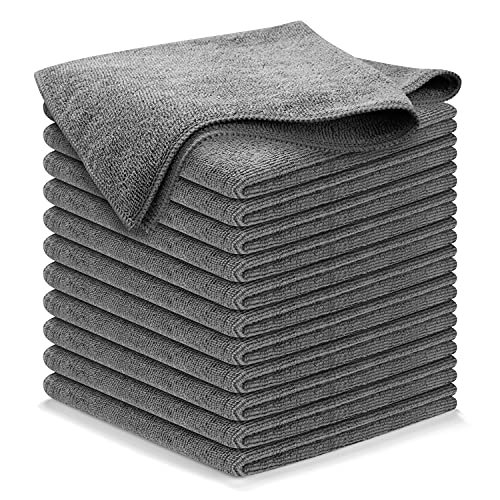
| USANOOKS Microfiber Cleaning Cloth Grey – | Nabob Wipers Auto Mechanic Shop Towels | |
|---|---|---|
| Product Image | |
|
| Price | View On Amazon | View On Amazon |
| Category | Premium Microfiber | Commercial Cotton Rags |
| Material & Fabric Construction | 300 GSM Microfiber (10x Grip-Root Weave, 2.5mm thickness) | 100% Pure Ring-Spun Cotton |
| Pack Count & Dimensions | 12-Pack (12.5″ x 12.5″) | 25-Pack (14″ x 14″) |
| Absorbency | Sucks up 8x to 10x its weight (4x more absorbent than cotton) | Standard high cotton absorbency for grease, paint, and spills |
| Durability & Lifespan | Rated for 1200+ washes with overlock braided stitching | Reinforced 4-sided overlocked stitching, standard reusable |
| Surface Safety & Lint Resistance | Won’t scratch, swirl, pill, or shed; swirl-free mirror shine | Lint-free ring spun cotton construction |
| Edge Construction | Heavy-duty overlock braided stitching | Overlocked stitched hem on 4 sides |
| Best For | Automotive detailing, mirror finishing, and delicate surfaces | Heavy mechanic grease, paint spills, and shop cleanup |
| Amazon Link | View On Amazon | View On Amazon |
| Overall Winner | Winner | Runner-up |
USANOOKS Microfiber Cleaning Cloth Review
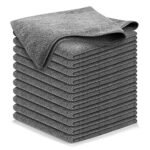
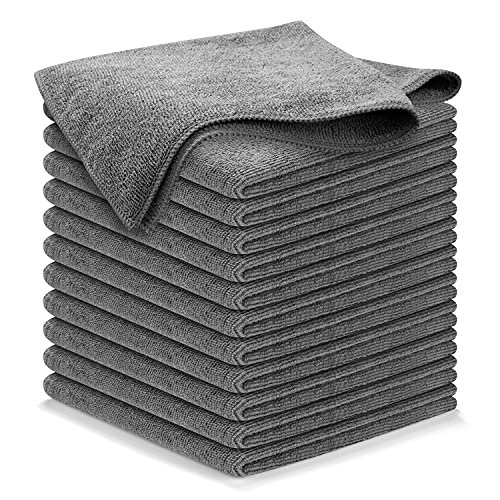
The USANOOKS microfiber cloth is built around a proprietary 10x Grip-Root weave designed to pull fine dust and moisture deep into the fabric. Each towel features a 2.5mm thick design that feels substantial in the hand, avoiding the flimsy feel common in cheap multipacks. Rated at 300 GSM, the split synthetic fibers boast 8x to 10x liquid absorption relative to their dry weight. Heavy-duty overlock braided stitching keeps the edges from fraying after repeated cycles in the washer. The brand rates these cloths for 1200+ washes, providing years of daily service without shedding lint onto delicate paint or glass.
Key Features
- 10x Grip-Root weave traps fine grit, dust, and liquids securely
- 300 GSM density and 2.5mm thickness provide long-term durability
- Overlock braided stitching prevents fraying through hundreds of wash cycles
- Rapid-dry release layers prevent water spots and swirl marks on clear coats
Pros
- Traps light dust without requiring chemical spray
- Leaves mirrors, windows, and touchscreens completely streak-free
- Highly durable edge stitching survives hot water laundry cycles
Cons
- Melts easily if dried on high heat or exposed to hot exhaust pipes
- Catches uncomfortably on rough hands and jagged metal burrs
Best for: Auto detailers, electronics cleaners, and homeowners who want streak-free windows and lint-free vehicle finishes.
Expert Opinion: These cloths excel on delicate paint and clear glass because the split synthetic fibers trap fine grit rather than dragging it across the surface.
Nabob Wipers Cotton Shop Towels Review
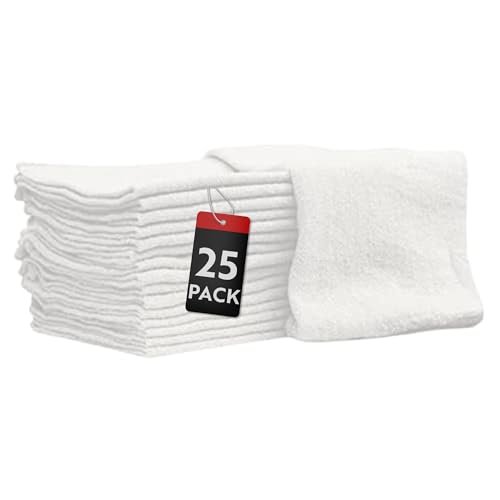
Nabob Wipers manufactures these shop rags using 100% pure ring-spun cotton to tackle heavy industrial messes. The square 14″x14″ size provides ample surface area for folding into quarters when scrubbing workbench grime. Each rag has reinforced overlock stitching on all four sides to prevent the hems from unspooling during rough use. Natural cotton fibers easily soak up motor oil, brake fluid, wet paint, and transmission fluids without breaking down. They are fully machine washable and reusable, making them a reliable alternative to disposable blue paper shop rolls.
Key Features
- 100% pure ring-spun cotton construction handles tough mechanical tasks
- Sized at 14″x14″ inches for generous wipe coverage
- Four-sided overlocked stitching prevents hem unraveling
- Heat-resistant natural fibers tolerate hot engine bays and industrial laundry
Pros
- Tolerates harsh solvents, acetone, brake cleaner, and petroleum products
- Withstands high-heat washing and drying cycles without damage
- Budget-friendly bulk pack makes them expendable for filthy jobs
Cons
- Leaves stray lint fibers behind on clean glass
- Pushes dry dust around unless dampened with a cleaning spray
Best for: Mechanics, woodworkers, and DIYers dealing with grease, transmission fluid, solvents, and rough workshop surfaces.
Expert Opinion: When dealing with brake cleaner, mineral spirits, or piping hot engine blocks, natural cotton is the only material that will not melt into a sticky mess.
Microfiber Towels vs Cotton Towels: Key Differences That Matter
Performance Comparison
Microfiber owes its cleaning power to microscopic, wedge-shaped synthetic filaments made from polyester and polyamide. When split, these fibers generate a static charge that acts like a magnet for fine dust, pollen, and pet dander. In my detailing bay, a dry USANOOKS towel pulls road film off a windshield in one pass without spraying glass cleaner.
Cotton takes a completely different physical approach. Ring-spun cotton fibers are hollow tubes that absorb liquid through basic capillary action. They handle dense liquids like 10W-30 motor oil, gear lube, and wood stains far better than synthetic weaves. Microfiber struggles with thick sludge because grease coats the fine fibers, clogging the microscopic pockets and ruining the towel for future delicate work.
Price and Value Analysis
Cotton shop towels like Nabob Wipers usually cost much less per unit. You can pick up a 25-pack of cotton rags for a fraction of the cost of premium detailing microfiber. That lower price tag changes how you treat them. When I finish draining an oil pan or wiping down a greasy motorcycle chain, I feel fine throwing a ruined cotton rag in the trash.
Microfiber towels demand a higher initial investment, but they make up for it through longevity. USANOOKS cloths survive over a thousand washes if laundered correctly. Because they clean effectively with plain water, they also save you money on specialty surface sprays over time.
Build Quality Comparison
The USANOOKS towels rely on dense synthetic knitting with braided edge overlocking. The 300 GSM weight gives them enough plushness to cushion your fingers against body panels, preventing accidental pressure scratches. The synthetic fibers will not decompose, fray, or shed threads during standard washing.
Nabob Wipers cotton rags feel rougher, thinner, and more utilitarian. Ring-spun cotton has great tensile strength against tearing, yet the natural cellulose fibers shed small amounts of lint as they age. They can handle aggressive scrubbing against splintered wood, rusty iron, and coarse concrete without snagging or pulling apart.
User Experience Differences
Wiping down an interior with microfiber feels effortless because the fabric grips surfaces smoothly. The main annoyance happens when you have dry, calloused hands, since split microfiber clings to rough skin like Velcro. Microfiber also requires strict laundry rules: no fabric softeners, no bleach, and zero heat in the dryer.
Cotton towels provide a familiar, rugged feel. You can wash them with harsh detergents, dry them on high heat, and toss them in a bin without worrying about static buildup. They lack the soft glide of microfiber on smooth plastic, but they never grab at your skin or melt when touching a warm engine manifold.
Which Should You Choose?
Your specific cleaning environment and the chemical sensitivity of your surfaces should guide your choice.
| Choose USANOOKS Microfiber Towels if… | Choose Nabob Wipers Cotton Towels if… |
|---|---|
| Cleaning mirrors, windows, and glossy automotive paint without streaks | Wiping down oily car parts and greasy workshop tools |
| Dry dusting furniture and sensitive computer screens safely | Working with harsh chemicals like acetone or paint thinner |
| Soaking up thin liquid spills quickly with minimal effort | Cleaning hot surfaces where synthetic materials would melt |
| General household cleaning without relying on chemical sprays | Rough garage chores where towels might get tossed out |
Frequently Asked Questions
Q: In the debate of Microfiber Towels vs Cotton Towels, which is better for car detailing?
A: Microfiber towels are far superior for car detailing because their split synthetic fibers trap abrasive dust particles safely inside the weave. Cotton towels can grind trapped grit against your clear coat, causing fine swirl marks and light scratches over time.
Q: Can I wash Microfiber Towels and Cotton Towels together in the same laundry load?
A: Never wash them together. Cotton naturally sheds lint during wash cycles, and microfiber towels will act like magnets, trapping that lint deep inside their synthetic fibers and ruining their streak-free performance.
Q: Microfiber Towels vs Cotton Towels: Which lasts longer in daily use?
A: Microfiber towels generally last longer because synthetic polyester and polyamide fibers resist degradation far better than organic cotton. A quality microfiber cloth can easily survive hundreds of gentle washes without losing its static charge.
Q: Do cotton shop towels scratch automotive glass?
A: Cotton itself will not scratch glass, but the coarse fibers often hold onto stray grit and debris from past jobs. Cotton also leaves behind tiny lint particles, making it difficult to achieve a completely clear, streak-free window.
Q: Why do microfiber towels lose their absorbency over time?
A: Microfiber loses absorbency when washed with fabric softeners or dried with dryer sheets. These products coat the microscopic split fibers with waxy chemicals, clogging the weave and stopping the fabric from pulling in liquids.
Q: Which towel is safer for hot engine parts and industrial solvents?
A: Cotton towels are much safer for hot surfaces and strong chemicals. Microfiber melts into plastic residue when exposed to high heat, and harsh solvents like lacquer thinner can dissolve synthetic fibers.
Q: Can cotton towels clean surfaces without chemical sprays?
A: Cotton needs water or a chemical cleaner to capture dust and grime effectively. Without moisture, cotton rags simply push dust across a surface instead of lifting it away like charged microfiber does.
When you purchase a product through Amazon links on carsolutionpro.com, we may earn a small commission at no extra cost to you. This helps support the site and keep our content free. As an Amazon Associate, we earn from qualifying purchases made through our links.