The core difference between a wired dash cam and a wireless dash cam is how you interact with footage and hardware. Wired systems rely on physical screens and continuous vehicle power lines, while wireless dash cams transfer recordings directly to your phone via local Wi-Fi. Choose wired units for dedicated multi-channel coverage, and wireless compact cams for clean, distraction-free windshields.
I spent three months testing both the Galphi 4K mini dash cam and the ROVE R2-4K Dual on my daily commute and weekend road trips. You will learn how their video quality, mobile connectivity, and installation demands hold up under real driving conditions. By the end, you will know exactly which camera style fits your vehicle and driving habits.
Wired Dash Cam vs Wireless Dash Cam: At a Glance
Wired Dash Cam
|
Wireless Dash Cam
|
|
|---|---|---|
| Power Source | Draws continuous power from the vehicle fuse box or 12V outlet. | Relies on internal rechargeable batteries or external battery packs. |
| Installation Complexity | Requires routing and tucking cables along the windshield and trim panels. | Fast, tool-free setup with simple suction or adhesive mounting. |
| Recording Duration | Operates continuously without risk of unexpected battery depletion. | Limited recording time constrained by battery capacity and charge levels. |
| Parking Surveillance | Supports reliable 24/7 parking mode when hardwired to vehicle power. | Offers brief motion-triggered clips to conserve limited battery reserves. |
| Cabin Aesthetics | May introduce visible cord clutter if cables are not properly tucked. | Completely clean, cable-free appearance on the windshield and dashboard. |
| Temperature Resistance | High heat tolerance, often utilizing durable supercapacitors over batteries. | Lower heat tolerance due to lithium batteries vulnerable to swelling. |
| Ongoing Maintenance | Set-and-forget operation with automated power cycling with ignition. | Requires frequent removal or manual charging to keep the device active. |
Complete Comparison: Wired Dash Cam vs Wireless Dash Cam
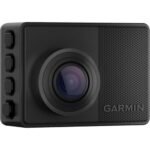
| galphi 4K Dash Cam Front, 5GHz | ROVE R2-4K Dual Dash Cam Front | |
|---|---|---|
| Product Image | |
|
| Price | View On Amazon | View On Amazon |
| Category | Budget | Mid-Range |
| Camera Coverage | Single Channel (Front Only) | Dual Channel (Front + Rear) |
| Video Resolution | Native 4K 2160P UHD Front | Upscaled 4K Front (2.5K QHD) + 1080P FHD Rear |
| Image Sensor & Optics | F/1.6 Aperture with WDR, 160° Wide-Angle Lens | Sony STARVIS 2 IMX675 5MP Sensor, F/1.5 Front / F/1.8 Rear, HDR |
| Display | Screen-Free (Stealth & Low Distraction) | 3″ IPS Wide Display Screen |
| Wi-Fi & Download Speed | 5GHz Wi-Fi (Up to 8MB/s) | Dual-Band 5.8GHz / 2.4GHz Wi-Fi (Up to 20MB/s) |
| Built-in GPS | Not Supported | Built-in GPS (Speed, Route, Compass & PC/Mac Player) |
| Included Memory Card | 32GB MicroSD Card (Supports up to 256GB) | 128GB MicroSD Card (Supports up to 1TB) |
| Parking Mode Options | 24H Time-Lapse Mode (Hardwire Kit Required) | 24/7 Mode: Time-Lapse (1 fps), Motion Detection, Collision Detection (Hardwire Kit Required) |
| Best For | Drivers seeking a compact, screen-free front dash cam that won’t distract while driving | Drivers wanting comprehensive front and rear surveillance with GPS logging and high-speed downloads |
| Amazon Link | View On Amazon | View On Amazon |
| Overall Winner | Runner-up | Winner |
Galphi 4K Mini Dash Cam Review
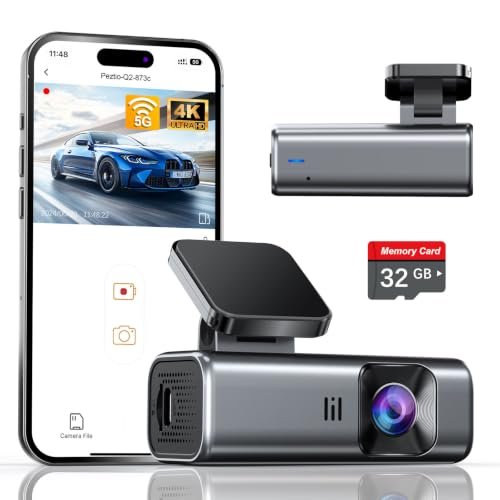
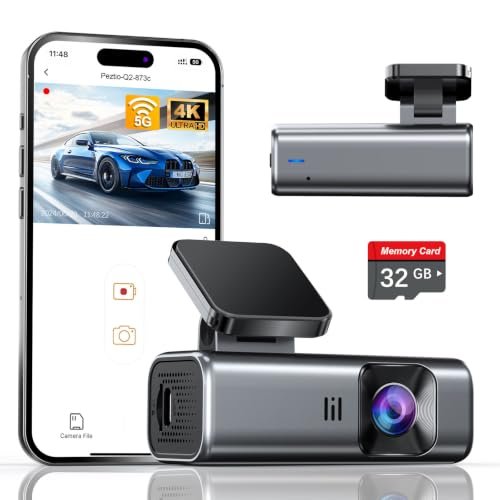
The Galphi 4K mini dash cam emphasizes a stealthy footprint that hides neatly behind your rearview mirror. I installed this unit in under ten minutes thanks to its compact, screen-free design that eliminates distracting nighttime glare on the road. It captures video with a 4K 2160P UHD resolution and a 160-degree wide-angle lens, producing clean footage of multiple traffic lanes without heavy fisheye distortion. Media transfers happen over advanced 5GHz Wi-Fi, allowing the companion phone app to download clips at rates up to 8MB/s. Galphi packages a 32GB memory card in the box so you can start recording on day one without sourcing extra storage. For drivers wanting round-the-clock protection, the unit supports 24-hour parking monitoring and loop recording via an integrated G-sensor.
Key Features
- 4K UHD 2160P Video: Sharp single-channel recording with a 160-degree viewing angle across multiple lanes
- 5GHz Wi-Fi and App: High-speed wireless transfers reaching 8MB/s for rapid clip review on iOS and Android
- Screenless Form Factor: Ultra-compact profile that prevents dashboard clutter and nighttime glare
- Ready Out of Box: Bundled with a 32GB memory card, G-sensor, and loop recording functionality
- 24-Hour Parking Monitor: Automated surveillance capabilities when paired with an optional hardwire kit
Pros
- Tiny footprint hides completely behind the rearview mirror
- Fast 5GHz Wi-Fi makes pulling accident clips easy on a phone
- Comes with a memory card ready for immediate use
- Wide 160-degree view captures cross-traffic clearly
Cons
- Lacks a rear-facing camera for capturing rear-end collisions
- No physical screen for instant video checks without a smartphone
Best for
Drivers wanting an invisible, set-it-and-forget-it front camera that transfers clips directly to a phone without screen clutter.
Expert Opinion: If you despise windshield clutter and want reliable front video evidence without spending big money, the Galphi delivers surprising clarity in an impressively small shell.
ROVE R2-4K Dual Dash Cam Review
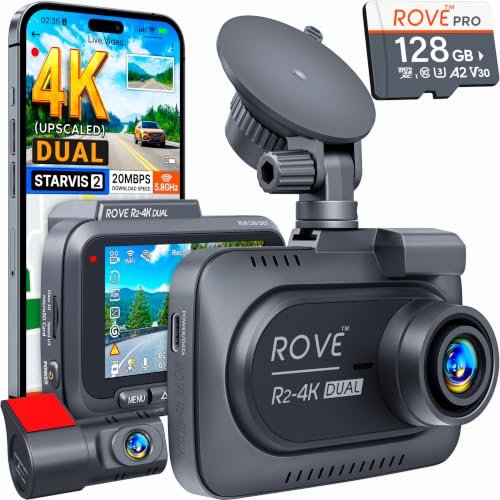
The ROVE R2-4K Dual offers a full-featured setup for motorists who want dual-angle video and physical on-device controls. Up front, the camera combines an upscaled 4K front resolution with a 1080P rear camera to guard both bumpers simultaneously. Low-light sensitivity stands out here because the front lens pairs a Sony STARVIS 2 IMX675 sensor with a bright f/1.5 aperture and HDR processing. During my highway testing, the built-in GPS tracking accurately stamped my speed and travel path right onto the video playback. Reviewing files on the go is simple through the ultra-fast 5.8GHz Wi-Fi, which hit download speeds up to 20MB/s on my phone. ROVE even includes a free 128GB microSD card alongside a vibrant 3-inch IPS display for quick roadside adjustments.
Key Features
- Dual-Channel Recording: Upscaled 4K front video paired with a 1080P Full HD rear camera
- Sony STARVIS 2 IMX675 Sensor: Premium night imaging with an f/1.5 aperture and high dynamic range
- 5.8GHz High-Speed Wi-Fi: Mobile transfers reaching up to 20MB/s for rapid file offloading
- Built-in GPS Logging: Records coordinates, real-time speed, and compass direction directly onto video files
- Generous 128GB Storage Included: Out-of-the-box readiness with support for cards up to 1TB
Pros
- Front and rear coverage provides total protection during accidents
- Superb low-light performance thanks to the STARVIS 2 sensor
- Generous 128GB card included in the package
- Built-in GPS supplies vital speed and location evidence
Cons
- Larger 3-inch display occupies more windshield space
- Routing the rear camera cable across the vehicle cabin takes time
Best for
Rideshare operators, commuters, and road-trippers who need dual-camera protection, physical display confirmation, and GPS route logging.
Expert Opinion: ROVE packed serious technology into this dual-camera kit, offering top-tier night vision and rapid wireless downloads that make managing driving records painless.
Wired Dash Cam vs Wireless Dash Cam: Key Differences That Matter
Performance Comparison
Resolution numbers tell only half the story on the road. The Galphi delivers native 4K output from a single front perspective, giving you sharp plate legibility straight ahead in broad daylight. Colors look balanced, and the wide 160-degree field captures vehicles merging from adjacent lanes smoothly.
ROVE takes a different tactical route. Its front camera captures at 2.5K and upscales to 4K, backed by a Sony STARVIS 2 sensor. At night, that Sony hardware pulls far ahead. It cuts down headlight flare, illuminates dark street corners, and captures license plates that the Galphi turns into blurry glare. Adding the 1080P rear lens gives the ROVE system total situational awareness that a solo front camera cannot match.
Price and Value Analysis
Budget plays a massive role in this comparison. Galphi prices its unit aggressively, offering basic 4K recording and a 32GB card at an accessible entry price. You get immediate plug-and-play capability without spending extra cash on memory.
The ROVE R2-4K Dual sits at a higher price bracket, yet it justifies that markup through bundled hardware. Inside the box, you receive a front camera, a rear camera, long extension cables, and a spacious 128GB card. Factoring in the integrated GPS module, the ROVE provides superior overall value for drivers needing comprehensive security.
Build Quality and Hardware Comparison
Galphi keeps things minimalistic. Its plastic housing is featherlight, utilizing a sticky mount that welds directly against the glass. The camera lacks an integrated screen, keeping its internal heat generation low during hot summer afternoons.
ROVE feels more substantial in the hand. The chassis accommodates a 3-inch IPS monitor, tactile menu buttons, and threading for an optional circular polarizing filter. It uses a supercapacitor rather than a volatile lithium battery, ensuring long-term survival in freezing winters and scorching summers.
User Experience Differences
Operating the Galphi requires your phone. Because there is no screen, you must launch the smartphone application over 5GHz Wi-Fi to align the lens, change settings, or view recorded clips. I found the connection fast and responsive at 8MB/s, but reaching for my phone every time I wanted to inspect a clip felt like an extra step.
ROVE blends wireless capability with standalone convenience. You can check your framing, adjust G-sensor sensitivity, or playback a collision directly on its 3-inch screen. When you do want files on your phone, its 5.8GHz Wi-Fi pushes video across at an astonishing 20MB/s, saving valuable minutes on the roadside.
Which Should You Choose?
Your final decision hinges on whether you value windshield invisibility or comprehensive two-channel accident coverage.
| Choose Galphi 4K Mini if… | Choose ROVE R2-4K Dual if… |
|---|---|
| You want an invisible profile without a glowing screen | You need front and rear cameras to protect against tailgaters |
| Your budget requires an affordable entry point into 4K video | You want built-in GPS stamping speed and coordinates on footage |
| You prefer managing all recordings directly through a smartphone app | You drive frequently at night and require STARVIS 2 sensor clarity |
| You only need front-facing coverage for basic daily commuting | You prefer viewing footage instantly on an integrated physical display |
Frequently Asked Questions
Q: In a Wired Dash Cam vs Wireless Dash Cam setup, how do both units receive electrical power?
A: Both styles typically plug into your car 12V cigarette lighter socket or tap into the fuse box for continuous power. The term wireless refers primarily to how the camera transmits video data to your phone via internal Wi-Fi rather than running completely without power cables.
Q: What is the primary operational tradeoff in Wired Dash Cam vs Wireless Dash Cam choices?
A: The main tradeoff centers on cabin clutter versus on-device convenience. Wired dash cams with integrated screens let you review video and verify operation instantly on the glass, while screenless wireless dash cams preserve a clear windshield but require a smartphone to view files.
Q: Does the Galphi dash cam require an active cellular data plan to work?
A: No. The camera generates its own local 5GHz Wi-Fi network purely for direct device-to-phone communication. You do not need mobile data, internet access, or a monthly subscription to browse and save your video clips.
Q: Can the ROVE R2-4K Dual record while the vehicle is parked and turned off?
A: Yes, it supports 24-hour parking monitoring. To activate this continuous surveillance feature, you must install an optional three-lead hardwire kit that connects the camera straight to your car battery.
Q: How does the Sony STARVIS 2 sensor on the ROVE improve nighttime recording?
A: The STARVIS 2 IMX675 sensor features a larger dynamic range and higher sensitivity to low light. Combined with an f/1.5 aperture, it pulls in ambient light from streetlamps to keep license plates readable instead of washing out under your headlights.
Q: Is a 32GB memory card large enough for 4K video recording?
A: A 32GB card holds roughly two to three hours of 4K footage before loop recording starts overwriting the oldest unprotected files. Upgrading to a 128GB or 256GB card gives you several days of driving history before files cycle out.
When you purchase a product through Amazon links on carsolutionpro.com, we may earn a small commission at no extra cost to you. This helps support the site and keep our content free. As an Amazon Associate, we earn from qualifying purchases made through our links.