Burnishing compound is a liquid detergent formulated for wet tumbling metal media to polish jewelry and hardware. Rubbing compound is an abrasive paste made to level automotive clear coats and remove scratches from painted surfaces. Choose burnishing compound for tumbling small metal parts, and pick rubbing compound for hand or machine paint correction.
In my workshop, I keep both of these products on hand, but grabbing the wrong one can easily ruin a workpiece. You will learn how each formula operates, where their capabilities end, and which one solves your specific surface prep problem. Let’s break down how they stack up in real-world use.
Burnishing Compound vs Rubbing Compound: At a Glance
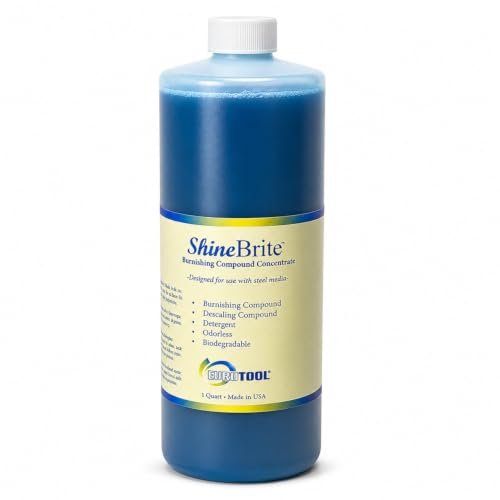
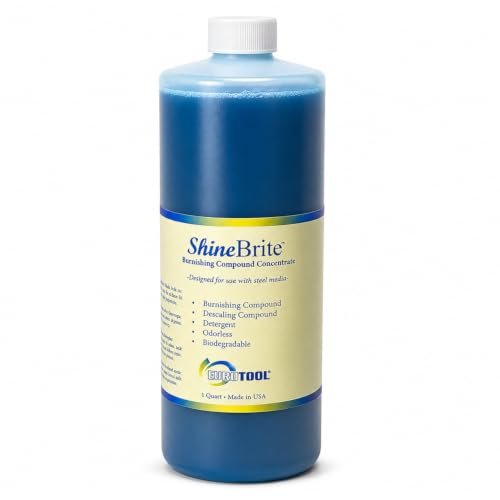
Burnishing Compound
|
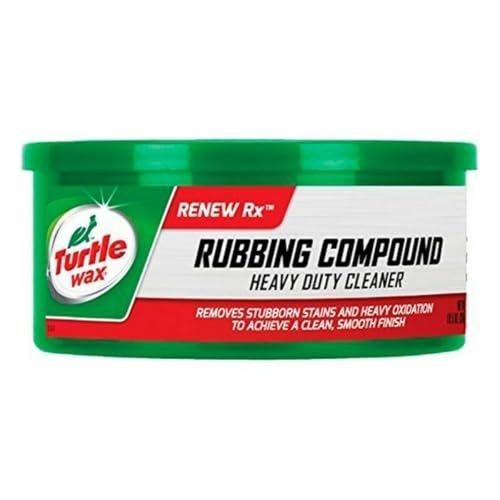
Rubbing Compound
|
|
|---|---|---|
| Primary Function | Polishes and refines surfaces to achieve an ultra-smooth, mirror-like gloss. | Aggressively cuts paint or clear coat to level deep scratches and oxidation. |
| Abrasive Action | Non-abrasive or ultra-fine; lubricates, cleans, and smooths microscopic surface peaks. | Heavy to medium abrasive; physically grinds down defects across the surface. |
| Material Removal | Negligible to zero material loss; preserves thin coatings and base layers. | Actively strips layers of clear coat or base material to level defects. |
| Ideal Process Stage | Final finishing step to maximize gloss and clarity after correction. | Initial restoration step for heavy defect removal before finer polishing. |
| Resulting Finish | Mirror-bright, reflective finish free of micro-marring or swirl marks. | Leveled surface that typically leaves haze requiring a secondary finishing polish. |
| Common Application Method | Tumbling barrels, vibratory finishers, or ultra-soft rotary finishing pads. | Firm foam cutting pads, wool pads, or firm manual hand rubbing. |
| Risk of Surface Damage | Extremely low; will not thin out paint edges or delicate metal. | Moderate to high; improper use can easily burn through clear coat. |
Complete Comparison: Burnishing Compound vs Rubbing Compound
| EUROTOOL ShineBrite Burnishing Compound (32… | Turtle Wax T230A 10.5 Oz Rubbing | |
|---|---|---|
| Product Image | |
|
| Price | View On Amazon | View On Amazon |
| Category | Specialty Metal Tumbling Compound | Automotive Paint Rubbing Compound |
| Primary Action | Detergent, burnishing, and descaling without cutting base metal | Abrasive heavy-duty cutting for deep scratches and oxidation |
| Form & Concentration | Liquid concentrate (mixes into gallons of water bath) | Ready-to-use abrasive paste/compound |
| Application Method | Rotary/vibratory tumblers paired with steel media | Hand microfiber cloth or machine buffer |
| Surface Compatibility | Brass, copper, silver, and precious metals | Clear coats, single-stage automotive paints, and lacquers |
| Safety & Scent | Odorless and biodegradable formula | Standard automotive heavy-duty chemical formula |
| Country of Origin | Made in the USA | Not Specified |
| Best For | Brightening, descaling, and cleaning metal in tumblers | Eliminating deep car scratches, road grime, and paint swirl marks |
| Amazon Link | View On Amazon | View On Amazon |
| Overall Winner | Winner (Workshop & Metal Finishing) | Runner-up (Automotive Detailing) |
EUROTOOL ShineBrite Burnishing Compound Review
I keep a jug of EUROTOOL ShineBrite next to my rotary tumbler because it does things dry abrasives cannot touch. This liquid concentrate works alongside steel shot to transform tarnished brass, copper, and silver into mirror-bright pieces without stripping base metal away. It relies on a blend of specialized detergents, burnishing agents, and descaling properties that suspend grime in the water bath while preventing rust formation on your media. Because the solution is odorless and biodegradable, working with it in a closed basement shop never leaves behind chemical headaches or harsh fumes. You only need a couple of ounces mixed with water to treat a full batch, meaning this single container lasts through dozens of cleaning cycles.
Key Features:
– Concentrated liquid formula that dilutes into multiple gallons of working solution
– Formulated specifically for wet tumbling with stainless steel media
– Built-in descaling and rust-inhibiting agents protect both workpieces and shot
– Odorless and biodegradable chemistry safe for indoor use
– Made in the USA with specialized surfactants for non-ferrous and precious metals
Pros:
– Leaves jewelry, brass shells, and small metal parts with a bright, clean sheen
– Keeps steel shot from rusting during and after wet tumbling cycles
– High dilution ratio delivers excellent value from a single bottle
Cons:
– Completely ineffective for paint correction or vehicle bodywork
– Requires a rotary tumbler or vibratory machine and metal media to work
Best for: Jewelers, cartridge reloaders, and metalworkers who need to clean, descale, and burnish batches of small metal components in a tumbler.
Expert Opinion: ShineBrite is essentially an industrial-strength lubricant and wash that lets stainless steel shot compress and burnish metal surfaces without micro-scratching. It will not grind away deep gouges, but it creates deep reflections on hard metal goods better than any paste I have tried.
Turtle Wax T230A Rubbing Compound Review
When dealing with chalky clear coat or clear scratches on a vehicle panel, Turtle Wax T230A has been a staple in my garage for decades. It utilizes an advanced abrasive formula to physically grind down high edges on damaged clear coats, lacquer, and single-stage paint. The heavy-duty cleaning power bites into deep stains, baked-on tree sap, and severe road film that regular car washes leave behind. You get professional-grade defect removal at an entry-level price, though you must follow it with a finer polish to refine the resulting micro-marring. Its versatile application allows work by hand with a microfiber pad or via a dual-action polisher for larger panels. It spreads smoothly right out of the tub, offering an easy-to-use paste consistency that stays workable long enough to cut defects evenly.
Key Features:
– Heavy-duty abrasive paste cuts through deep clear coat scratches and heavy oxidation
– Precision cutting agents restore clarity across single-stage paint, lacquer, and modern clear coats
– Dual application flexibility lets you work by hand with a pad or with a buffer
– Contaminant stripping ability quickly removes stubborn road grime and paint transfer
– Thick paste consistency stays put on vertical body panels without running
Pros:
– Removes paint scuffs and deep blemishes that finer polishes cannot fix
– Readily accessible and budget-friendly for quick garage repairs
– Works well on various painted surfaces, gel coats, and clear plastics
Cons:
– Leaves a dull haze that requires a secondary finishing polish
– Can easily burn through thin clear coats if worked too aggressively
Best for: Car owners, DIY mechanics, and detailers needing to strip oxidation, smooth surface scratches, or erase paint transfer from vehicle finishes.
Expert Opinion: Turtle Wax T230A is a classic mechanical cutter that relies on abrasive grit to shave away microscopic layers of clear coat until scratches disappear. Treat it with respect, keep your pad flat, and always plan on a follow-up polishing step to bring back true gloss.
Burnishing Compound vs Rubbing Compound: Key Differences That Matter
Performance Comparison
These two products achieve surface improvement through opposite physical principles. EUROTOOL ShineBrite relies on peening and chemical suspension. As your tumbler spins, stainless steel shot strikes the metal items, flattening microscopic peaks into valleys while ShineBrite lubricates the impact and washes away oxides. No metal is shaved away during this cycle.
Turtle Wax T230A relies on abrasive wear. Its gritty paste acts like liquid sandpaper, slicing through the top layer of paint or plastic to level the edges of a scratch. Burnishing compound smooths by pressure and cleaning; rubbing compound smooths by controlled destruction of the upper layer.
Price and Value Analysis
ShineBrite costs more out of the gate, but the concentration factor changes the math quickly. Mixing eight ounces of concentrate yields four gallons of usable wash, which handles dozens of tumbling runs. If you store your mixed fluid cleanly, you can reuse it across multiple cycles for even better economy.
Turtle Wax T230A comes in an inexpensive tub ready to spread immediately. You consume the paste as you buff, wiping it off into a rag and discarding the residue. While the purchase price is lower, the product disappears rapidly across large jobs like an entire vehicle hood or truck bed.
Formulation and Build Quality
Looking under the lid reveals two completely different chemical profiles. ShineBrite is a clear, water-thin blue detergent concentrate that mixes immediately into clean water. It produces minimal foam, smells neutral, and contains rust inhibitors that prevent carbon or steel shot from oxidizing in storage.
Turtle Wax T230A is a dense, gritty cream loaded with mineral abrasives suspended in carrier solvents. It has a slight chemical odor and leaves behind a white, powdery residue once the carriers dry out on a panel. The compound is designed to break down under mechanical friction rather than dissolve in water.
User Experience Differences
Working with ShineBrite is predominantly passive. You measure a small capful, pour it into the tumbler barrel with your media and water, secure the lid, and turn on the motor. An hour later, you dump the barrel into a colander, rinse the parts with fresh water, and dry them. Your hands stay clean throughout the entire process.
Turtle Wax demands physical effort and careful attention. You apply the paste to an applicator, press firmly into the paint, and rub in tight circles until the compound begins to clear. If you push too hard or stay on one body line too long, you can burn straight through the clear coat to the primer. Dust cleanup requires microfiber towels and detail spray.
Which Should You Choose?
Your choice comes down to whether you are tumbling small metal parts in a machine or buffing painted surfaces by hand.
| Choose EUROTOOL ShineBrite if… | Choose Turtle Wax T230A if… |
|---|---|
| You run stainless steel media in a vibratory or rotary tumbler | You need to level scratches on automotive clear coats or lacquer paint |
| You want to brighten silver brass or copper jewelry without cutting metal | You are removing stubborn oxidation and paint transfer from vehicle body panels |
| You need to prevent your steel tumbling shot from rusting between batches | You plan to buff out defects using microfiber pads or a machine buffer |
| You want an odorless liquid concentrate that cleans without stripping material | You want a ready-to-use abrasive paste for immediate spot repairs |
Frequently Asked Questions
Q: What is the fundamental difference in Burnishing Compound vs Rubbing Compound?
A: Burnishing compound is a liquid detergent used inside a tumbling machine with metal media to peen, wash, and shine metal parts without removing base material. Rubbing compound is an abrasive cream designed to physically shave down clear coat or paint layers to remove scratches and oxidation.
Q: Can I use rubbing compound in a rotary rock or metal tumbler?
A: No, rubbing compound is far too thick and gritty for a wet tumbler. It creates a gummy paste that clogs your media, resists rinsing, and can erode fine details off delicate jewelry instead of shining it.
Q: When comparing Burnishing Compound vs Rubbing Compound, which one removes scratches better?
A: Rubbing compound removes scratches significantly better on painted surfaces because its abrasive particles grind the surrounding edges flat. Burnishing compound does not remove physical scratches because it contains zero abrasive grit; it only brightens and work-hardens metal surfaces.
Q: Can I apply burnishing compound by hand with a microfiber cloth?
A: You can use it as a gentle cleaning wash, but it will not produce a burnished shine on its own. True burnishing requires the rolling weight and friction of steel shot or porcelain media pressing against the metal surface.
Q: Will burnishing compound strip away automotive clear coat?
A: No, burnishing compound lacks the abrasive minerals necessary to cut into automotive finishes. If you wipe it on a car door, it behaves like mild car wash soap and leaves scratches completely untouched.
Q: Do I need to rinse my items after using these compounds?
A: Yes, both products require post-treatment cleanup. You must rinse burnished metal under clean water to flush away suspended soils, while rubbing compound requires buffing with a clean microfiber towel to clear off dried powder.
Q: Can I use rubbing compound on bare brass or silver?
A: You can use it by hand to cut heavy tarnish off raw metal, but it leaves behind micro-scratches that look cloudy. You will need to step down to a finer metal polish or run the piece through a tumbler with burnishing compound to restore true reflectivity.
When you purchase a product through Amazon links on carsolutionpro.com, we may earn a small commission at no extra cost to you. This helps support the site and keep our content free. As an Amazon Associate, we earn from qualifying purchases made through our links.