The primary difference lies in chemical formulation: dish soap is an aggressive degreaser designed to dissolve food oils, while car shampoo is pH-balanced to clean road grime without stripping protective wax. Use dish soap only for stripping old sealants before paint correction. Choose car shampoo for routine washing to protect your clear coat.
Over the years, I have washed hundreds of vehicles using everything from kitchen detergents to dedicated automotive formulas. In my experience detailing daily drivers and neglected project cars, grabbing a bottle of dish soap often seems tempting when the garage shelf is bare. This guide breaks down how both cleaners interact with automotive finishes so you can pick the right bottle for your detailing goals.
Dish Soap vs Car Shampoo: At a Glance
Dish Soap
|
Car Shampoo
|
|
|---|---|---|
| pH Balance | Typically alkaline; formulated to cut through heavy household grease and animal fats. | Usually pH-neutral; engineered specifically to be safe on sensitive automotive clear coats. |
| Impact on Wax & Coatings | Strips off existing carnauba wax, synthetic sealants, and temporary protective layers. | Preserves and maintains existing wax, paint sealants, and ceramic coatings. |
| Surface Lubricity | Low lubricity on automotive paint, increasing the risk of wash-induced swirl marks. | High lubricity creates a slick barrier that encapsulates dirt to prevent scratches. |
| Effect on Rubber & Trim | Dries out rubber moldings, weatherstripping, and plastic trim over repeated uses. | Gentle conditioning formula that will not dry out or discolor trim pieces. |
| Degreasing Capability | Aggressive degreasing action that cuts rapidly through stubborn road oils and film. | Moderate cleaning power tailored to lift everyday dirt without stripping oils. |
| Rinsing Characteristics | Prone to leaving behind film residues and water spots if not rinsed immediately. | Rinses clean with minimal residue, promoting a streak-free and glossy finish. |
| Best Suited For | Pre-detailing paint decontamination and stripping old protection prior to paint correction. | Routine maintenance washes and ongoing protection of vehicle paintwork. |
Complete Comparison: Dish Soap vs Car Shampoo
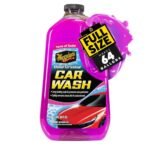
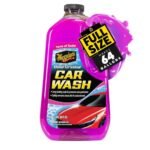
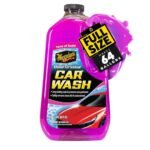
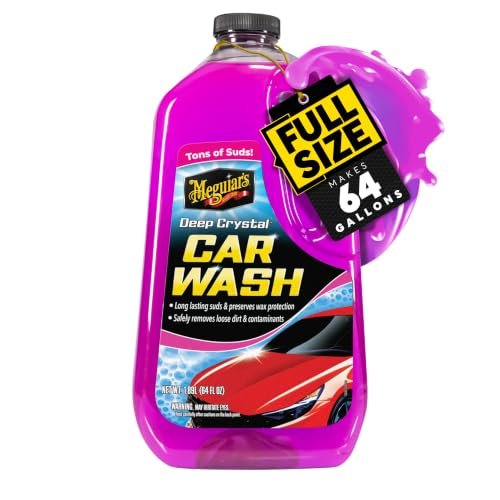
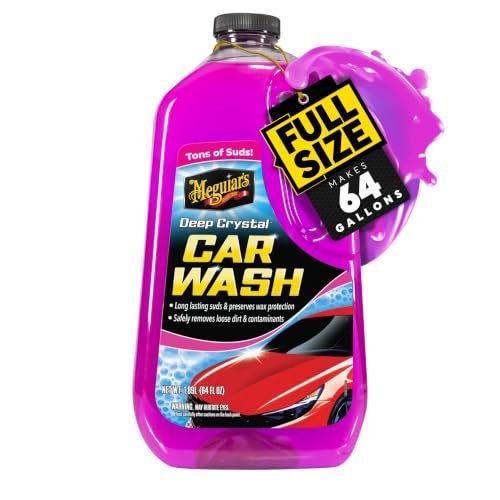
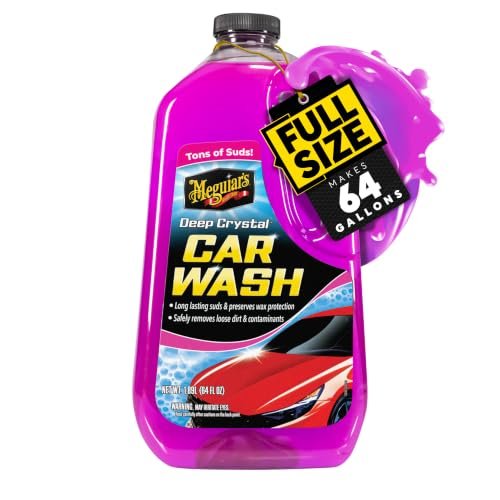
| Meguiar’s Deep Crystal Car Wash, 64 | Meguiar’s Deep Crystal Car Wash, 64 | |
|---|---|---|
| Product Image | |
|
| Price | View On Amazon | View On Amazon |
| Category | Budget | Budget |
| pH Level & Wax Safety | pH balanced; preserves waxes and sealants | pH balanced; preserves waxes and sealants |
| Cleaning Action | Lubricating suds encapsulate and lift dirt & grime | Lubricating suds encapsulate and lift dirt & grime |
| Finish Quality | Streak-free, high-gloss clean shine | Streak-free, high-gloss clean shine |
| Foaming Performance | Long-lasting rich suds throughout entire wash | Long-lasting rich suds throughout entire wash |
| Bottle Size & Yield | 64 oz bottle (makes up to 64 gallons) | 64 oz bottle (makes up to 64 gallons) |
| Best For | Routine maintenance washing without stripping wax | Routine maintenance washing without stripping wax |
| Amazon Link | View On Amazon | View On Amazon |
| Overall Winner | Tie | Tie |
Liquid Dish Soap
I have reached for liquid dish soap many times when prepping heavily oxidized project cars for multi-stage paint correction. Standard household dish soap relies on aggressive surfactants engineered specifically to break down stubborn animal fats and food oils. That chemical strength gives it powerful degreasing action, cutting through road film in seconds. Because dish soap carries an alkaline pH profile, repeated washes dry out rubber moldings and strip existing wax down to bare clear coat. The formula creates dense, clinging suds that rinse away cleanly without leaving oily food residues behind. It serves as a blunt instrument rather than a refined automotive maintenance wash.
- Heavy-duty surfactants formulated to emulsify thick grease and food oils
- Alkaline formulation that breaks down organic matter quickly
- Wax-stripping capability to expose bare clear coat before polishing
-
High-sudsing action with basic household water dilution
-
Inexpensive and readily available in almost every kitchen
- Effectively strips old wax layers and stubborn road grime
-
Rinses away without leaving behind gloss-enhancing oils
-
Strips protective wax, ceramic spray, and paint sealants
- Dries out plastic trim and rubber door seals over time
- Lacks lubricating agents needed to prevent wash-induced swirl marks
Best for: DIYers who need to strip old wax, road oils, and silicone residues before machine polishing or applying a fresh ceramic coating.
Expert Opinion: Use dish soap strictly as a chemical prep tool rather than a weekly wash soap. If you leave your paint unprotected after a dish soap wash, oxidation and environmental damage will follow quickly.
Meguiar’s Deep Crystal Car Wash
Meguiar’s Deep Crystal Car Wash is an automotive formula built specifically to protect your clear coat during routine maintenance. In my garage tests, its pH balanced car wash soap lifted road grime easily without degrading the existing carnauba wax on my hood. Rich foam provides slick lubrication that allows your microfiber wash mitt to glide across delicate clear coat safely. It actively lifts dirt and grime by encapsulating grit particles before they can drag and cause micro-scratches. You also get a crisp, streak-free shine that leaves paint looking deep and vibrant after a simple rinse. With a concentrated mix ratio, this 64-ounce bottle produces long-lasting suds across dozens of two-bucket washes.
- pH-balanced chemistry that preserves existing wax, sealant, and ceramic coatings
- High-lubricity foam designed to safely encapsulate grit and prevent paint swirl marks
- Streak-free formula that rinses clean without water spots or residue
-
Concentrated 64-ounce size capable of yielding up to 64 gallons of wash solution
-
Preserves existing paint protection and clear coat integrity
- Provides excellent wash mitt glide to minimize swirl marks
-
Leaves a clean, glossy finish with no streaking
-
Cannot strip stubborn old wax when preparing for paint correction
- Requires dedicated automotive purchases rather than grabbing household supplies
Best for: Car owners wanting a safe, high-lubricity soap for regular weekly maintenance washes that keeps clear coat and wax intact.
Expert Opinion: Deep Crystal delivers the exact lubricating cushion that modern, soft clear coats need. It keeps wash-induced swirls at bay while preserving whatever protective wax or sealant you previously applied.
Dish Soap vs Car Shampoo: Key Differences That Matter
Performance Comparison
When you drag a wash mitt across your car, the chemistry inside the bucket dictates what happens to your paint. Dish soap cuts surface tension and dissolves grease almost instantly. That aggressive cleaning action removes road film, but it also strips every drop of protective wax or paint sealant you applied months ago.
Car shampoo behaves entirely differently. Formulas like Meguiar’s Deep Crystal focus on high lubricity rather than pure grease-cutting power. The slick suds wrap around loose dirt particles, lifting them away from the clear coat so your mitt can glide over the panels without grinding dirt into the finish. Car shampoo leaves your protective coatings completely intact while cleaning away road grime.
Price and Value Analysis
Dish soap holds an obvious price advantage at first glance. A bottle costs only a few dollars at any grocery store, and most households already keep some under the kitchen sink. For a quick one-time degreasing job, the upfront cost is virtually zero.
Car shampoo costs slightly more initially, yet it provides far better long-term value for a vehicle owner. A 64-ounce bottle of Meguiar’s Deep Crystal dilutes into 64 gallons of wash water, making each wash cost pennies. More importantly, using car shampoo saves you money by protecting your clear coat and eliminating the need to re-wax your vehicle every single weekend.
Chemical Formulation and Quality
The fundamental difference between these two products comes down to pH balance and specialized additives. Household dish soap typically sits at an alkaline pH between 8 and 9.5. It relies on harsh sodium-based detergents designed to strip baked-on oils from ceramic plates and stainless steel cookware.
Car shampoos are formulated around a neutral 7.0 pH. They use gentle, non-ionic and anionic surfactants paired with specialized gloss enhancers and water-softening agents. These specialized ingredients allow the wash water to sheet off the surface evenly, preventing mineral deposits from forming ugly water spots on hot days.
User Experience Differences
Washing a car with dish soap feels squeaky and dry. Your wash mitt drags against the surface with notable resistance, which increases the likelihood of creating fine swirl marks and spiderweb scratches under sunlight. Once rinsed, the paint feels raw and completely grabby to the touch.
Car shampoo offers a plush, silky sensation under the wash mitt. The suds cling to vertical panels, giving you plenty of time to work around the car without the soap drying into a chalky film. Rinsing leaves the paint slick, glossy, and actively beading water.
Which Should You Choose?
Your specific detailing goal determines whether you should reach for a household degreaser or an automotive wash.
| Choose Dish Soap if… | Choose Car Shampoo if… |
|---|---|
| Stripping old carnauba wax before polishing | Routine weekly maintenance washes |
| Removing stubborn silicone tire shine overspray | Preserving existing wax and paint sealants |
| Prepping paint panels for ceramic coating | Preventing wash mitt swirl marks on soft paint |
| Degreasing muddy off-road suspension components | Rinsing streak-free in direct sunlight |
Frequently Asked Questions
Q: When comparing Dish Soap vs Car Shampoo, will dish soap ruin my car paint?
A: Dish soap will not ruin your clear coat after a single wash, but using it repeatedly strips protective wax, dries out rubber seals, and leaves paint vulnerable to oxidation.
Q: In the debate of Dish Soap vs Car Shampoo, which is better for removing old wax?
A: Dish soap is much better at stripping old wax and sealants due to its harsh degreasing agents, whereas car shampoo is formulated specifically to keep wax intact.
Q: Can I use car shampoo to clean greasy kitchen dishes?
A: You should avoid using car shampoo on cookware. Automotive soaps contain gloss enhancers, water-softening agents, and rinse aids that are not food-safe or rated for dishware.
Q: Why does dish soap cause more swirl marks during a car wash?
A: Dish soap lacks lubricating polymers. Without that slick barrier, dirt particles drag directly across your clear coat under your wash mitt, creating fine scratches.
Q: How often should I wash my vehicle with dedicated car shampoo?
A: Washing every one to two weeks with a pH-neutral car wash soap keeps road grime and bird droppings from etching into your clear coat.
Q: Does dish soap dry out the rubber moldings around car windows?
A: Yes, the strong degreasers in dish soap leach plasticizers from rubber seals and plastic trim, causing them to fade, turn chalky, and dry out over time.
When you purchase a product through Amazon links on carsolutionpro.com, we may earn a small commission at no extra cost to you. This helps support the site and keep our content free. As an Amazon Associate, we earn from qualifying purchases made through our links.