Have you ever wondered how much force it actually takes for an airbag to deploy during a crash? Understanding this can make a huge difference in how you think about your safety on the road.
Airbags don’t just pop out randomly—they react to specific forces and conditions designed to protect you in the most critical moments. But how powerful is that force? And could it ever cause harm itself? You’ll discover the surprising science behind airbag deployment, why the force matters, and what it means for your protection every time you drive.
Keep reading to learn how this life-saving technology works and what you need to know to stay safe.

Credit: mylawcompany.com
Airbag Deployment Basics
Collision triggers are sensors that detect sudden impacts. These sensors send signals to the airbag system. The airbags deploy only if the force of the crash is strong enough. This force is usually measured in terms of acceleration or deceleration.
Sensor technology includes accelerometers and pressure sensors. These devices work together to decide if deployment is needed. They must react quickly and accurately to avoid false deployment.
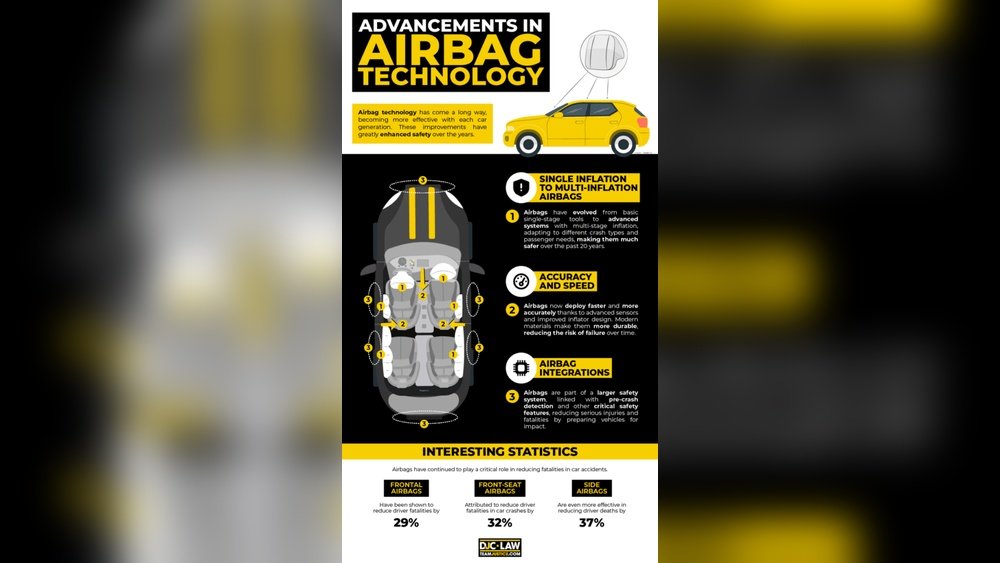
Deployment speed is extremely fast. Airbags inflate within 20 to 30 milliseconds after impact. This quick action helps protect passengers from serious injury by cushioning the blow.
Force Required To Deploy
Airbags deploy based on the impact speed of a crash. Usually, a collision at around 12 to 15 mph triggers deployment. Below this speed, airbags usually do not activate to avoid unnecessary force.
The pressure inside the airbag increases rapidly to protect passengers. This pressure creates a strong inflation force that fills the bag in less than 0.05 seconds. The force must be enough to stop the head or body from hitting hard surfaces.
Deceleration plays a big role. Faster slowing down means higher force for deployment. The angle of impact also matters; frontal crashes cause airbags to deploy more than side impacts. Side airbags have different force needs.
Airbag Deployment Mechanics
The inflator is the key part that makes the airbag fill with gas fast. It uses a small explosion to create a big burst of gas. This gas inflates the airbag in less than 0.05 seconds, which is extremely quick. The force must be strong enough to fill the bag but safe enough not to harm the passenger.
The cover penetration happens when the airbag pushes through the dashboard or steering wheel cover. The cover is designed to break easily so the airbag can come out fast. The force needed is just enough to break the cover without causing extra damage.
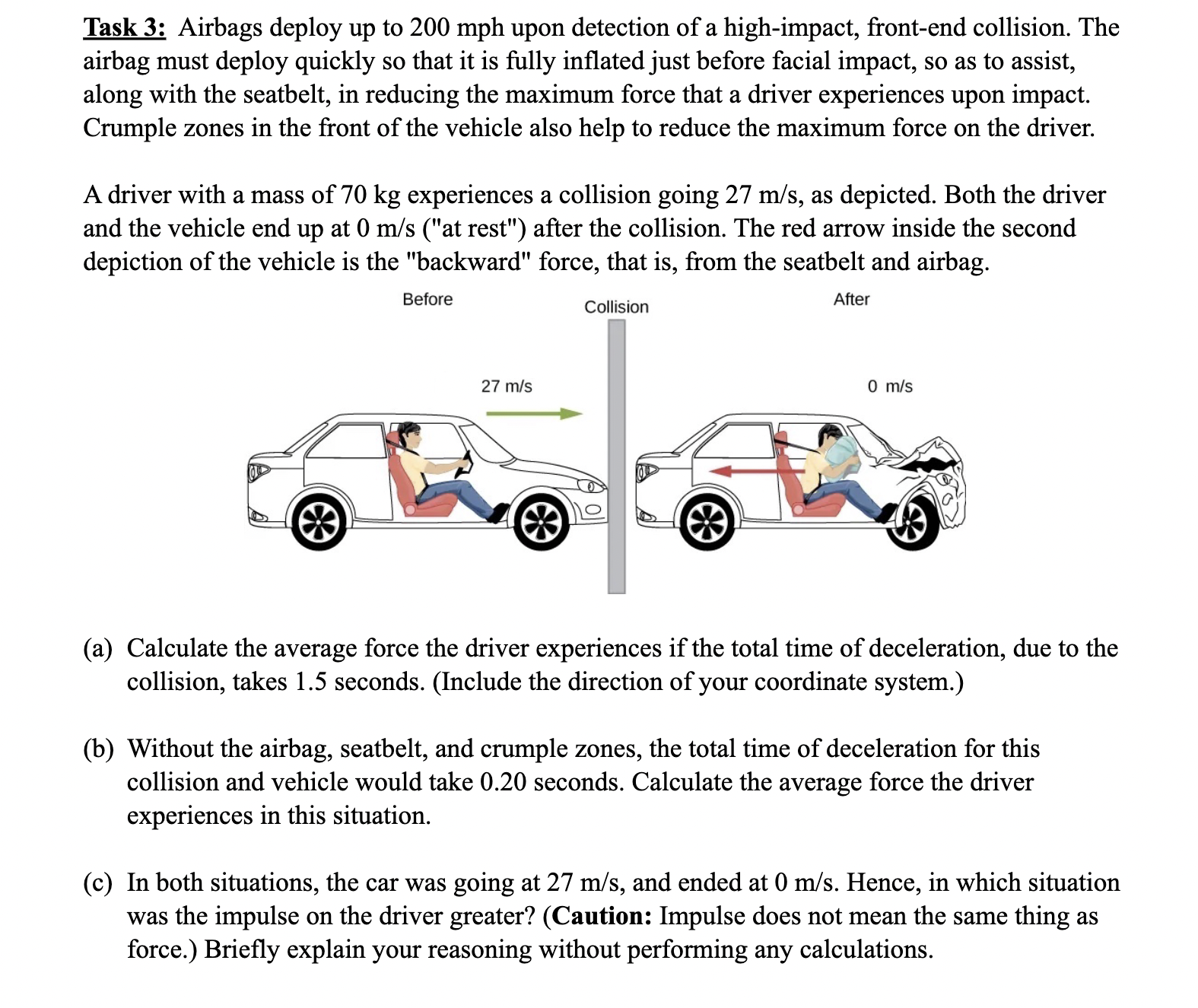
Deployment timing is very important. The airbag must inflate just before the passenger hits the car parts inside. Sensors detect a crash and send a signal to start the inflator. This happens in a few milliseconds to protect the passengers effectively.
Credit: www.chegg.com
Safety Risks During Deployment
Airbags deploy with very high force, often around 100 to 200 miles per hour. This sudden force can cause injuries like burns, bruises, or broken bones. The risk is higher if passengers sit too close or are not wearing seat belts.
Unexpected deployment can happen due to a fault or damage in the car. This can cause serious harm since the airbag inflates suddenly without a crash. Passengers should always stay alert and keep clear of airbags if the car shows any warning signs.
Precautions include always wearing a seat belt, sitting upright, and keeping children in the back seat. Avoid placing objects or hands near the airbag panel. First responders must be careful during rescues because airbags may still deploy.
Airbag Safety Guidelines
Proper seating positions are key to airbag safety. Sit upright and keep your seatbelt fastened. Stay at least 10 inches away from the steering wheel or dashboard. This distance helps reduce injury from airbag force during deployment.
Children and airbags require extra care. Children under 13 should ride in the back seat. Airbags can hurt small children if they deploy. Use a car seat or booster seat that fits your child’s size and age.
First responder precautions are vital during emergencies. Airbags can deploy with great force, even if the car is off. Always approach vehicles carefully and disconnect the battery if possible. Stay clear of airbag modules to avoid injury.
Credit: www.reddit.com
Common Airbag Deployment Myths
Many people think kicking a car can trigger airbags. This is not true. Airbags activate only during serious impacts, not by small hits or kicks.
Some believe airbags deploy only based on speed. Actually, airbags deploy due to a combination of factors like impact force and direction. Speed alone does not cause deployment.
Airbag malfunctions are rare but possible. Sensors might fail or trigger airbags accidentally. Car makers use strict tests to reduce these risks. Regular maintenance helps ensure airbags work correctly.
Factors Affecting Deployment
Seatbelt use affects airbag deployment force. Wearing a seatbelt can reduce the force needed. It helps slow the body, so airbags deploy with less power.
Vehicle type changes airbag force. Bigger cars may have airbags that deploy with more force. Smaller cars might use less force to protect passengers.
Sensor placement inside the car matters too. Sensors detect crashes and tell airbags when to deploy. If sensors are placed closer to impact zones, airbags deploy faster and with more force.
Post-deployment Considerations
Deployed airbags must be handled with care. They can contain chemicals and sharp parts inside. Always wear protective gloves and goggles when touching them. Do not try to reuse a deployed airbag. It must be replaced by a professional to ensure safety.
Repairing a car after airbag deployment often means replacing the entire airbag module. Sensors and control units may also need checking and resetting. Using original parts is very important to keep safety standards.
Recalls can affect airbags. Some airbags have faulty inflators that may cause injury. Check your car’s recall status regularly. If there is a recall, get it fixed by the dealer immediately to avoid risk.
Frequently Asked Questions
How Much Force Is Needed To Burst An Airbag?
Airbags typically deploy with forces generated by rapid deceleration around 15-20 mph collisions. The burst force reaches thousands of pounds per square inch instantly.
What Is The 5 10 20 Rule For Airbags?
The 5-10-20 rule for airbags means keep 5 inches from the steering wheel, 10 inches from the chest, and 20 inches from the face to avoid injury during deployment.
What Force Causes Airbags To Deploy?
Airbags deploy due to rapid deceleration caused by a collision force. Sensors detect impact severity and trigger inflation instantly.
How Much Pressure Does It Take For An Airbag To Deploy?
Airbags deploy when sensors detect a collision force equal to hitting a solid barrier at about 8-14 mph. Pressure from rapid deceleration triggers inflation within milliseconds to protect occupants.
Conclusion
Airbags deploy with a strong, sudden force to protect passengers. This force activates within milliseconds during a crash. It cushions impact and reduces injury risk. The exact force varies by crash severity and sensor data. Airbags work alongside seat belts for better safety.
Understanding this helps drivers respect airbag power. Always maintain safe driving habits to avoid accidents. Staying informed about airbag function improves overall road safety. Safety begins with knowledge and cautious driving.
When you purchase a product through Amazon links on carsolutionpro.com, we may earn a small commission at no extra cost to you. This helps support the site and keep our content free. As an Amazon Associate, we earn from qualifying purchases made through our links.